- This event has passed.
Burning Down the House
25 September to 10 October

About Burning Down the House
Who has the right to tell which stories?
Where’s the line between inspiration and exploitation?
Does any of that matter if the story’s good?
Scandinavia, 1879.
Playwright Henrik Ibsen scandalises audiences with A Doll’s House, whose heroine Nora walks out on her family.
But to one woman, the story is all too familiar. Laura Kieler, a young writer who had turned to Ibsen for help, finds that he has stolen her harrowing circumstances as the play’s raw material.
As Ibsen’s literary fame ignites, Laura’s life falls apart – she must fight to save her reputation and her relationship with her family.
Burning Down the House takes a theatrical flamethrower to Ibsen’s text, revealing Laura’s version of events – a darker story of a serious young writer and her emotionally abusive husband.
This new production by Breach, the acclaimed company behind After the Act (Royal Court) and It’s True, It’s True, It’s True (BBC 4), has emerged from the research of leading Ibsen expert Kirsten Shepherd, Professor of English and Theatre Studies at Oxford University.
Kirsten, research assistant Tzen Sam, and translator Gaye Kynoch have been uncovering and translating Laura’s articles, letters and plays to assist Breach in creating this new production.
Tickets
Please see important booking information below.
Booking information
Ticket prices:
Standard – £22.00
Student – £10.00
Tickets are subject to a booking fee
Dates & times:
Friday 25 September to Saturday 10 October 2026 at 7.30pm
Running time:
80 minutes without an interval
Location:
Theatre
Age guidance:
14+
About Schwarzman Centre for the Humanities
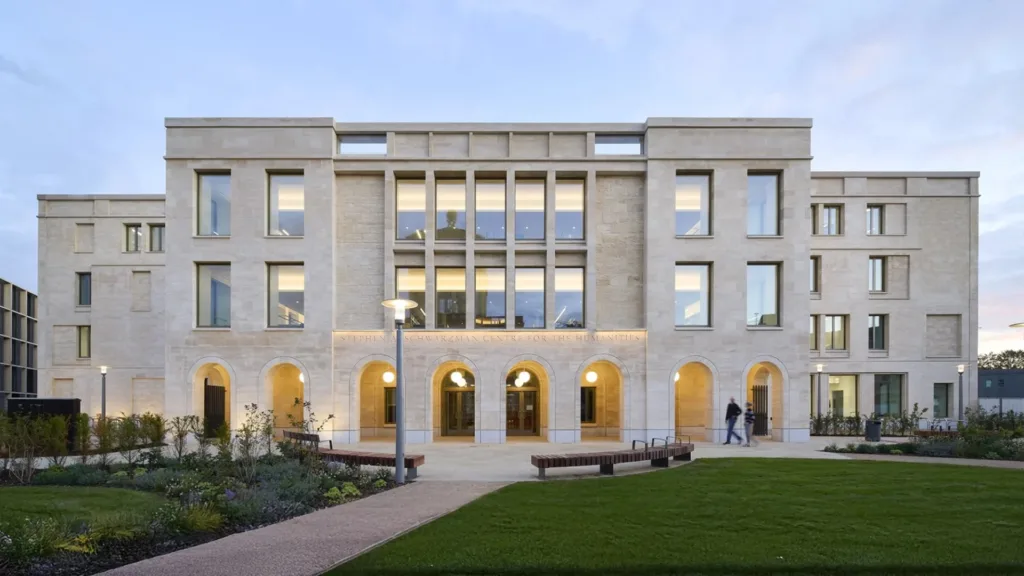
Schwarzman Centre for the Humanities is a major new cultural and academic landmark for the University of Oxford, bringing together seven humanities faculties with performance, exhibition, and public engagement spaces under one roof. Located in the Radcliffe Observatory Quarter, it is designed to foster interdisciplinary collaboration while opening the humanities to a wider public through events, performances, and year-round programming.
At its heart are world-class venues including a concert hall, theatre, cinema, recital spaces, and galleries, supported by flexible teaching and meeting facilities. A central atrium acts as a social hub, blending academic life with informal gathering spaces, cafés, and exhibitions. More than a university facility, the Centre functions as a civic cultural destination, connecting scholarship with creative practice and strengthening Oxford’s wider cultural life.