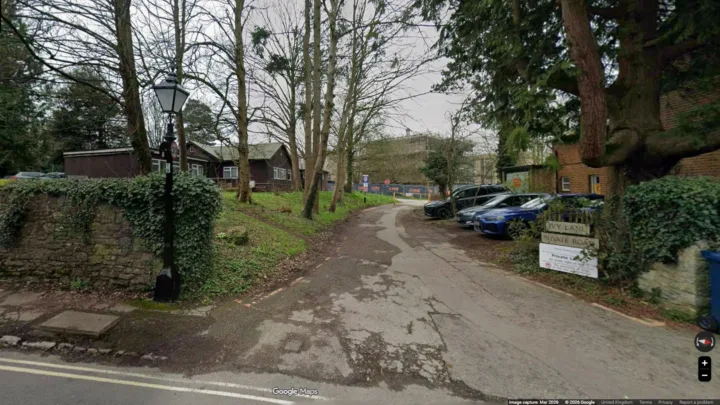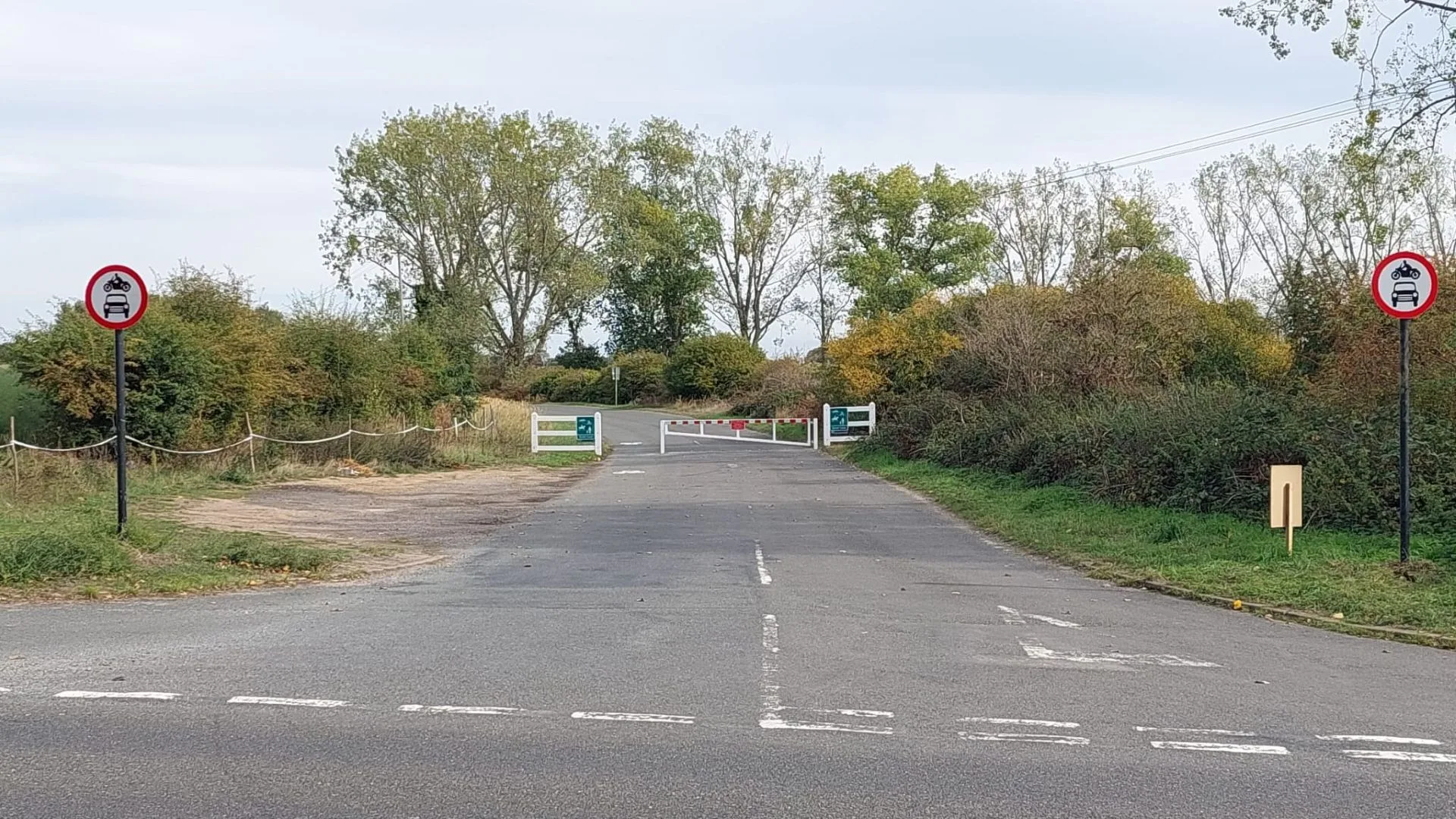
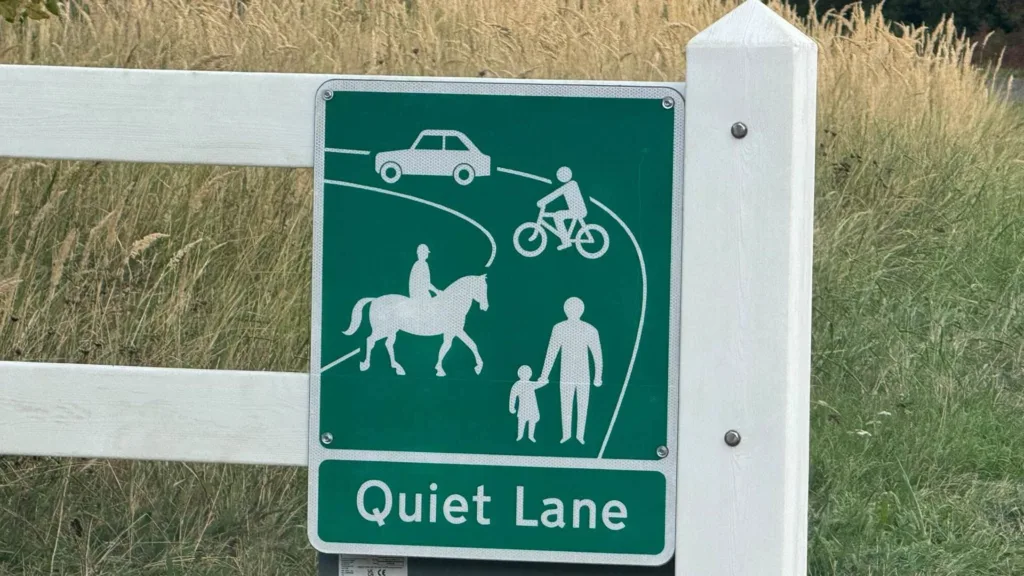
A locked gate now marks the start of Oxfordshire’s newest ‘quiet lane’, with Shepherds Pit Lane becoming the first of up to 10 planned schemes using experimental traffic restrictions that have been described as ‘rural LTNs’.
The partial closure runs along Shepherds Pit Lane from the Bayswater Road end near Oxford Crematorium in Barton, preventing through motor traffic from using the lane.
A 1.7-metre gap in the gate allows people walking, wheeling, cycling and riding horses to pass through. Access is also maintained for residents, farmers, landowners, businesses and emergency services.
A 20mph speed limit is in place, while other through traffic is being directed towards the adjacent B4027 Wheatley Road and Bayswater Road.
The scheme is being introduced under an Experimental Traffic Regulation Order (ETRO), allowing the council to test the measures before deciding whether they should remain in place.
First of 10 planned quiet lanes
The Shepherds Pit Lane scheme has been in development for several years and is the first to be delivered under Oxfordshire County Council’s new countywide quiet lanes policy and pilot programme, approved by the county cabinet in May.
The council intends to pilot up to 10 quiet lanes across Oxfordshire, although the locations of the remaining schemes have not yet been confirmed.
Potential sites have included proposed lanes in Blackthorn Village, Fawler, Towersey, Goring, Kennington and Aston Rowant. Some potential schemes have subsequently been removed from consideration following local opposition.
The council says the programme is intended to create safer and more attractive routes for walking, wheeling, cycling and horse riding by reducing the impact of motor traffic on minor roads.
The Shepherds Pit Lane trial was developed following local concerns about road safety and opportunities for walking and cycling between Stanton St John and Oxford. The council says the scheme was shaped through engagement with local residents, landowners and the parish council during 2025 and 2026.
Police raised concerns over speed limit
The introduction of the quiet lane has not been without disagreement.
Thames Valley Police responded to a consultation on the proposed reduction in the speed limit, describing it as “highly inappropriate”.
Earlier this month, Oxfordshire County Council’s Cabinet Member for Transport Management, Gareth Epps, described the police response as surprising.
“I would hope they would find a more appropriate way to express their view on this,” he said, referring to the council and police’s wider partnership on road safety.
The disagreement comes as the council begins testing an approach that differs from the traditional definition of a quiet lane.
Why the council is using a gate
The council’s Shepherds Pit Lane scheme uses a physical gate to prevent through traffic rather than relying solely on signs.
The authority says this approach is based on evidence it reviewed, including Department for Transport evaluations and findings from the Transport Research Laboratory (TRL), which it says found that sign-only quiet lanes generally deliver little or no reduction in traffic volumes or vehicle speeds.
The council therefore considers filtering through traffic necessary to achieve the safety, accessibility and active travel objectives of its new quiet lanes programme.
The approach has similarities with low-traffic neighbourhoods, although the Shepherds Pit Lane scheme is being applied to a rural lane rather than an urban residential area.
Trial will be monitored
The council will monitor the Shepherds Pit Lane scheme during the experimental period, including traffic volumes, vehicle speeds, road safety outcomes and feedback from local people.
Traffic surveys carried out in October 2025 will provide a baseline for comparison.
The consultation on the trial opened on Monday 28 September and will run for at least six months. The experimental arrangement is expected to remain in place for at least a year, with the ETRO allowing the council to extend the experiment to a maximum of 18 months.
At the end of the experimental period, the Cabinet Member for Transport Management will decide whether the measures should remain, be amended or be removed.
Councillor Gareth Epps said the trial would provide an opportunity to assess how a “fully filtered” quiet lane works in practice.
“This trial is an opportunity to see how a ‘fully filtered’ quiet lane works in practice, gather feedback from local people and collect robust evidence before any decisions are made about its future,” he said.
Residents, businesses and other members of the public can take part in the consultation through the council’s Shepherd’s Pit Lane consultation on the Let’s Talk Oxfordshire
Reporting contribution by Isabella Harris, Local Democracy Reporter (LDR) for Oxfordshire, covering local politics, council meetings and planning decisions across six councils in the county.