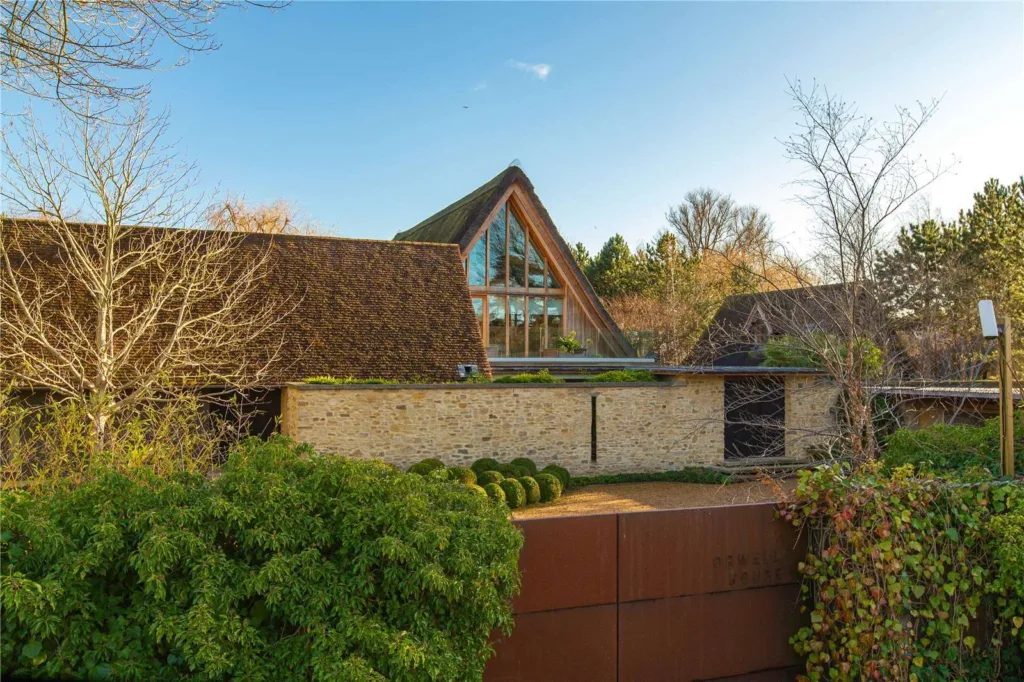
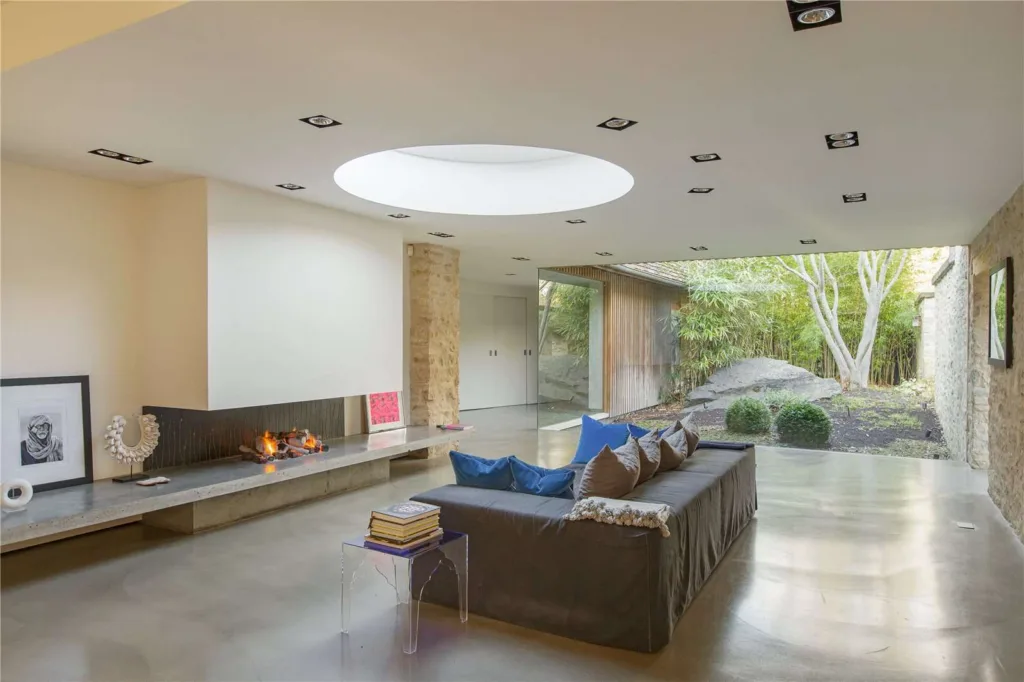
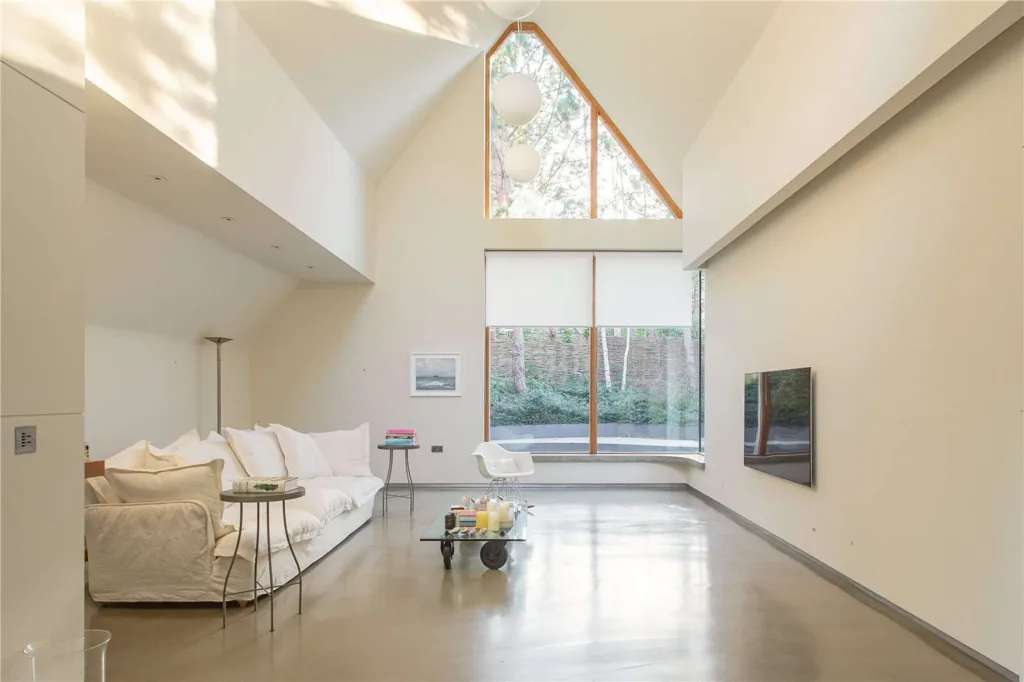
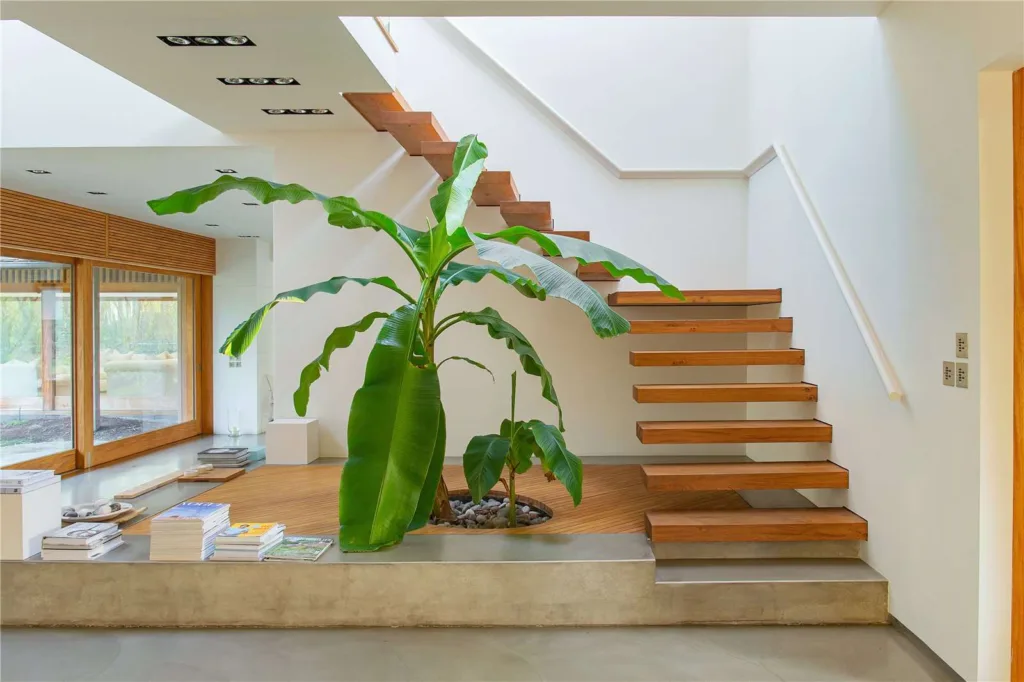
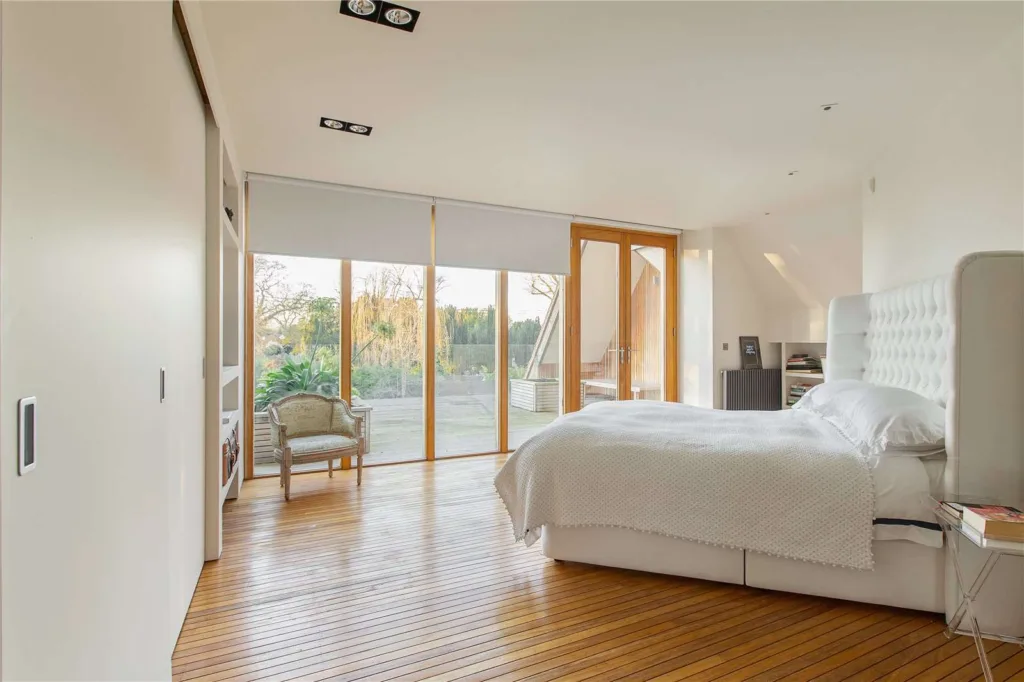
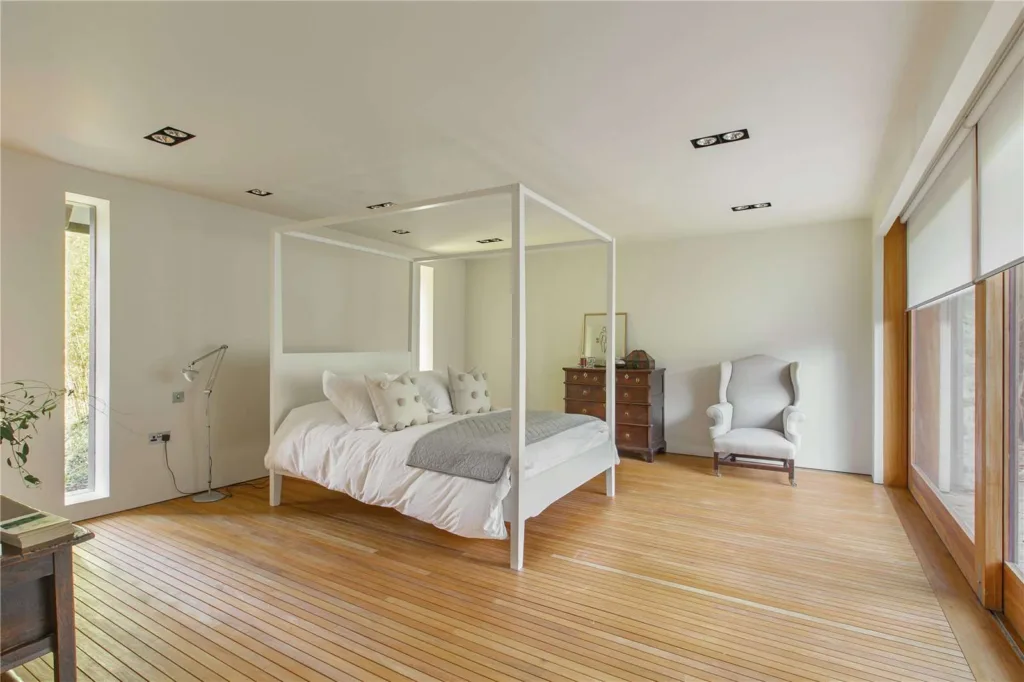
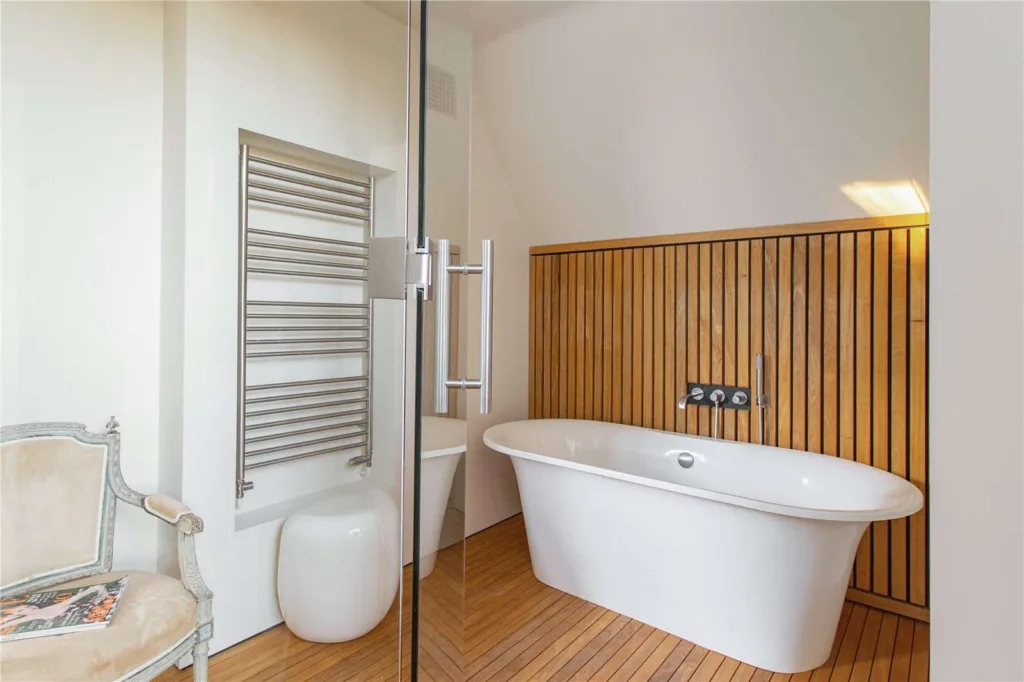
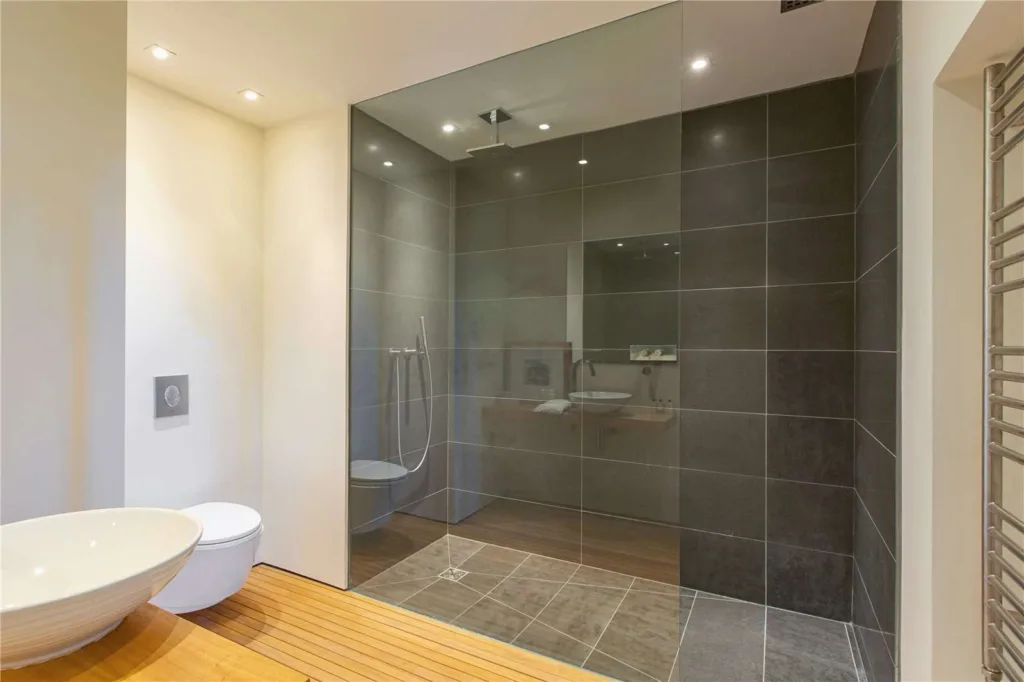
Orwell House stands in striking contrast to the historic fabric of Sutton Courtenay, a village rich in centuries of architectural heritage along the banks of the River Thames. Designed and built in 2007/08 by local architect Andrew Herring, the house embraces what he describes as “organic modernism” – a deliberate blending of natural materials, contemporary structure and landscape-led living.
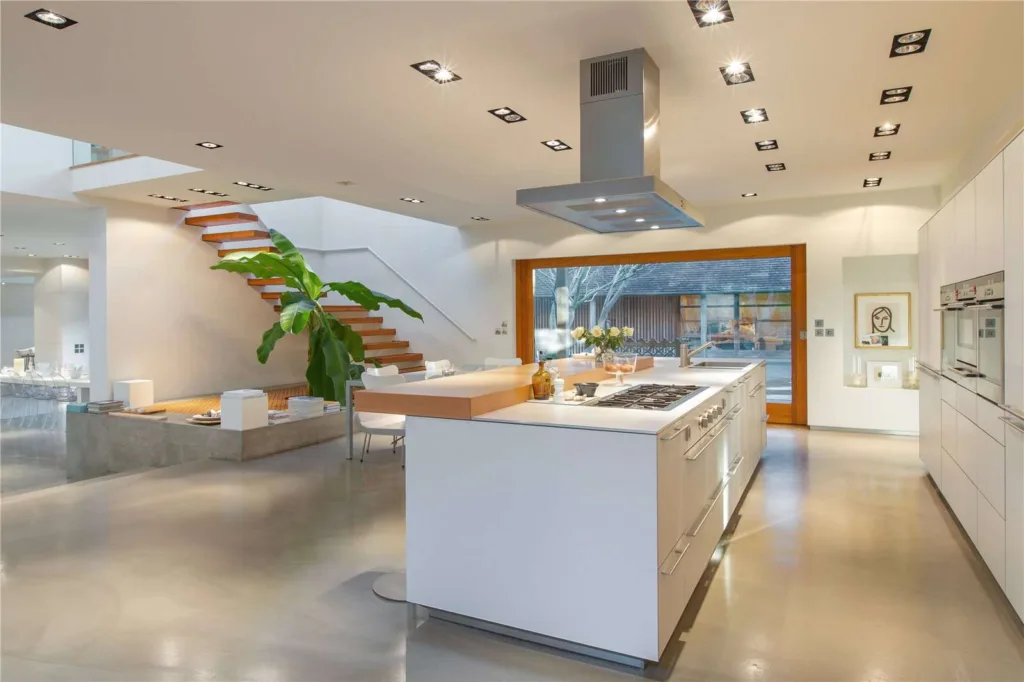
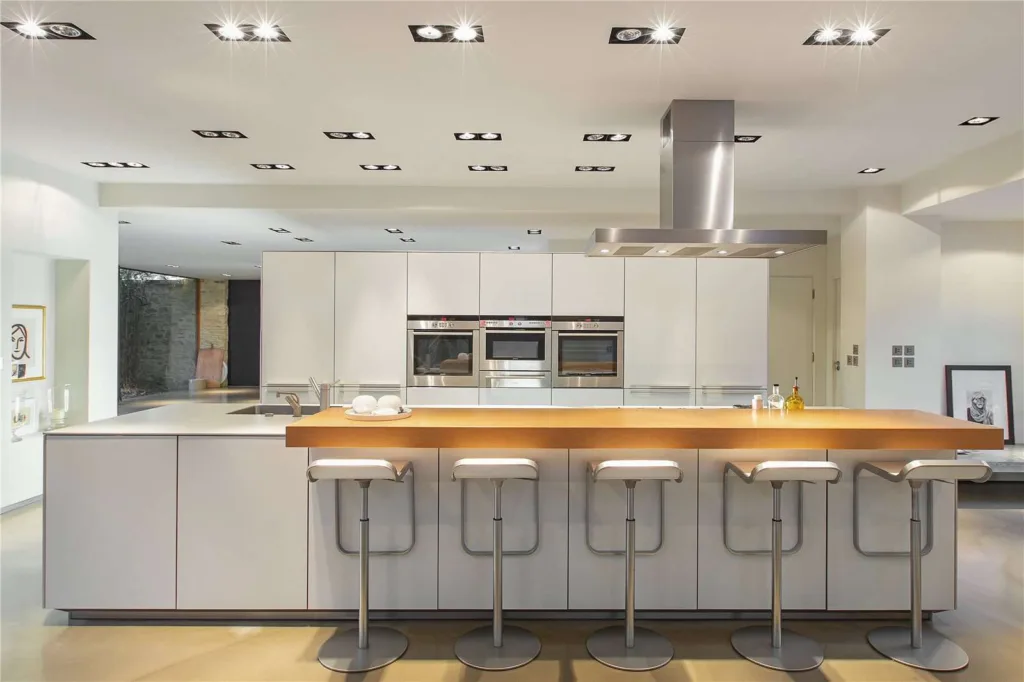
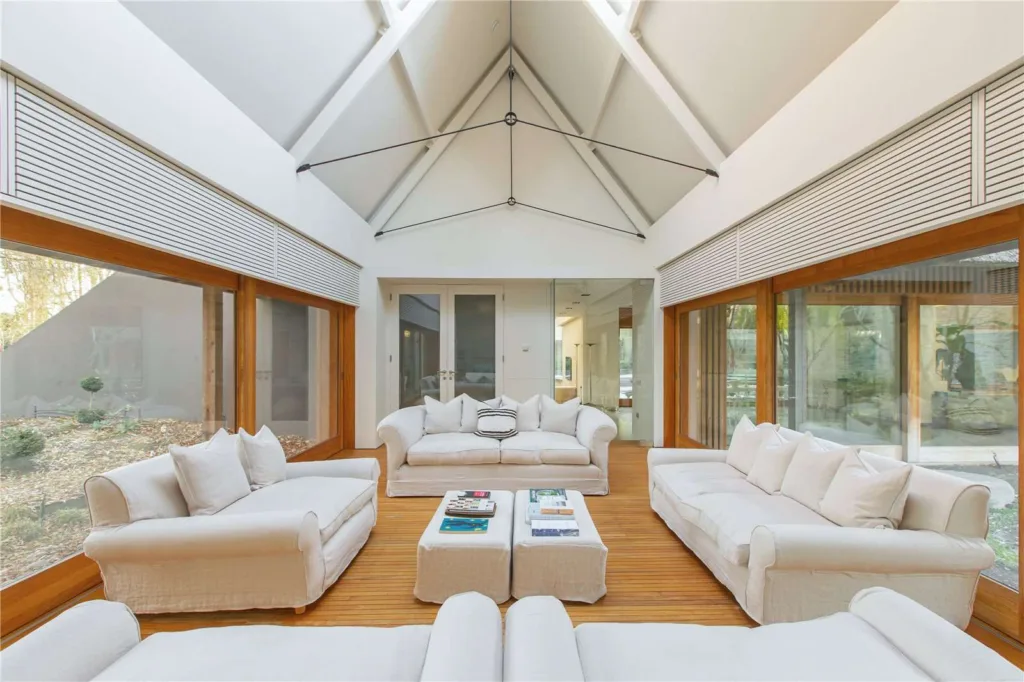
At its core, the design philosophy is one of connection rather than separation. Oak, stone, thatch, water and planting are set against glass, polished concrete and crisp white surfaces, creating a dialogue between tradition and modernity. Floor finishes extend seamlessly from interior to exterior, encouraging movement between house and garden, while extensive glazing ensures the landscape is ever-present within the living spaces.
The result is a home defined as much by atmosphere as architecture – light-filled, open and intentionally understated. Arrival is purposefully restrained, with a Corten steel gated entrance leading to gravel parking and a triple-aspect open-bay garage, setting a tone of privacy and quiet confidence from the outset.
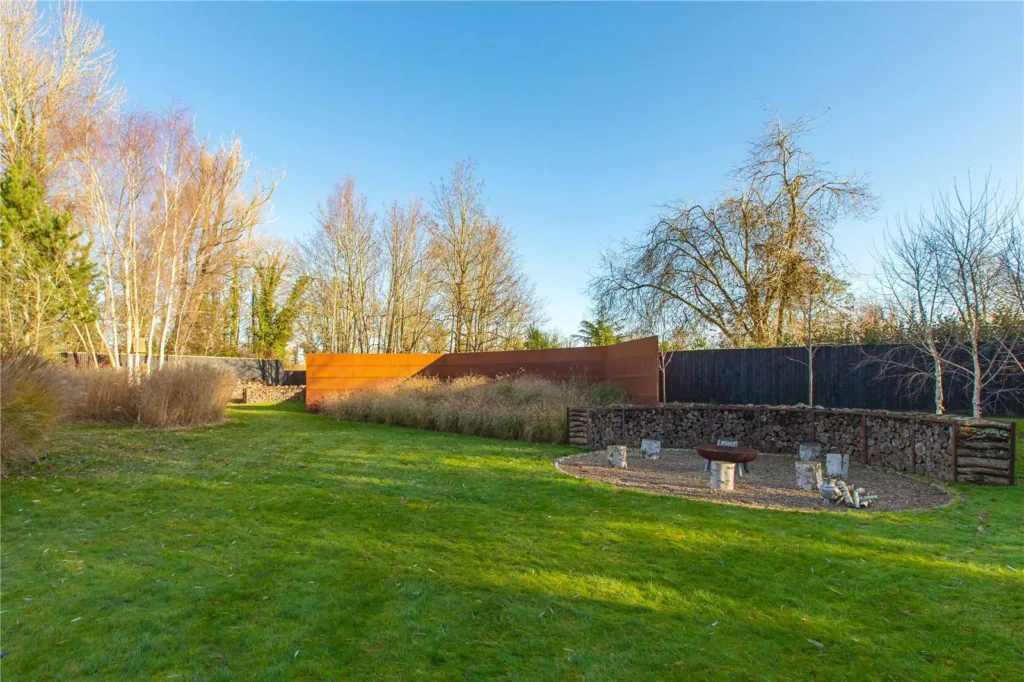
The gardens, designed by Andrew Herring in collaboration with Chelsea Flower Show gold medallist Sarah Eberle, extend the architectural vision outdoors. Mature planting of willow, bamboo, silver birch and tulip trees is interwoven with water features, long grasses and sculptural elements such as Corten steel garden structures and a fire pit. Olive trees frame a decking terrace, while a Japanese slate heated swimming pool forms a focal point for outdoor living.
A separate pool house adds further flexibility, incorporating a first-floor bedroom and shower room and functioning equally well as a studio annexe or guest accommodation, depending on need.
Sutton Courtenay itself is a village shaped by both history and community. Its village green is surrounded by homes dating back to the 16th century and earlier, alongside notable landmarks including The Abbey, the Manor House and the Norman Hall. Local amenities include a primary school, village shop, church and several public houses, while nearby Abingdon, Didcot and Oxford provide wider services, cultural life and connectivity.
Transport links are strong, with the A34 offering access to the M40 and M4, and Didcot Parkway providing fast rail services to London Paddington in around 40 minutes. The area is also well served by a range of respected state and independent schools.
Orwell House sits within a place of quiet historical significance – not least as the final resting place of George Orwell in the village churchyard – yet the house itself is resolutely contemporary in spirit. It is a carefully composed retreat where architecture, garden and landscape are designed to operate as one continuous living experience.
Gallery
Click to enlarge