How to make the perfect seasonal salad
There’s no real secret to building a delicious, elegant seasonal salad that works just as well for a midweek meal as it does for entertaining. At its core, it’s simply a considered combination of seasonal produce, layered for texture and flavour, and finished with a dressing that brings everything together.
Start with what’s in season
The foundation of any great seasonal salad is, unsurprisingly, seasonality. Think about what’s naturally growing at the time of year and let that guide your ingredients. When you cook with the seasons, the produce is at its best – fuller in flavour, better in texture, and often more affordable.
In spring, reach for tender greens such as lettuce, watercress and spinach, alongside peas, spring onions and new potatoes. Summer brings a brighter palette of ingredients like tomatoes, peppers, cucumbers and British asparagus. As autumn arrives, deeper flavours come through with squash, pumpkin, beetroot and mushrooms. In winter, root vegetables such as carrots, parsnips and sweet potatoes take centre stage, alongside hearty brassicas like kale, cabbage and cauliflower.
Decide on the flavour profile
Once you’ve chosen your seasonal base, consider the overall direction of the salad. Do you want something light and fresh, or warm and comforting?
In warmer months, lean towards raw or lightly cooked vegetables to highlight freshness and crunch. In colder seasons, roasting or sautéing vegetables helps concentrate their natural sweetness and adds depth.
Spices and herbs can help define the character of the dish. Warming spices like cumin, paprika and coriander seed work well in autumn and winter salads, alongside woody herbs such as rosemary and thyme. For spring and summer, soft herbs like mint, basil and parsley bring brightness and lift.
Build layers of texture
A great salad is all about contrast. Think beyond leaves and consider how different textures can work together.
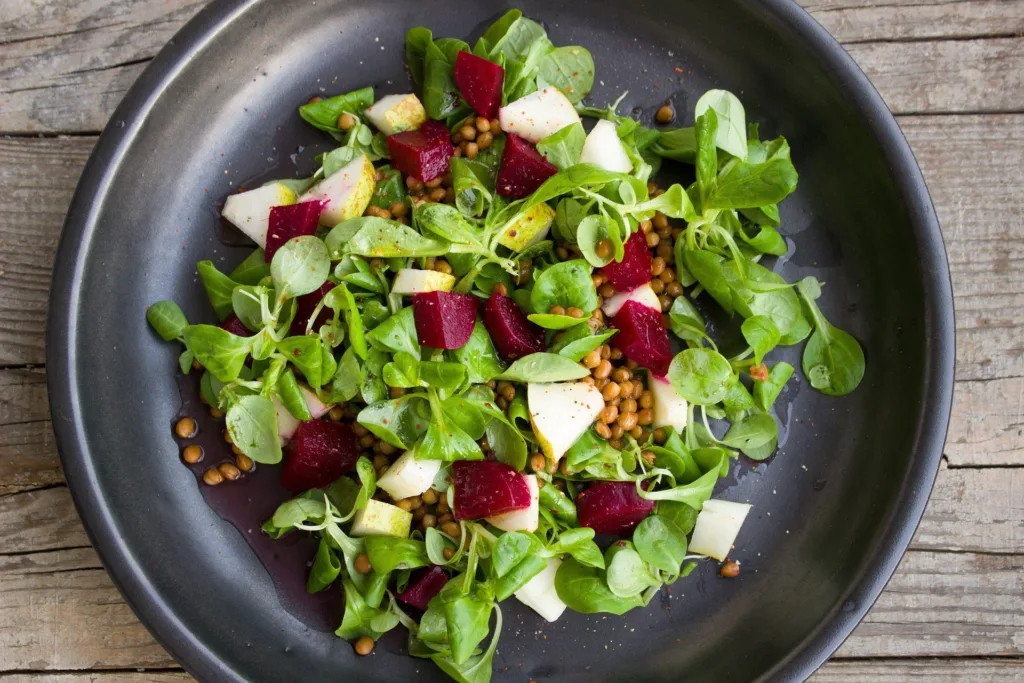
Start with a base of grains or legumes for substance – lentils, pearl barley, quinoa or chickpeas are all excellent options. Then layer in cooked elements such as roasted vegetables, followed by raw components like shaved carrot, radish or fresh greens for crunch and freshness.
Adding nuts and seeds – toasted almonds, pumpkin seeds or walnuts – brings another layer of texture and a satisfying crunch.
Don’t underestimate cooked ingredients
While salads are often associated with raw ingredients, cooked elements can transform them. Creamy roasted sweet potato, charred corn or caramelised carrots add warmth and richness that raw vegetables alone can’t achieve.
These elements also help make a salad more filling and balanced, turning it into a complete meal rather than just a side dish.
Add protein and richness
To make your salad more substantial, include a source of protein. Soft cheeses like feta, goat’s cheese or ricotta work beautifully with seasonal vegetables, particularly in autumnal combinations featuring squash or beetroot.
For heartier winter salads, roasted chicken, hot smoked salmon or even poached eggs can add depth and make the dish more satisfying.
Get the dressing right
A good dressing should enhance, not overpower, the ingredients. Start by considering the overall balance of the salad – is it sweet, bitter, earthy or salty? Then build a dressing that contrasts or complements those flavours.
Use a base such as olive oil, yoghurt or buttermilk, and add acidity through lemon juice, vinegar or even something slightly sweeter like pomegranate molasses. Tahini is also a great addition, adding creaminess and a subtle nutty richness.
Assemble at the right time
Timing matters. Grains can be dressed while still warm so they absorb flavour more effectively. However, delicate leaves should only be dressed just before serving to maintain their crispness.
Fresh herbs are best torn or chopped and tossed directly into the salad rather than just stirred into the dressing – this keeps their flavour bright and evenly distributed throughout the dish.
The finishing touch
A perfect seasonal salad is ultimately about balance: warm and cold, soft and crunchy, rich and fresh. When you build it thoughtfully around seasonal produce and layer in texture and flavour, it becomes far more than just a side dish – it becomes the highlight of the table.