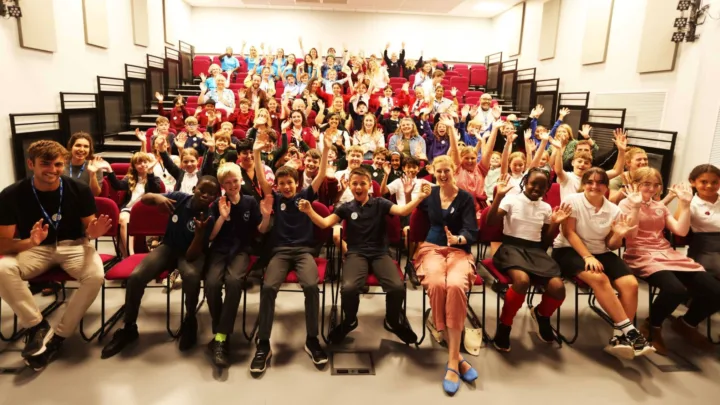
This year’s International Women’s Day marks 115 years of celebrating women’s achievements and promoting gender equality, and one Oxfordshire school leader is using the occasion to highlight the importance of visible female leadership in education.
Dr Sarah Squire, Head of Cokethorpe School, says schools have a powerful role to play in shaping how young people view leadership and opportunity.
Since taking up the role in September 2025, Dr Squire has sought to demonstrate how leadership built on confidence, self-belief and healthy relationships can help students thrive across every aspect of school life.
Before moving into school leadership, Dr Squire completed a doctorate in psychology, focusing on children’s cognitive development. Early in her career she worked with primary school pupils, gaining valuable insight into the wider influences that shape learning, including family support, wellbeing and personal confidence.
“Children need healthy interactions with those around them and a holistic, well-rounded experience,” she explains. “They should see a range of role models so that leadership feels visible and attainable.”
Dr Squire believes the impact of adult behaviour and representation in schools is often underestimated.
“They absorb information at a rate we often forget is possible as adults. Every time children see adults acting in different ways, their preconceptions are challenged and their understanding is shaped. This is why their perception of both women and men needs to be multifaceted and positive.”
She also highlights the continuing imbalance in leadership within the education sector. According to the Department for Education (DfE), women made up 63% of the secondary school workforce in 2023, yet only 40% of headship roles were held by women.
“Fifty per cent of the population are women, yet leadership does not reflect this,” she says. “Achieving real equality means young people need to see a broader range of people leading at the top.”
Dr Squire has taken practical steps to challenge traditional expectations around leadership. She has deliberately chosen to use the title “Head” rather than gendered alternatives, emphasising that the role should always go to the most suitable candidate, regardless of gender.
She also encourages greater balance in working life. “When male colleagues request flexible working, that’s positive, because equality means supporting both men and women in balancing work and family life.”
Dr Squire draws inspiration from the global education network WomenEd and its book 10% Braver, which encourages women working in education to step into leadership roles.
“The book asks a simple but powerful question: what would you do if you were 10% braver?” she says, adding that the idea helped give her the confidence to pursue leadership herself.
Ultimately, Dr Squire believes schools play a crucial role in shaping how young people see leadership and opportunity.
“Children don’t come into the world with stereotypes; they simply accept what they’re exposed to. If they only see one type of leader, that becomes their model. Schools can broaden that, showing what leadership really looks like in all its forms and inspiring confidence in every student, regardless of gender.”