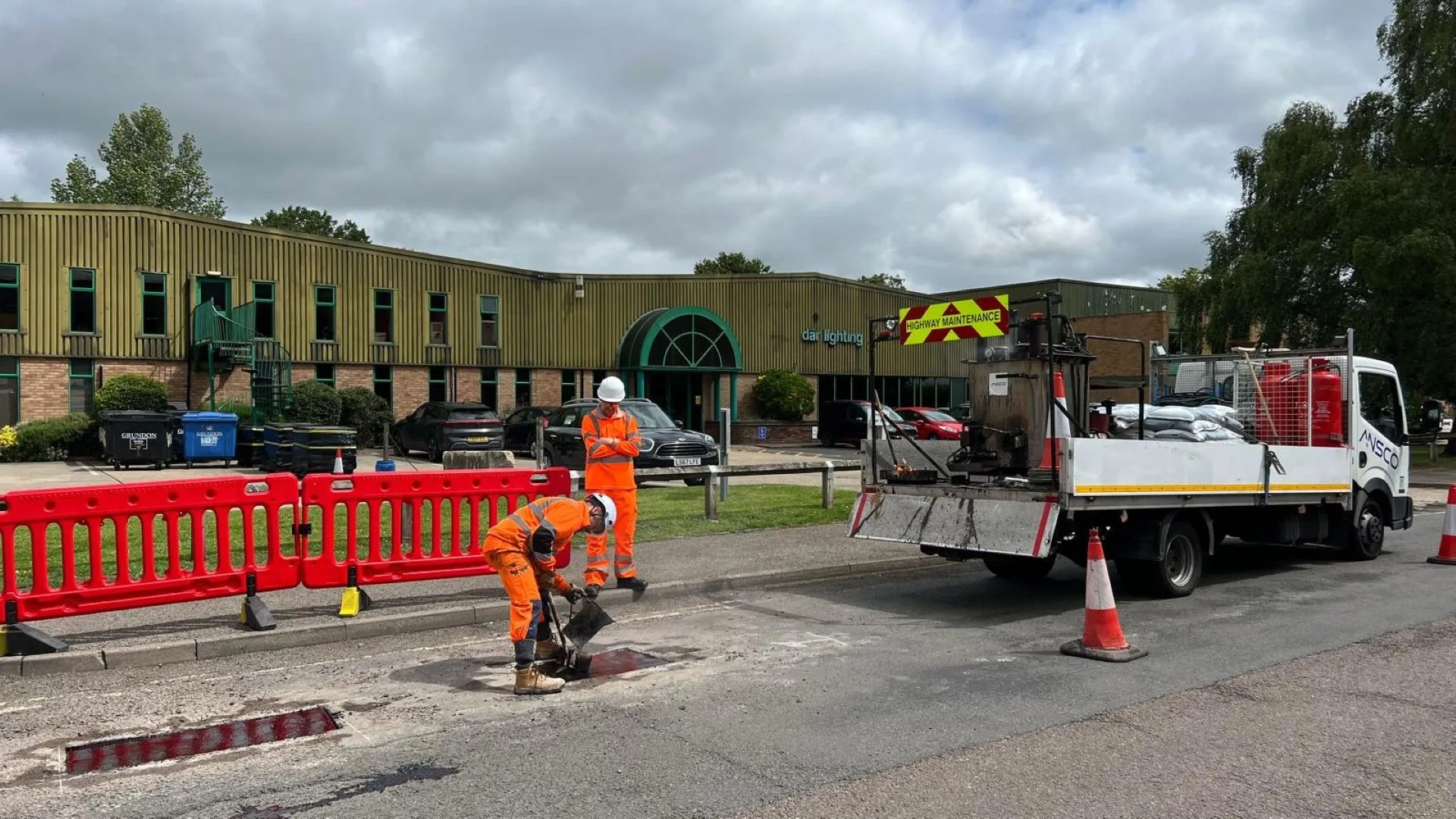
A stretch of road in Banbury has become the focus of one of Oxfordshire’s most ambitious highways experiments to date, as the county looks to tackle a surge in pothole damage caused by extreme winter weather.
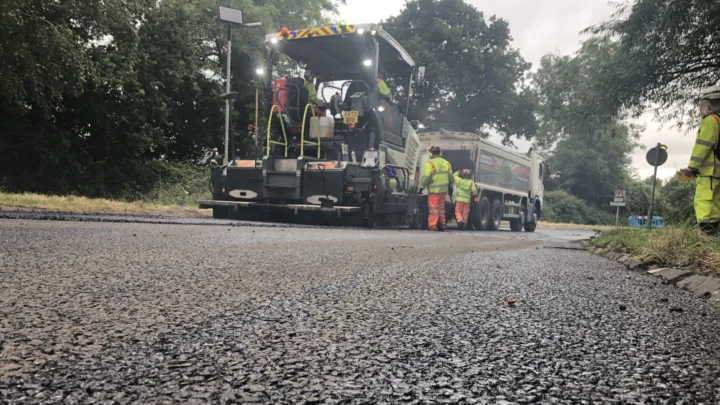
Banbury’s Wildmere Road was closed this week and divided into a series of test sections as part of a live trial led by Oxfordshire County Council and highways contractor M Group.
Across a 700-metre stretch, engineers applied 15 different pothole filling and patching methods to directly compare performance under identical conditions.
Some of the techniques are already in use on Oxfordshire’s road network, while others are new technologies introduced for testing by M Group. The aim is to assess which materials and approaches deliver the best long-term durability, efficiency and value for money.
The trial builds on a smaller innovation day held in Steventon in 2023, which was believed to be the first of its kind in the country. That earlier exercise tested seven repair methods; this latest initiative more than doubles that scale, reflecting the increasing pressure on the county’s highways network.
Liz Leffman said the recent surge in potholes had been “unprecedented”, driven by a harsh winter of freezing temperatures followed by prolonged rainfall. The result, she said, had placed significant strain on a network of around 3,000 miles of roads.
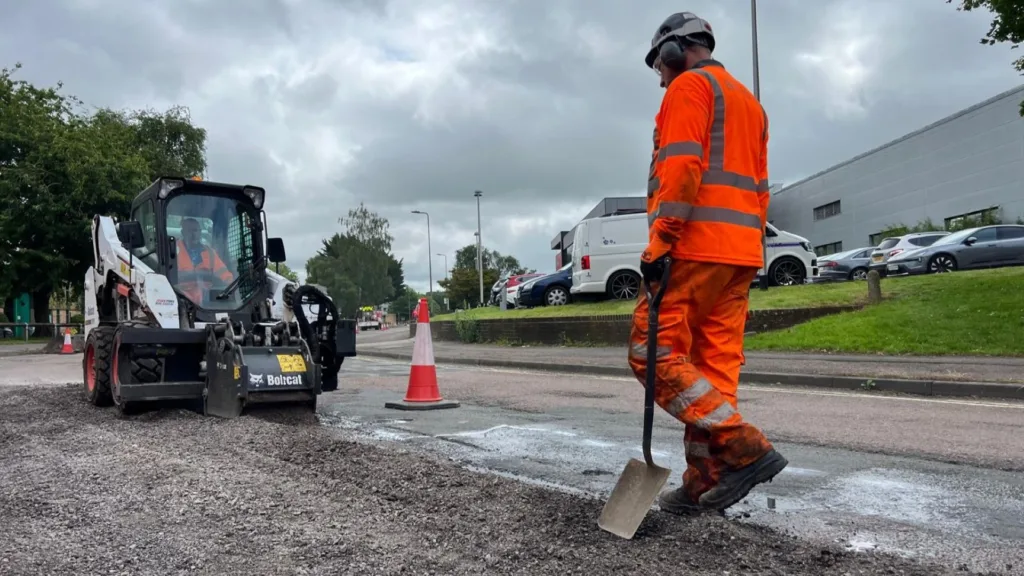
The council has faced more than 1,000 pothole reports per week at peak demand, with more than 1,300 defects reported in a single week earlier this year. In response, repair crews were increased from seven to 25, alongside the deployment of specialist equipment including a Bobcat planer, Dragon Patcher and thermal repair systems.
Since January 2026, M Group has already repaired more than 33,000 highway defects across the county, compared with 37,042 potholes filled during the whole of the 2024–25 financial year.
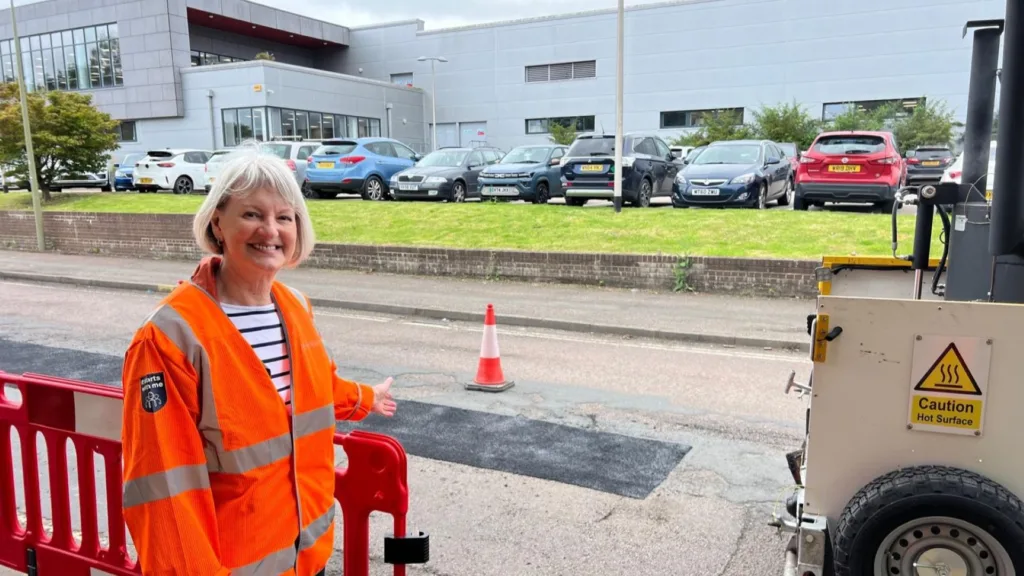
Richard Lovewell described the trial as an extension of a long-standing partnership with the council, highlighting a “Swiss Army knife” approach to pothole repair that continues to evolve with new materials and technologies.
He said the goal is to improve durability and allow repairs to be carried out more effectively in varying weather conditions, particularly as climate change brings wetter winters and hotter summers that place additional stress on road surfaces.
Importantly, the council has confirmed the trial has not added extra cost, as it is being carried out on real defects using donated materials from suppliers across the country. These include fast-curing resins already used in industrial flooring, now being adapted for highway use.
Over the next two years, Wildmere Road will be regularly monitored to assess how each repair method performs over time. Engineers will analyse durability, material usage, carbon impact, waste generation, labour efficiency and overall longevity.
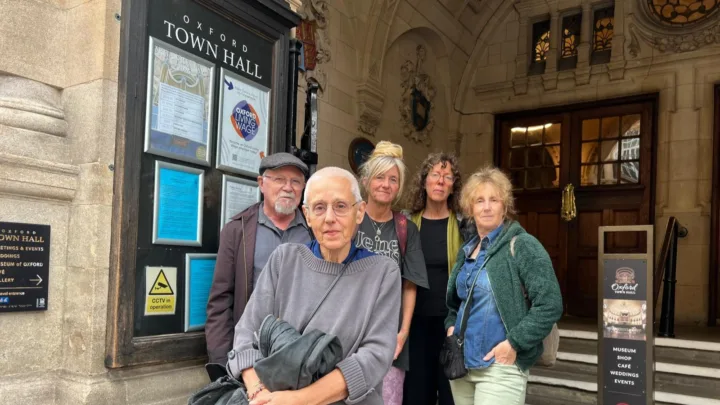
Local residents have already noticed the condition of the road. One worker, Alison Bristow, described it as “notoriously bobbling” and said the surface can feel particularly poor when travelling by bus.
She added that while disruption from the works was inconvenient, any attempt to improve the road was welcome.
The trial marks a significant step in Oxfordshire’s ongoing effort to address what has become a persistent national issue, with the county hoping the results will help shape a more resilient and cost-effective approach to pothole repair in the years ahead.
Reporting contribution by Isabella Harris, Local Democracy Reporter (LDR) for Oxfordshire, covering local politics, council meetings and planning decisions across six councils in the county.