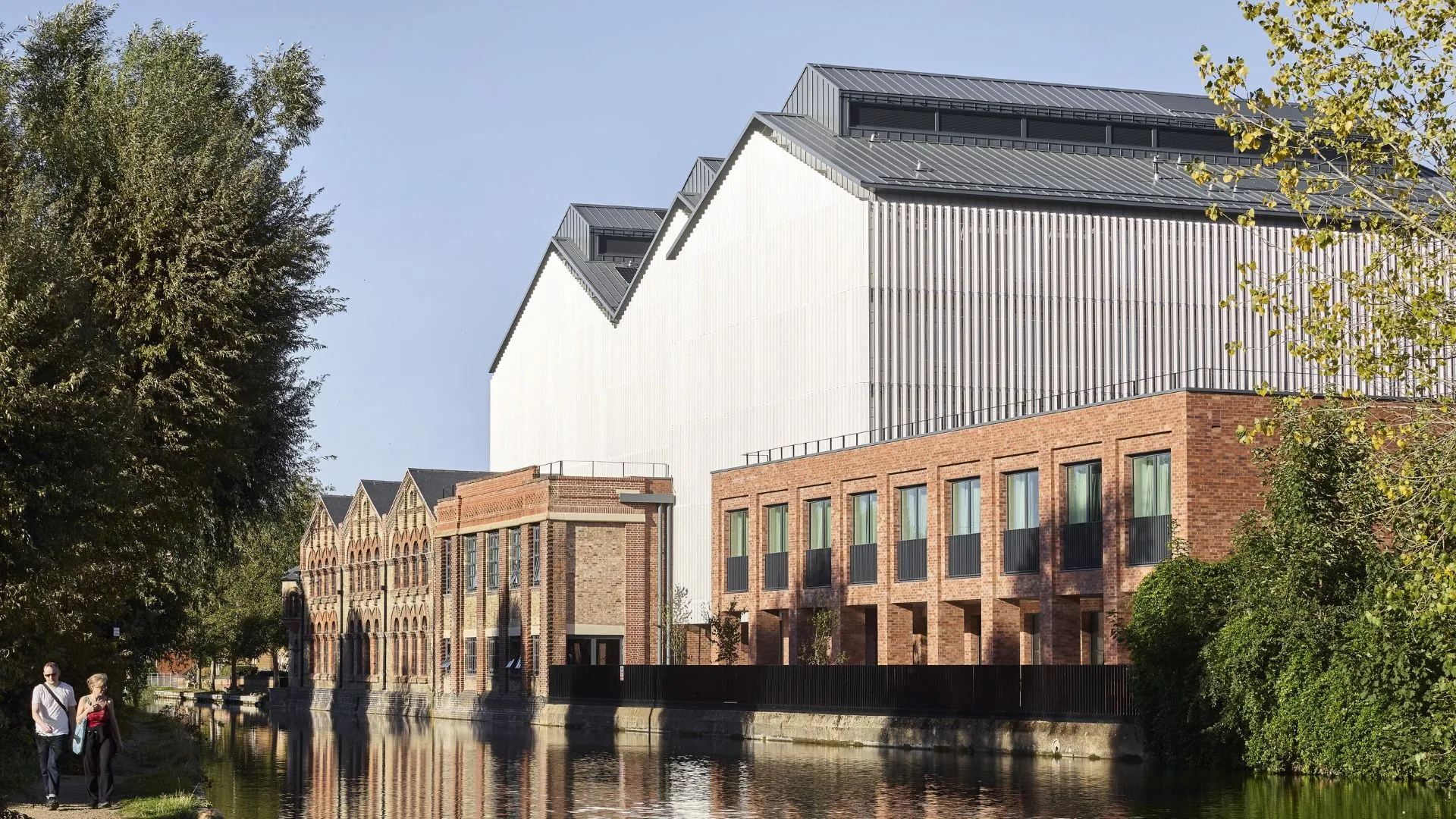
Oxford’s historic Osney Power Station has been transformed into a £70 million Global Leadership Centre for the University of Oxford’s Saïd Business School, bringing a major new executive education facility to the west of the city centre.
The centre, which has now opened, occupies the former power station on Arthur Street, a short walk from Oxford station and Saïd Business School’s main campus on Park End Street.
The project has converted one of Oxford’s notable surviving industrial buildings into a residential centre for executive education, with 120 bedrooms alongside teaching, meeting, dining and wellbeing facilities.
The redevelopment was designed by John McAslan + Partners, with a focus on retaining the character and industrial heritage of the former power station while adapting it for a new use.
Built in 1892, Osney Power Station supplied electricity to Oxford until it closed in 1968. The University subsequently acquired the building, which was used for a variety of purposes, including as a research laboratory for the Department of Engineering.
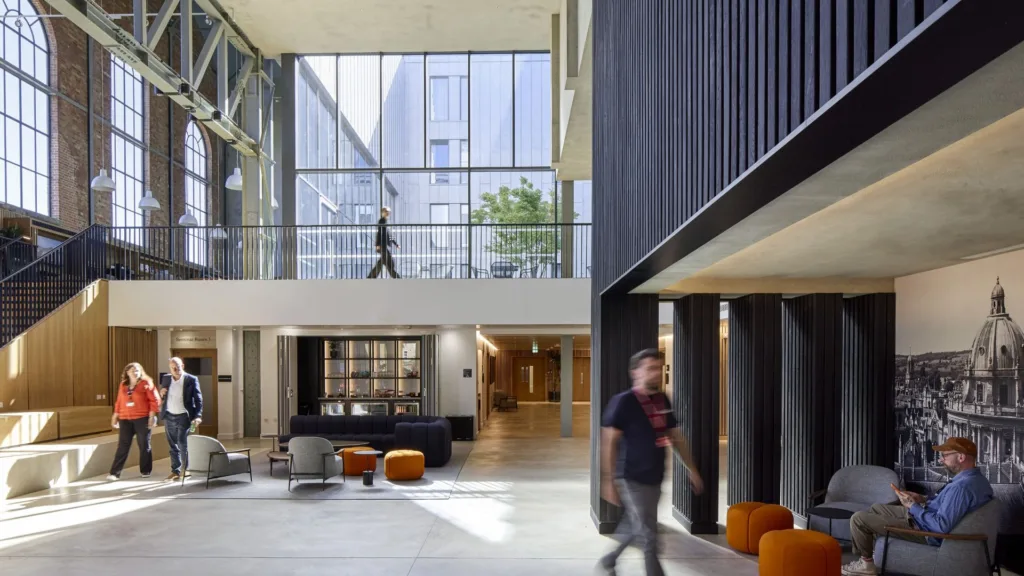
At the centre of the new building is a triple-height agora created within the former turbine hall. Original steel trusses, exposed brickwork and the building’s gantry crane have been retained, while new timber, glass and steel elements introduce classrooms, balconies, staircases and social spaces.
The redevelopment also incorporates a landscaped courtyard, library and three new floors of bedrooms within the former turbine sheds. New brickwork has been designed to reflect the colour and texture of the historic masonry, while perforated metal screening has been used around the upper accommodation.
The centre has four classrooms and 12 seminar rooms, together with open learning areas, a dining room, library, gym and riverside terrace. Teaching spaces can accommodate groups ranging from small seminars to larger sessions of around 70 people.
Professor Mette Morsing, dean of Saïd Business School, said the centre would provide a setting where business leaders could work with Oxford academics and one another away from their day-to-day responsibilities.
The project also places emphasis on energy efficiency. The redevelopment uses a fabric-first approach informed by Passivhaus principles, alongside photovoltaic panels, air-source heat pumps and upgraded insulation and airtightness.
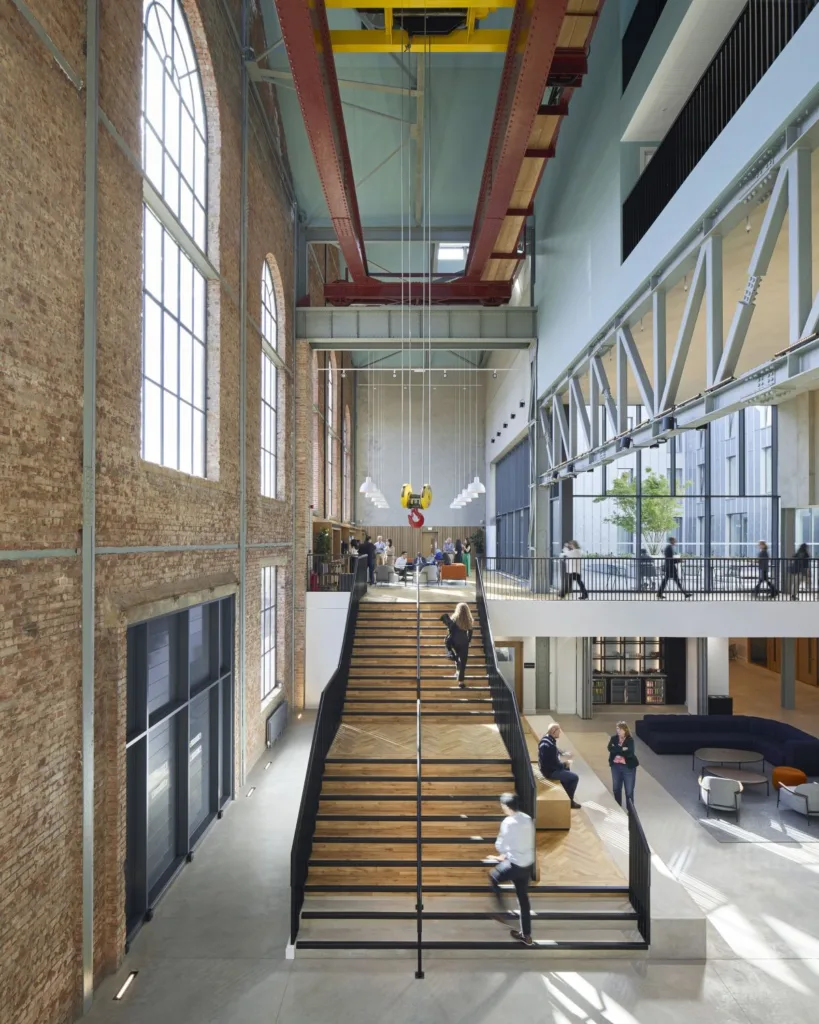
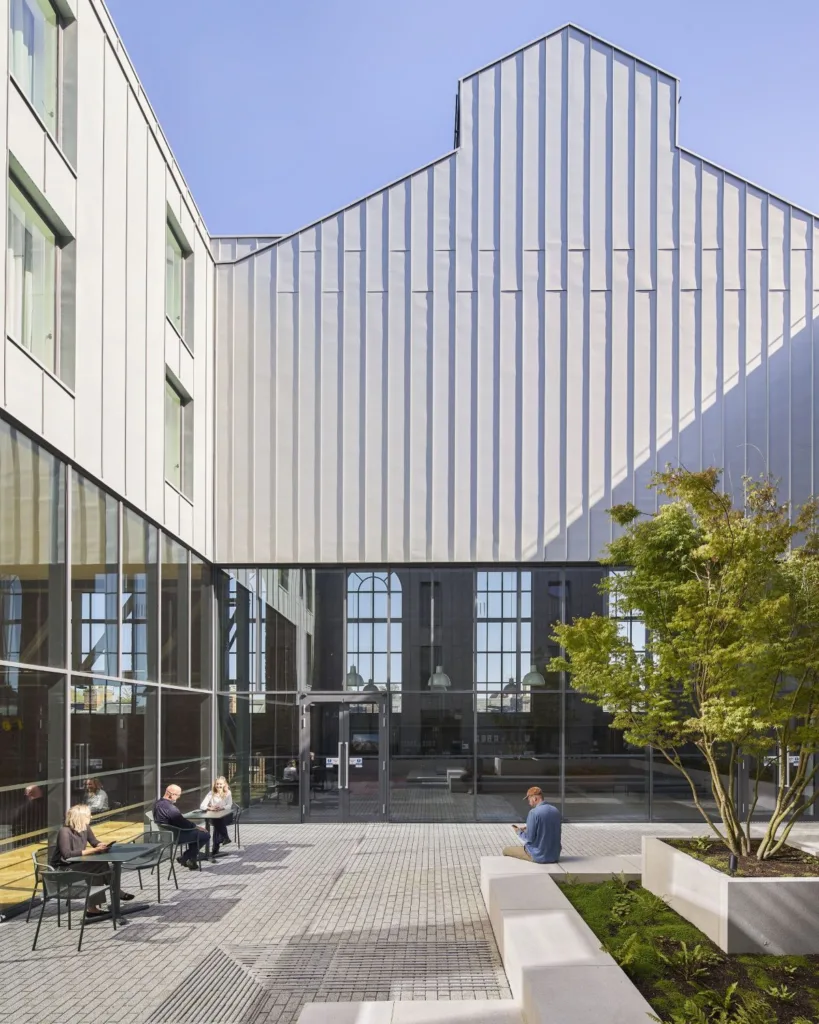
The decision to retain the historic structure was balanced against the building’s existing energy performance. According to the architects, energy modelling found that rebuilding the lightweight internal sheds would provide better long-term carbon performance than retaining their poorly performing fabric. The historic facades and the building’s principal industrial character have nevertheless been preserved.
Landscaping and green roofs form part of the wider scheme, while the architects say the surrounding public spaces are intended to strengthen the relationship between the centre and its residential setting.
John McAslan, founder and executive chairman of John McAslan + Partners, said the project was intended to retain the distinctive characteristics of the power station while creating a contemporary environment for learning and collaboration.
The Global Leadership Centre represents a significant new investment by Saïd Business School in its executive education activities and adds a new University destination to an area that has undergone substantial change in recent years.
For Oxford, however, the project also marks another chapter in the life of a building that has been part of the city’s infrastructure for more than 130 years — shifting from a power station serving the growing city to a centre intended to bring business leaders, academics and other organisations together.