A proposal for up to 150 new homes on agricultural land at Sandford-on-Thames has opened for consultation, with developers highlighting links to Oxford and the proposed reopening of the Cowley Branch Line.
Development proposed beside Oxford ring road
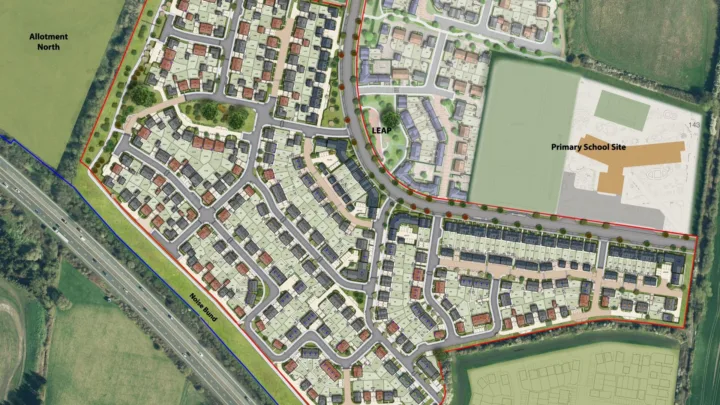
A riverside village on the southern edge of Oxford could see up to 150 new homes built under plans submitted to South Oxfordshire District Council.
The proposal, reference P26/S4098/O, covers a field at Sandford-on-Thames bordering the A4074 and close to Littlemore. The site is around 100 metres from the River Thames.
The planning statement describes the scheme as an opportunity to “create a new neighbourhood”, with housing accompanied by landscaping, open space and infrastructure.
The developers say the site is capable of accommodating up to 150 homes and argue that its location, while currently agricultural, is already influenced by surrounding urban infrastructure.
The design and access statement points to nearby residential development at St Nicholas Place and Heyford Hill Lane, as well as the A4074 and the Cowley Branch railway.
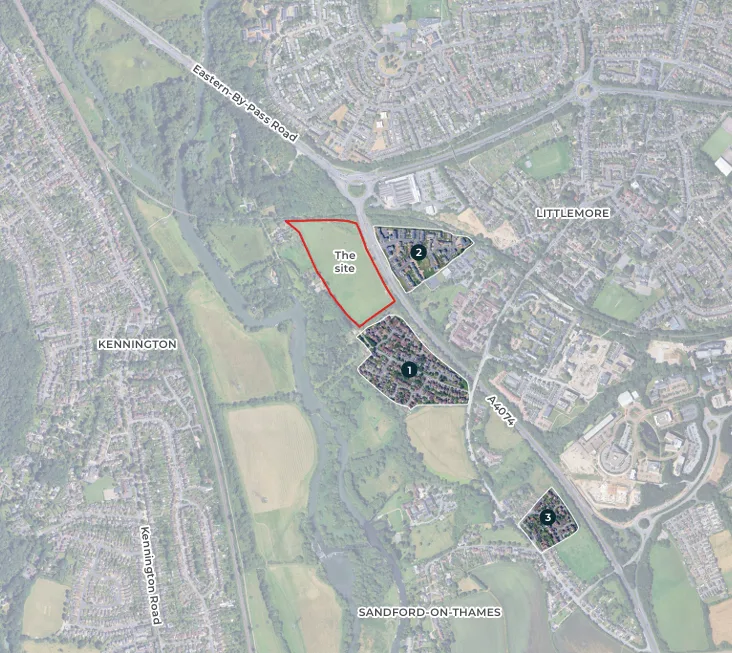
It also highlights access to Rose Hill, Littlemore, the Oxford Science Park and local employment and services.
A key part of the argument is the proposed Oxford Littlemore railway station, which would form part of the planned reopening of the Cowley Branch Line to passenger services.
The £175 million project is intended to reconnect the line with passenger services for the first time in around 60 years. It is also expected to support substantial housing growth along the route.
Questions over the railway link
The reference to the proposed station has drawn criticism from Independent Oxford Alliance councillor David Henwood, who represents Littlemore.
He described linking present or future planning applications to a station that does not yet exist as “speculative” and questioned the wider implications for agricultural land and development around Oxford.

The comments reflect a broader debate surrounding the Cowley Branch Line and the extent to which future transport infrastructure should be used to support new housing and employment development.
The proposed development’s design statement argues that the site is well connected to existing communities and employment opportunities and would reinforce what it describes as the existing settlement pattern rather than creating an isolated development.
The plans also acknowledge that the scheme would establish a new landscape edge for Sandford-on-Thames.
Landscape and flood measures
The application proposes retaining and enhancing existing trees, woodland belts and boundary vegetation, with native planting intended to create a stronger landscape framework around the development.
The plans also include integrated water basins, swales and rain gardens as part of the site’s drainage strategy.
The applicant says the site has a low flood risk and that the proposed landscape measures would strengthen green infrastructure while helping to integrate the new homes with the surrounding landscape.
Sandford-on-Thames has a distinctive setting between the southern edge of Oxford, the River Thames and agricultural land to the south.
The planning documents refer to the village’s historic relationship with the river, including Sandford Lock, former mill buildings, older cottages, inns and the church.
The proposed development would change the character of the village’s southern and eastern approaches, although the applicant argues that the site is not visually or geographically isolated because of the surrounding road, railway and existing development.
The application is now subject to consultation with South Oxfordshire District Council.
Developers Rainier Developments were contacted for comment.
Reporting contribution by Isabella Harris, Local Democracy Reporter (LDR) for Oxfordshire, covering local politics, council meetings and planning decisions across six councils in the county.