John Partridge has spent almost four decades inhabiting some of theatre’s most recognisable characters. Now, as The Silence of the Lambs comes to New Theatre Oxford, he is taking on one of the most indelible figures in modern popular culture — Hannibal Lecter — alongside Mollie Gallagher, making her professional stage debut as Clarice Starling.
We spent time with John and Mollie to explore the process of bringing these iconic characters to the stage, the complex relationship between them, the strange intimacy of performing behind glass and what happens when a cinematic classic is reimagined for the theatre.
There are roles for which an actor can draw upon a character’s established history, and there are those in which the history of the performance itself becomes part of the challenge. Hannibal Lecter belongs firmly in the latter category.
Since Anthony Hopkins’s Oscar-winning performance in the 1991 film adaptation of Thomas Harris’s The Silence of the Lambs, Lecter has become one of the most recognisable villains in popular culture: cultivated, articulate and unnervingly composed, his menace deriving as much from restraint as violence.
For John Partridge, who now takes the role in a major new stage adaptation, the problem was therefore not simply how to play Lecter, but how to make him his own.
“When I first heard about it being put on, I thought, ‘Ooh, that would be fantastic!’” he recalls. Ahead of his audition, Partridge was sent the script and asked to prepare two scenes. He enlisted his friend Tamzin Outhwaite to read with him; when she discovered what the material was, her reaction was immediate. “Oh my god!”
Partridge’s own reaction has proved rather more considered. He was a teenager when The Silence of the Lambs appeared in cinemas, part of the generation for whom Hopkins’s Lecter quickly became inseparable from the character itself. “I’m a child of the 70s, so when the film came out in 1991, I was one of those core Silence viewers,” he says. “It lives in our zeitgeist.”
That familiarity could easily become a constraint. Instead, Partridge found a way of using it as a starting point. He was intrigued to learn that Hopkins had drawn on such unexpected influences as Truman Capote, Katharine Hepburn and HAL from 2001: A Space Odyssey when constructing his Lecter. The revelation gave Partridge permission to undertake a similar act of imaginative disassembly.
“My three are Cary Grant, Elizabeth Taylor, and John Malkovich,” he says. “Lecter is intelligent, mocking and acerbic, but also serious and malevolent. Now, I try to forget any other version of Lecter and just put myself firmly in that cell.”
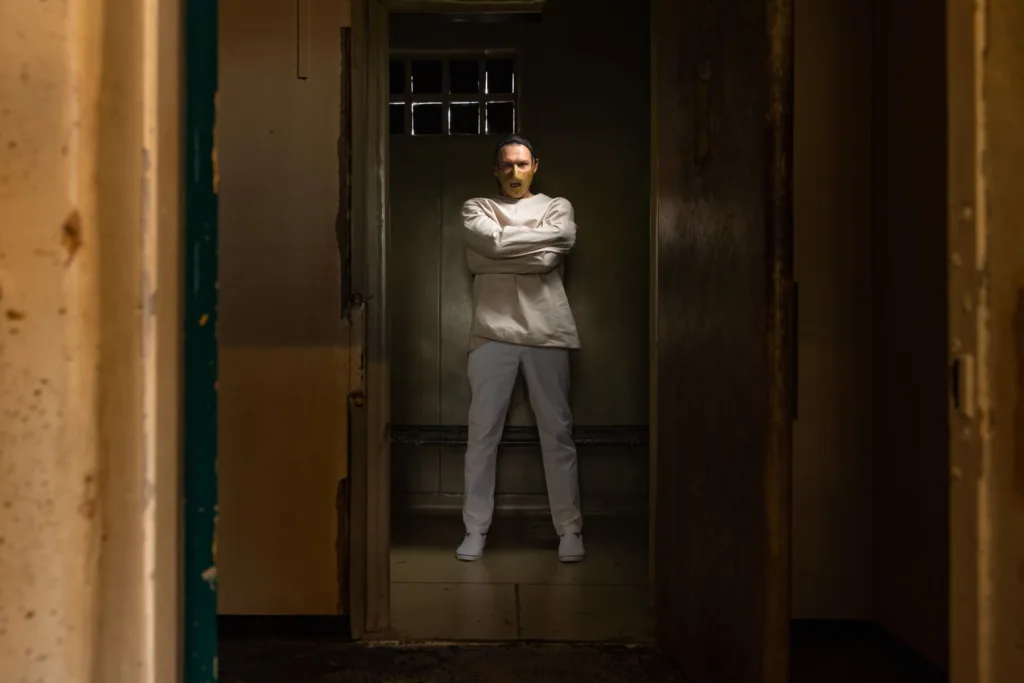
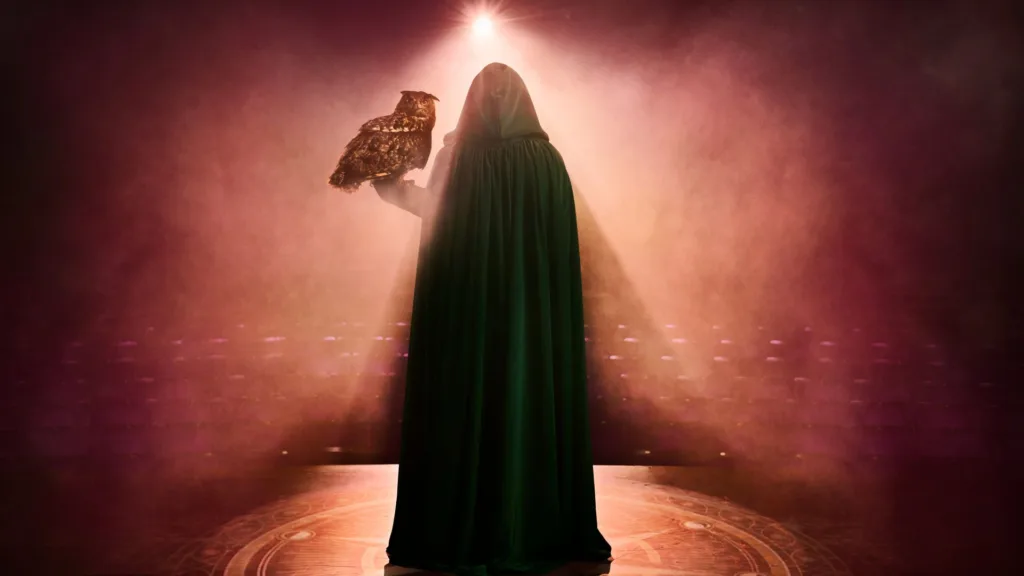
That cell is one of the defining features of the stage production. For much of the play, Lecter is physically confined behind glass, a visual image familiar from the story but transformed by the theatre’s particular relationship between actor and audience. Cinema can place the viewer wherever the director chooses; theatre leaves the audience in the room, sharing the same space and the same passage of time as the performers.
Partridge initially wondered how he could overcome the obvious theatrical limitation of placing his character inside a box. The answer, he says, was to stop thinking about projecting beyond it and instead draw the audience towards him.
“When I was first placed in the box, I thought, ‘Oh my goodness, how do I push my performance beyond it?’ Then I realised that rather than trying to push, I have to pull the audience into the box.”
It is an approach that also reveals something about Partridge’s interpretation of Lecter. The character is not merely a monster imprisoned for the protection of others; he is a man who considers himself intellectually and aesthetically superior to the people who have confined him. He loves music and art, possesses considerable social grace and remains capable of exquisite courtesy even while discussing acts of extraordinary brutality. His physical confinement therefore becomes part of the psychological contest.
The stillness required of him is also a significant departure for an actor whose career has frequently involved expansive physical and vocal performances. Partridge trained in ballet at the Royal Ballet School before studying musical theatre, and at 16 joined the original UK tour of Andrew Lloyd Webber’s Cats. His subsequent stage career has encompassed A Chorus Line, Grease, Starlight Express, Tommy, Cabaret and Everybody’s Talking About Jamie, alongside television work that includes his long-running role as Christian Clarke in EastEnders.
“Lots of the roles I’m known for are quite gregarious,” he says. “I’ve played a lot of larger-than-life characters. Lecter is larger-than-life, but it’s very, very different.”
At 55, Partridge sees the role as an opportunity to draw together experiences accumulated over a long career rather than discard them in favour of something entirely new. “If you’re lucky enough to be in this business for a long time — I’m 55 now, I went into Cats when I was 16 — parts like this come along where you can roll up everything you’ve done, and colour with all the crayons in your colouring box.”
His dance training has consequently become part of the performance in a more restrained form. Lecter’s movements are economical, but they are not without precision; the physical discipline of ballet can be repurposed as control. “I can use my dance background, my physicality, in a new way to inhabit Lecter,” Partridge says, while drawing on “the actor I am now, with all my experience” to bring him to life.
If Lecter is defined by his control, Clarice Starling enters the story having to learn how to establish her own authority. Mollie Gallagher, best known for playing Nina Lucas in Coronation Street, makes her professional theatre debut as the FBI trainee whose investigation brings her into Lecter’s orbit.
For Gallagher, the role carries its own cultural weight. She has always loved the film, and the character of Clarice was familiar long before she was asked to play her. “She’s such an iconic heroine,” she says. “You can’t get much cooler than Clarice. She’s a badass.”
Yet Gallagher has deliberately avoided simply reproducing Jodie Foster’s performance. Her preparation has involved changing the way she holds herself and speaks. Clarice’s voice sits lower, her physicality is more grounded, and her movements are more deliberate.
“I’m quite airy, whereas Clarice is the complete opposite,” Gallagher says. “She’s grounded at all times.”
The transformation has extended beyond technique. Gallagher describes Clarice as highly intelligent, articulate and psychologically disciplined, qualities that require her to move beyond the instincts she associates with herself. “Weirdly, she makes me feel stronger and more confident. Now, in any situation in life, I can just think, ‘What would Clarice do?’”
There is, however, a personal point of connection. Clarice is an outsider within the FBI, a woman from West Virginia who has not inherited the wealth, status or institutional authority surrounding her. Gallagher identifies with the character’s working-class origins and with the experience of having to establish credibility in environments where she feels she is being judged before she has spoken.
“I feel like I have to prove myself every day — coming from my background and also being northern,” she says. “When I’m speaking to someone, I feel I have to articulate more to make them listen to me — basically speak a bit more ‘proper’.”
That understanding gives the central relationship a particular texture. Clarice is not simply the investigator seeking information from an imprisoned killer. She is also someone who has spent much of her life learning how to be taken seriously, now confronting a man who seems almost unnervingly capable of seeing through the carefully constructed version of herself she presents to the world.
Gallagher describes her conversations with Lecter as the point at which Clarice becomes most vulnerable. Her history, particularly the death of her father, is something she rarely discusses, yet Lecter draws it out of her. “No matter how powerful, smart and strong you are, that is really scary,” she says.
The relationship therefore develops into something more complicated than the conventional opposition between detective and criminal. Gallagher describes an unusual friendship emerging between the two, with Lecter becoming something like a confidant and therapist for Clarice even as she remains determined to extract information from him. By the end, she suggests, there is a sense of loss when that relationship disappears.
For Partridge, the theatrical potential of that exchange is almost musical. “It’s inherently theatrical. It’s like a dance: I invite her to dance with me.” He describes the scenes between Lecter and Clarice as “a tight tennis match”, with each character attempting to anticipate the other’s next move.
The chemistry between the two actors appears to have developed quickly. Gallagher says that from the first read-through they could look at one another and immediately find the connection. Partridge describes her as an instinctive actor, noting that she, like him, did not follow the conventional route into drama training. Gallagher’s first professional theatre role is therefore opposite an actor with decades of stage experience, yet she says Partridge has made the process unusually easy.
“He’s amazing — I couldn’t ask for anyone better to do this with,” she says. “He is the loveliest man, and then he summons this darkness. Sometimes we’ll be chatting, and he’ll do this look, and I’ll be like, ‘Oh no, Hannibal’s here!’”
The production’s adaptation by Gina Gionfriddo is equally important to that dynamic. Rather than attempting to reproduce the film scene by scene, the playwright has created a version for the stage that combines Harris’s material with new writing. Partridge believes the two elements have been integrated almost invisibly. “She’s managed to weave her words in with Thomas Harris so seamlessly — it’s as if Buffalo Bill has stitched it together himself.”
That theatrical reinvention extends to some of the story’s more problematic elements. The production has changed Buffalo Bill’s treatment of gender identity from the original novel and film, removing the implication that a transgender identity itself is connected to the character’s violence. Partridge says the decision was important to the production’s contemporary perspective.
“We do not need to be villainising our trans brothers and sisters in that way,” he says. “Our story is much stronger for the changes we’ve made.”
The production also retains the story’s interest in behavioural science and criminal profiling, which occupies an intriguing position within its 1980s setting. The detectives who believe that violent offenders can be understood through their psychology are treated with scepticism, while Lecter dismisses profiling as a form of “junk science”. Yet the investigation depends upon precisely the kind of psychological understanding that the established authorities are reluctant to embrace.
For Partridge, the emergence of behavioural science is one of the story’s most interesting elements. “That science changed the world,” he says. “Profiling, understanding the mind of a killer, was a game-changer.”
The broader social context is also something Partridge has considered closely. He points to the production’s depiction of attitudes towards women, policing and gender during the 1980s, and draws connections to contemporary debates around misogyny, gender equality and the rights of LGBT people. These are his interpretations of the themes rather than a claim that the historical and contemporary contexts are identical, but they illustrate why the production is not being approached simply as a nostalgic recreation of a celebrated film.
For Gallagher, the enduring appeal is more direct. She is a committed fan of horror and thrillers, and says that when she was younger, “horror, horror, horror” was always her answer when asked what she wanted to perform. The opportunity to originate Clarice on stage therefore combines a character she has admired with the genre she already loves.
It also arrives at a moment when theatre audiences have shown an appetite for adapting familiar cinematic thrillers for live performance. Partridge sees The Silence of the Lambs as occupying a distinctive place within that trend.
“It’s the godfather of them all — the holy grail of psychological thrillers,” he says.
Whether that reputation can survive the transition from screen to stage is ultimately something the audience has to decide. The production’s task is not to compete with the film on its own terms, but to exploit what theatre can do differently: the proximity, the shared silence, the absence of an edit and the knowledge that the actors are performing the encounter in front of you, night after night.
That becomes particularly significant when the central figure is a character whose power has always depended on the sensation that he is studying the person watching him.
When The Silence of the Lambs arrives at New Theatre Oxford, John Partridge will once again enter Lecter’s glass cell. Mollie Gallagher will sit opposite him as Clarice Starling, bringing a character she has admired from the screen into an entirely different medium.
For Partridge, the attraction of the role may ultimately be its contradiction. Lecter has been seen before by millions, yet the theatre offers the possibility of seeing him anew — not through the camera’s eye, but at close range, in real time, with the audience sharing the same room.
The question is no longer simply what Lecter will do next. It is what happens when the audience is close enough to watch him think.
The Silence of the Lambs comes to New Theatre Oxford from 19 to 24 October 2026.
Behind the scenes with John Partridge and Mollie Gallagher
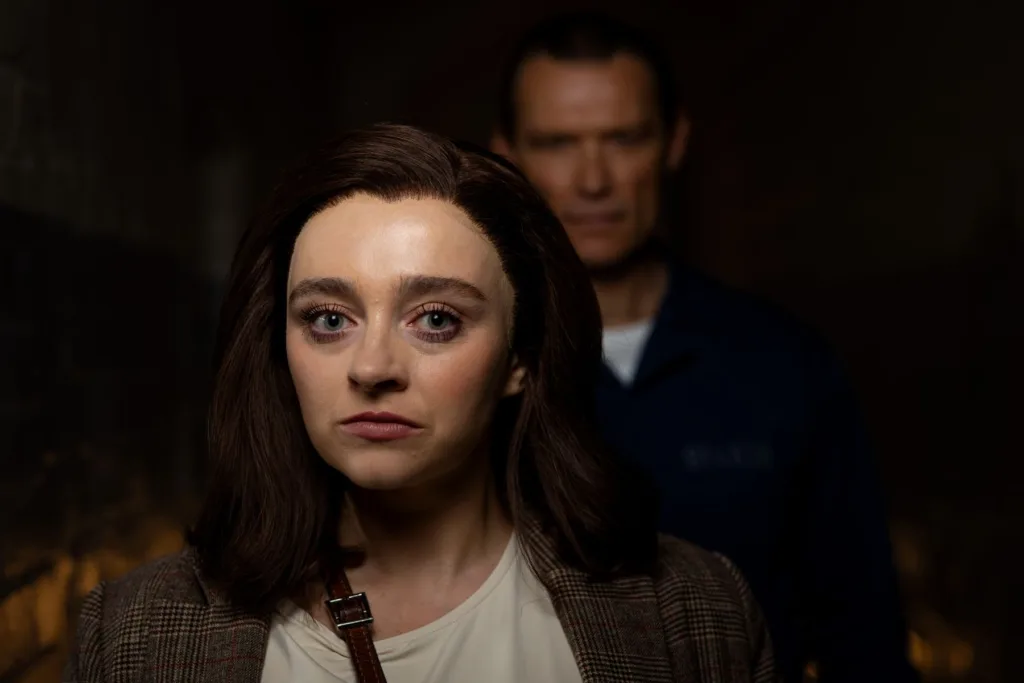
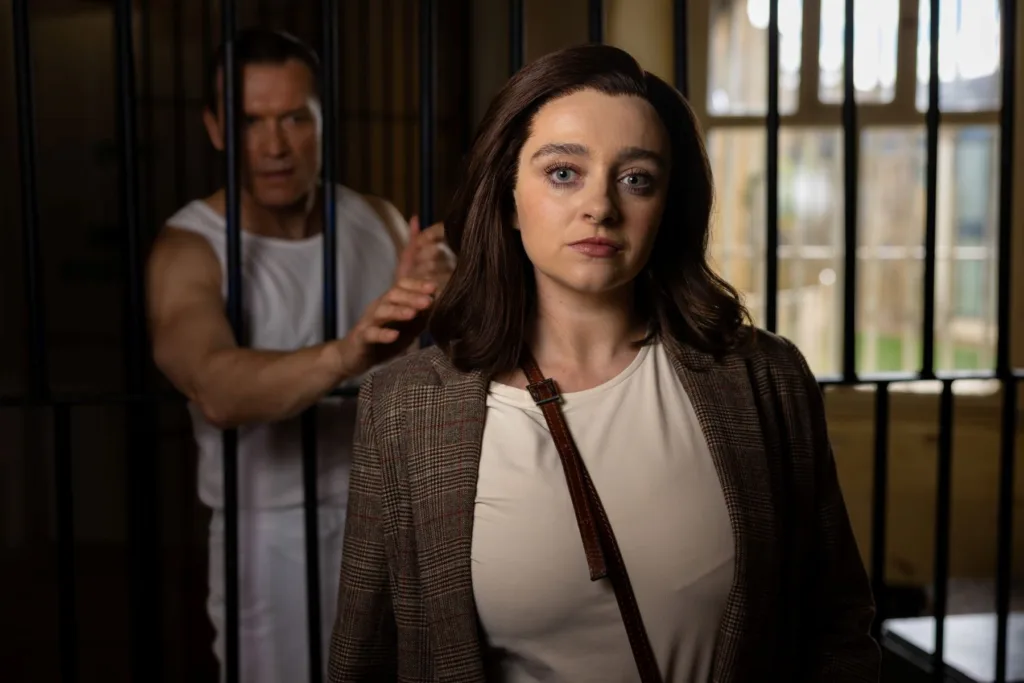
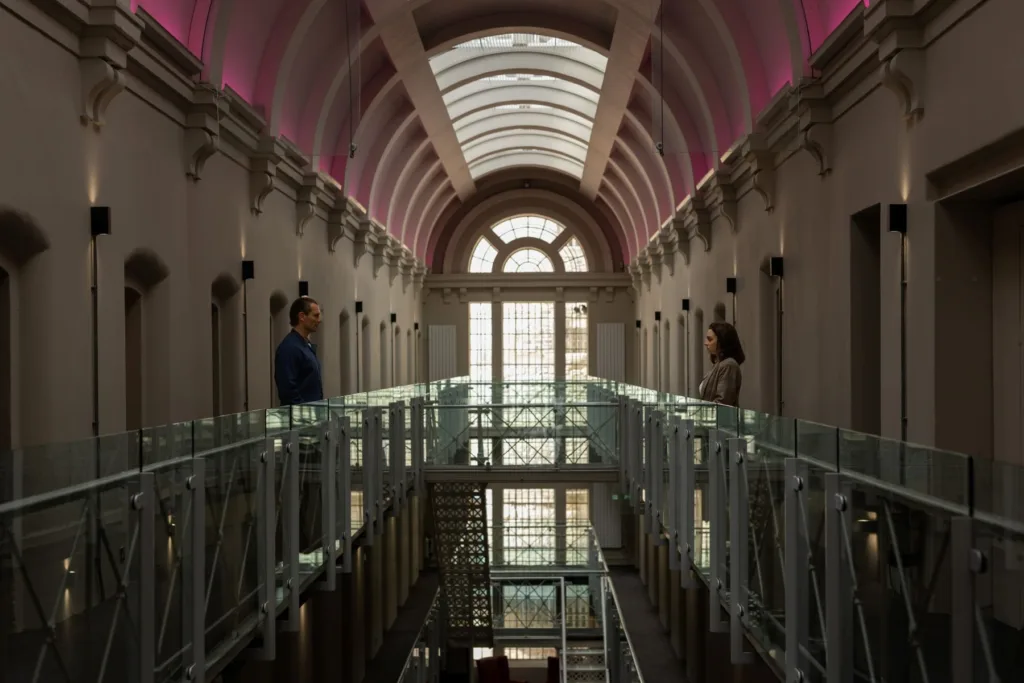
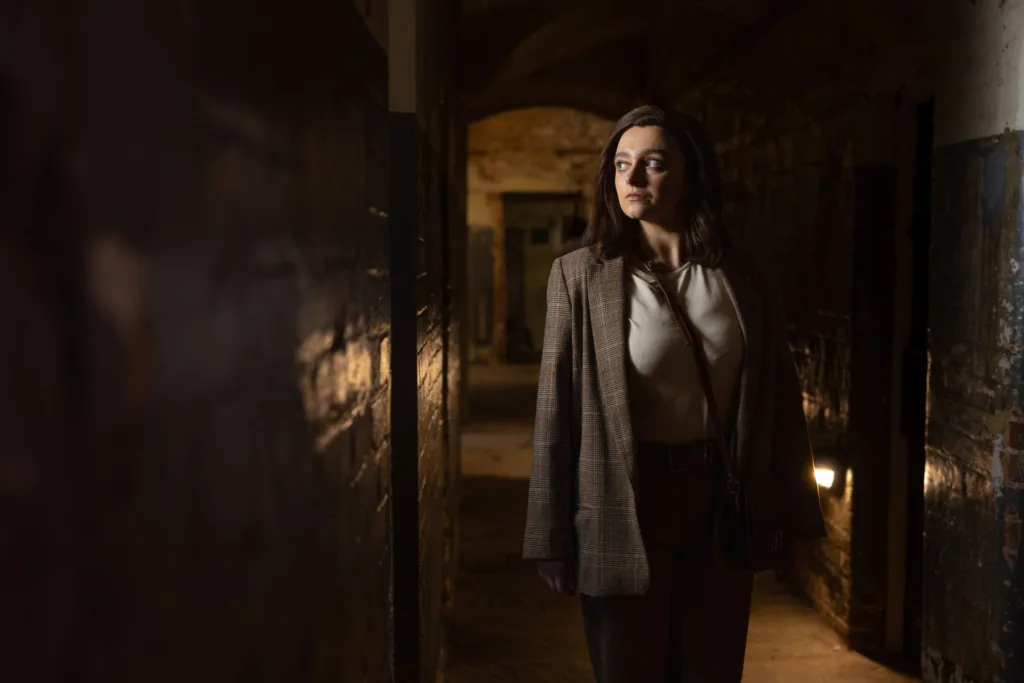
Our time with John and Mollie also took us behind the scenes of a promotional photocall at Oxford Castle Prison, where the historic setting provided an atmospheric backdrop for the production.
From the conversation to the photographs, it was an opportunity to meet the actors behind Lecter and Clarice before they take their places on the New Theatre Oxford stage.
Gallery
Click to enlarge