A new map for Oxfordshire: who will shape the region’s future?
Oxfordshire is facing one of the most significant changes to its local government structure in a generation. Seven existing councils are expected to be replaced by three larger unitary authorities, while a new mayoral authority could bring Oxfordshire together with Berkshire and Swindon under a directly elected regional mayor.
The two proposals, announced by the Government on consecutive days, are connected by a common ambition: to change how decisions are made, how public services are organised and how local areas plan for their future. But they also introduce different layers of government, with different responsibilities and geographical reach. One will reshape the councils closest to residents; the other could establish a new regional voice with powers over issues such as transport, housing, infrastructure and economic development.
For Oxford and the surrounding communities, the implications extend beyond administrative boundaries. The changes raise questions about where decisions will be taken, whose interests will carry weight and how local priorities will be balanced against wider regional ambitions.
A different kind of local government
The Government’s minded-to decision proposes replacing Oxfordshire’s county council and five district councils, together with West Berkshire Council, with three unitary authorities. These would be Greater Oxford, North Oxfordshire and Ridgeway.
Greater Oxford would encompass the city and its immediate surroundings. North Oxfordshire would bring together most of the existing Cherwell and West Oxfordshire districts, while Ridgeway would combine most of South Oxfordshire and the Vale of White Horse with West Berkshire.
The intention is to replace the current two-tier arrangement in Oxfordshire, where responsibilities are divided between the county and district councils, with a single authority in each area. Services and functions currently split between different councils would sit within one organisation, changing the way decisions are made and how residents engage with local government.
The proposed structure is a substantial departure from the familiar map of Oxfordshire. It also raises a broader question about what makes a council local. Larger authorities may bring together services and resources across wider areas, but will they retain a sufficiently close understanding of the distinct communities they represent? And how will the priorities of a city, its surrounding towns and its rural communities be reconciled within the same organisation?
Who will shape Oxford’s future?
The creation of Greater Oxford is particularly significant because it brings the city and its immediate surroundings into a new political and administrative framework. Decisions about housing, planning, transport, public services and economic development will be made within an authority whose boundaries extend beyond those of the existing city council.

That creates an opportunity to consider Oxford and its neighbouring communities as a more connected place. Housing needs, employment, transport networks and infrastructure do not stop at the city boundary, and the new authority could provide a different basis for planning across those relationships. At the same time, it will need to balance the needs of communities that may have different expectations about development, investment and the character of the places in which they live.
The question of influence within Greater Oxford is also worth considering. The University of Oxford and its colleges are among the largest and most economically significant institutions in the city, with a substantial presence in employment, research, property and the wider development of Oxford. Their activities inevitably intersect with decisions about land, housing, transport and infrastructure, whether or not they are directly involved in the political process.
The issue is not simply whether the University seeks to influence the city’s future. An institution can be the largest organisation in a region, with considerable economic significance, without necessarily taking an active role in shaping its development. But its scale and position may still affect how its interests are perceived and how much weight they carry in discussions about the city. As Greater Oxford takes shape, how will the priorities of major institutions be balanced against those of residents, smaller businesses and other organisations? And what should a fair balance look like in a city where the interests of so many different groups overlap?
Will a simpler structure mean better services?
One of the central arguments behind local government reorganisation is that a single council can make it easier to coordinate services, reduce duplication and provide clearer accountability. Instead of navigating separate county and district responsibilities, residents would deal with one authority for the services it provides.
But changing the structure of local government does not, by itself, determine the quality or cost of those services. Bringing organisations together involves significant work: systems, staff, budgets, property, contracts and responsibilities all have to be aligned. The transition will require resources, while the longer-term financial position of the new authorities will depend on how effectively they manage their responsibilities and the pressures facing local government.
There are also questions about the distribution of resources across the new areas. Oxford, with its particular housing pressures, economic profile and public service needs, will sit alongside communities with different circumstances and priorities. How will funding and investment be allocated? Will a larger authority be better placed to address inequalities between communities, or could some areas find their concerns less visible within a wider organisation?
The practical test will ultimately be what residents experience: whether services become easier to access, whether decisions are more coherent and whether the new arrangements can respond to local needs. Those outcomes will take time to establish, and the case for reorganisation will be judged as much by how the new councils operate as by the boundaries drawn around them.
A new regional power centre
Alongside the changes to local councils, the Government has announced that plans for a Mayoral Strategic Authority covering Oxfordshire, Berkshire and Swindon will progress. The proposed authority would be led by a directly elected mayor, with the potential to take on responsibilities and funding in areas including transport, housing, infrastructure, skills and economic growth.
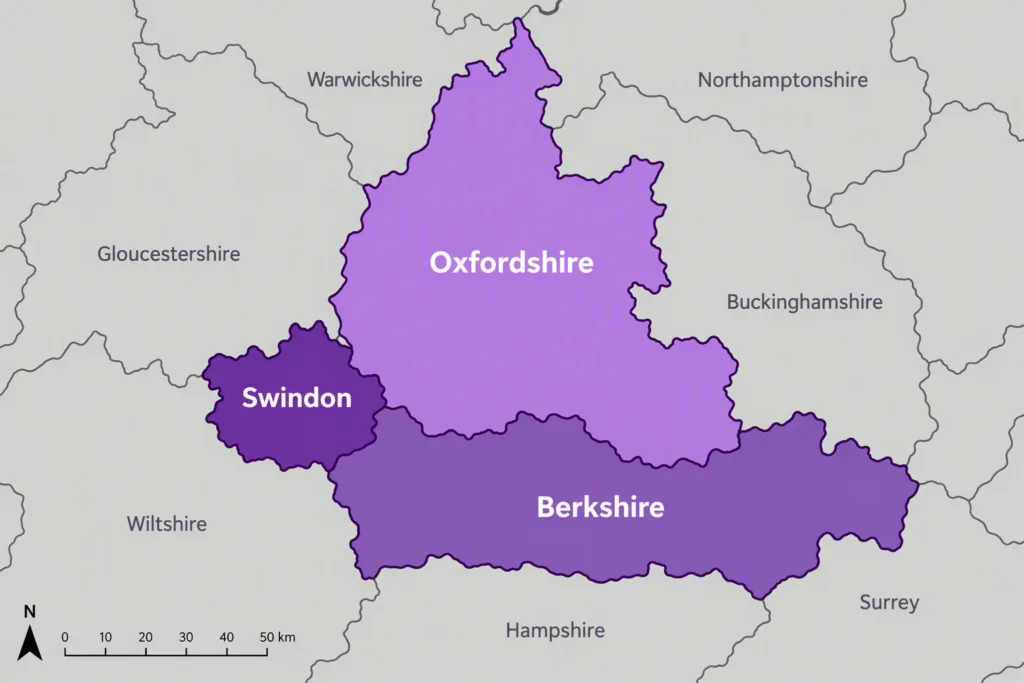
The proposed geography is striking. It brings together places with established economic, transport and employment connections, but also with distinct identities and local priorities. Oxford would become part of a wider regional area extending west and south, creating a new level of decision-making beyond the proposed unitary councils.
A mayor could provide a recognisable regional figure with a mandate to represent the area and negotiate with central government. The authority could also offer a way to coordinate decisions on issues that cross council boundaries, particularly transport and infrastructure. But the precise powers, resources and responsibilities have yet to be settled, and the extent of the mayor’s influence will depend on the arrangements eventually agreed.
Read more: Plans for elected Thames Valley mayor move forward amid council leaders’ support and concerns
For Oxford, the question is how its interests would be represented within a region that includes larger towns, other cities and communities with different economic priorities. Would the city’s role as a centre for education, research, employment and tourism give it a distinctive voice, or would its priorities have to compete with those of a much wider area? And how would the regional mayor’s agenda relate to the decisions made by Greater Oxford and the other new councils?
What happens to local democracy?
The proposals would change not only the structure of local government but also the relationship between residents and the people making decisions on their behalf. Larger authorities may create clearer lines of responsibility, but they also cover more people and a wider range of communities. The way councillors are elected, how local representation is organised and how residents can influence decisions will therefore matter considerably.
The proposed timetable envisages elections for shadow authorities in May 2028, ahead of the new councils formally taking over on 1 April 2029. Mayoral elections are also anticipated in 2028. For residents, this means a period in which the familiar councils will continue to operate while the institutions that replace them are being established.
The transition raises questions about accountability at both local and regional levels. How accessible will councillors be within larger authorities? Will residents know which body is responsible for a particular decision, particularly where responsibilities are shared between the unitary councils and the mayoral authority? And what opportunities will communities have to shape the priorities of the new organisations before they become fully operational?
These are not simply questions of administrative design. They go to the heart of what residents expect from local democracy: proximity, representation, transparency and the ability to influence decisions that affect everyday life.
Is this the end of the debate?
Although the Government has indicated its preferred structure for the new councils, the proposals are not yet the end of the process. Further decisions will be needed on boundaries, governance, representation, finances and the practical arrangements for transferring responsibilities. The mayoral authority is also at an earlier stage, with its detailed powers and operating arrangements still to be developed.
The next few years will therefore involve more than preparing organisations for a changeover date. They will shape how the new authorities work, how they relate to one another and how effectively they represent the communities within their boundaries.
For Oxfordshire, the changes offer a moment to reconsider how the region is governed and how its future is planned. They also invite a wider conversation about the relationship between the city and its surrounding communities, the balance between local and regional priorities, and the influence of the institutions and organisations that contribute so much to the area.
The boundaries may be drawn by government, but the character and priorities of the new authorities will depend on the decisions made within them. What should Oxford and Oxfordshire expect from this new map of local government — and what do residents want it to deliver?
Read more: Ongoing coverage of the local government devolution proposals