- This event has passed.
Candyman: Double Feature
29 May @ 6.00pm

About Candyman: Double Feature
Candyman (Bernard Rose, 1992) and Candyman (Nia DaCosta, 2021) are presented together in a double feature tracing the evolution of one of contemporary horror’s most enduring urban legends.
The first film follows a graduate student who, while researching urban myths, inadvertently summons the Candyman — a supernatural killer whose origins are deeply entangled with the history of Chicago’s Cabrini-Green housing project.
The second reimagines the legend for a new generation, following an artist whose growing obsession uncovers the continuing legacy of violence, trauma, and systemic inequality within the same community.
Screened together as part of Black Horror in “Post-Racial” America: Fear on Film After Obama through Trump 2.0, the pair reveals how the Candyman myth shifts across time while remaining rooted in questions of race, memory, and social injustice.
Watch the trailers
Candyman 1992
Candyman 2021
Tickets
Please see important booking information below.
Booking information
Times:
The reading is expected to finish at approximately 9.30pm, followed by a Q&A.
Running time:
3 hours 30 minutes
Age guidance:
18+
Language:
English
Content warnings:
Discrimination, language, sex, sexual violence, threat and horror, violence.
About Schwarzman Centre for the Humanities
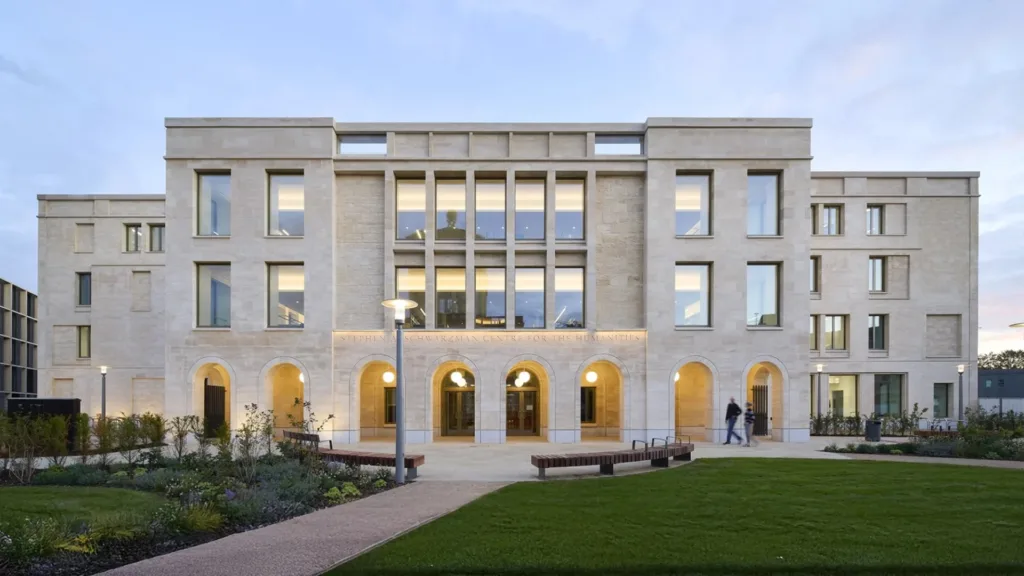
Schwarzman Centre for the Humanities is a major new cultural and academic landmark for the University of Oxford, bringing together seven humanities faculties with performance, exhibition, and public engagement spaces under one roof. Located in the Radcliffe Observatory Quarter, it is designed to foster interdisciplinary collaboration while opening the humanities to a wider public through events, performances, and year-round programming.
At its heart are world-class venues including a concert hall, theatre, cinema, recital spaces, and galleries, supported by flexible teaching and meeting facilities. A central atrium acts as a social hub, blending academic life with informal gathering spaces, cafés, and exhibitions. More than a university facility, the Centre functions as a civic cultural destination, connecting scholarship with creative practice and strengthening Oxford’s wider cultural life.