St John’s International Piano Series: Angela Hewitt

About St John’s International Piano Series: Angela Hewitt
Ludwig van Beethoven
Sonata for Piano no.19 in G minor, op.49, no.1
Sonata for Piano no. 20 in G major, op.49, no.2
Sonata for Piano no.17 in D minor, op.31, no.2 ‘The Tempest’
Interval
Sonata for Piano no.8 in C minor, op.13 ‘Pathétique’
Sonata for Piano no.31 in A-flat major, op.110
Beethoven composed thirty-two sonatas for the piano and Angela Hewitt has recorded them all in nine critically acclaimed albums. She has also given celebrated performances around the world.
Tonight’s selection captures Beethoven across his career. Two short but charming early compositions (they were published a decade after they were written); passion and drama in the iconic ‘Pathétique’; ‘The Tempest’ as he came to terms with his deafness, and finally op.110, the penultimate piano sonata.
If Beethoven was ever at peace with the world, it is perhaps at the end of this sonata.
Angela Hewitt has given many wonderful concerts in the Series, first at SJE Arts and latterly at St John’s College. It is a thrill to be able to present her in the new Sohmen Concert Hall.
Tickets
Please see important booking information below.
Booking information
Ticket prices:
From £14.50 to £49.00
All orders will be subject to a per transaction booking fee of £1.50
Dates & times:
Sunday 16 May 2027 at 6.00pm
Doors open at 5.30pm
Running time:
2 hours including an interval
Good to know:
Buying a season ticket (top three price bands only). Buy a ticket for every concert in the series, within the same transaction, to benefit from a 20% discount. This allows you to choose the seats you prefer for each concert.
About Schwarzman Centre for the Humanities
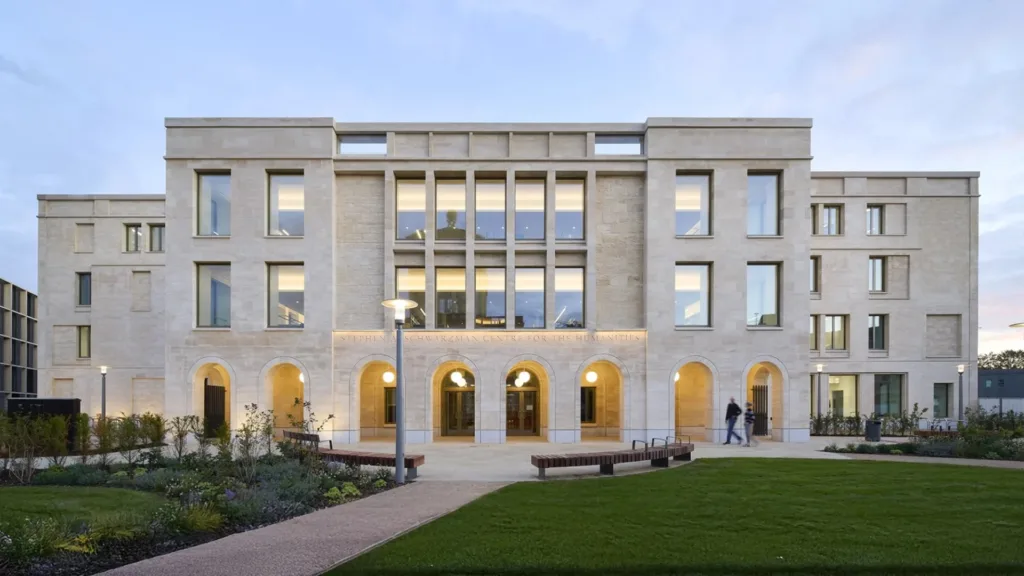
Schwarzman Centre for the Humanities is a major new cultural and academic landmark for the University of Oxford, bringing together seven humanities faculties with performance, exhibition, and public engagement spaces under one roof. Located in the Radcliffe Observatory Quarter, it is designed to foster interdisciplinary collaboration while opening the humanities to a wider public through events, performances, and year-round programming.
At its heart are world-class venues including a concert hall, theatre, cinema, recital spaces, and galleries, supported by flexible teaching and meeting facilities. A central atrium acts as a social hub, blending academic life with informal gathering spaces, cafés, and exhibitions. More than a university facility, the Centre functions as a civic cultural destination, connecting scholarship with creative practice and strengthening Oxford’s wider cultural life.