St John’s International Piano Series: Paul Lewis

About St John’s International Piano Series: Paul Lewis
Wolfgang Amadeus Mozart Piano Sonata no.6 in D major K284
Felix Mendelssohn Variations sérieuses, Op.54
Interval
Aaron Copland Piano Variations (1930)
Wolfgang Amadeus Mozart Piano Sonata no. 11 in A major K331
Internationally acclaimed for his Beethoven Cycle and for his Schubert Series, Paul Lewis has turned his attention to Mozart with a Mozart + world tour.
“For many years I’ve wanted to spend some time focusing on Mozart’s piano sonatas and have long felt sceptical of the broadly held view that these remarkable works are the poor siblings of his piano concertos….” Paul Lewis
Paul Lewis reveals the sonatas as compositions of extraordinary vitality, imagination and originality. He also shows their legacy by seeking out composers who down the centuries have picked up the threads. Last year, in the first instalment of Mozart +, Paul paired piano sonatas no.10 and no.14 with pieces by Poulenc and Debussy.
Tonight he programmes piano sonatas nos.6 and 11 alongside seminal sets of variations by Felix Mendelssohn and Aaron Copland.
Tickets
Please see important booking information below.
Booking information
Ticket prices:
From £14.50 to £49.00
All orders will be subject to a per transaction booking fee of £1.50
Dates & times:
Thursday 11 February 2027 at 7.30pm
Running time:
2 hours including an interval
Good to know:
Buying a season ticket (top three price bands only). Buy a ticket for every concert in the series, within the same transaction, to benefit from a 20% discount. This allows you to choose the seats you prefer for each concert.
About Schwarzman Centre for the Humanities
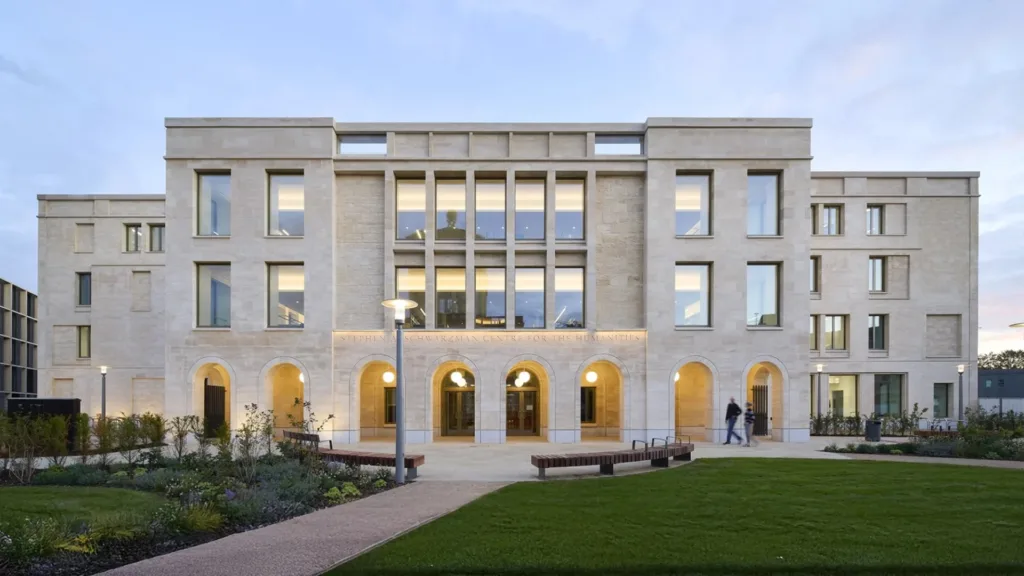
Schwarzman Centre for the Humanities is a major new cultural and academic landmark for the University of Oxford, bringing together seven humanities faculties with performance, exhibition, and public engagement spaces under one roof. Located in the Radcliffe Observatory Quarter, it is designed to foster interdisciplinary collaboration while opening the humanities to a wider public through events, performances, and year-round programming.
At its heart are world-class venues including a concert hall, theatre, cinema, recital spaces, and galleries, supported by flexible teaching and meeting facilities. A central atrium acts as a social hub, blending academic life with informal gathering spaces, cafés, and exhibitions. More than a university facility, the Centre functions as a civic cultural destination, connecting scholarship with creative practice and strengthening Oxford’s wider cultural life.