Each year, the International Booker Prize shines a spotlight on stories that cross borders, languages and cultures. Yet among the six shortlisted books that competed for the 2026 prize, one stood apart for its ambition, originality and literary ingenuity.
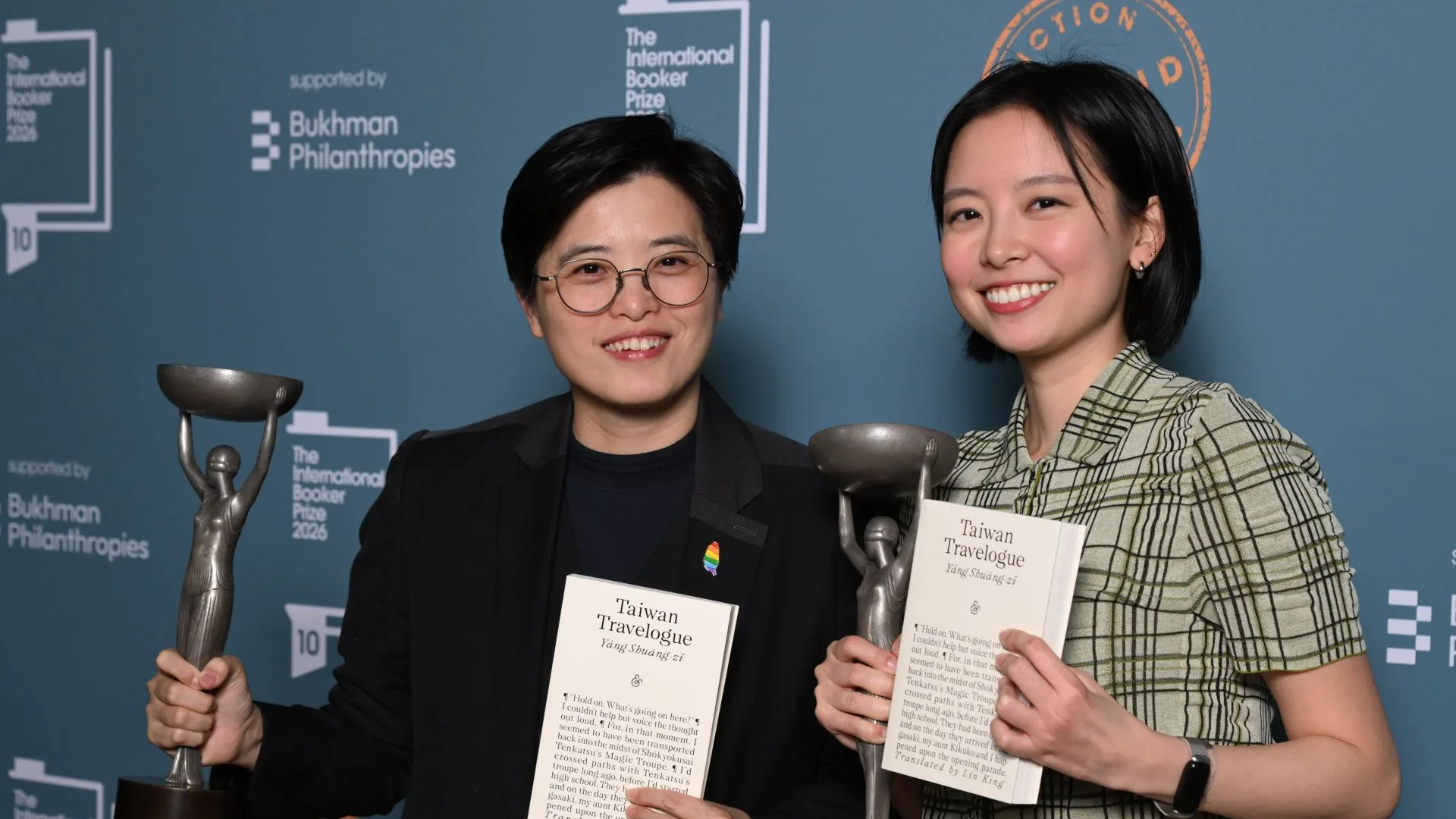
Taiwan Travelogue by Yáng Shuāng-zǐ, translated into English by Lin King, has become the first work translated from Taiwanese Mandarin to win the International Booker Prize, marking a landmark moment not only for Taiwanese literature but also for readers seeking stories that challenge conventional narratives of history and identity.
Announced as the winner at a ceremony held at London’s Tate Modern, the novel impressed a judging panel chaired by acclaimed novelist Natasha Brown. It was selected from a shortlist representing some of the most accomplished translated fiction published in English over the previous year.
Discover more: International Booker Prize 2026 shortlist
Yet to describe Taiwan Travelogue simply as a historical novel would be to overlook what makes it such a remarkable literary achievement. The book is at once a travel memoir, a work of metafiction, a meditation on colonialism and an exploration of how stories themselves are translated, transformed and preserved.
It is a novel about journeys, but also about who gets to tell the story of a journey.
A book within a book
One of the most fascinating aspects of Taiwan Travelogue is its structure.
The novel presents itself as the translation of a rediscovered Japanese travel memoir from the 1930s. Readers are invited into a literary hall of mirrors where the boundaries between author, narrator, translator and historical record become increasingly blurred.
This layered approach creates a sense of discovery. The reader is never simply consuming a straightforward narrative but is constantly encouraged to question the nature of historical truth. What survives from the past? Who records it? Which voices are amplified and which are forgotten?
By adopting the form of a translated text, Yáng Shuāng-zǐ cleverly mirrors the very act through which international readers encounter the novel itself. The result is a work that continually reflects upon language, interpretation and cultural exchange.
In many ways, the novel asks readers to become literary archaeologists, piecing together fragments of history while remaining aware that every historical account is shaped by perspective.
Travelling through colonial Taiwan
The novel unfolds against the backdrop of Taiwan during Japanese colonial rule, a period that lasted from 1895 until the end of the Second World War in 1945.
For many readers outside East Asia, this chapter of Taiwanese history remains relatively unfamiliar. Yet it is central to understanding the cultural tensions that underpin the novel.
The story follows two women travelling through Taiwan during the 1930s, exploring towns, cities and landscapes while sharing meals and conversations. Their journey reveals a society shaped by overlapping identities and competing loyalties.
Taiwan appears not as a static setting but as a living, contested space. Japanese influence is everywhere, yet local traditions endure. The colonial project seeks to define and organise the territory, but everyday life resists simple categorisation.
The travellers move through railway stations, restaurants, markets and neighbourhoods that become sites of cultural negotiation. Through these encounters, the novel illuminates the subtle ways power operates within colonial societies.
Rather than focusing on dramatic political events, Taiwan Travelogue often concentrates on ordinary experiences. It is through daily interactions that readers begin to understand the complexities of colonial rule and the personal consequences of living between cultures.
Food as history
Food occupies a central place within the novel.
At first glance, the culinary dimension of Taiwan Travelogue may seem merely decorative. The travellers sample dishes, discuss ingredients and reflect on regional specialities. Yet food quickly emerges as one of the book’s most powerful storytelling devices.
Meals become a language through which history is expressed.
Every dish carries traces of migration, trade, conquest and adaptation. Ingredients reveal cultural influences. Recipes preserve traditions. Dining customs expose social hierarchies.
In Yáng Shuāng-zǐ’s hands, food becomes a means of understanding colonial Taiwan in all its complexity.
The culinary tour undertaken by the protagonists allows readers to experience history sensorially. Taste, smell and texture become vehicles for exploring questions of belonging and identity.
This focus on food also distinguishes the novel from many historical works. Rather than approaching the past solely through political events or military conflicts, Taiwan Travelogue invites readers to consider how ordinary acts of eating and sharing meals can reveal deeper truths about society.
The result is a rich and immersive reading experience that lingers long after the final page.
Women at the centre of the story
At its heart, Taiwan Travelogue is also a story about relationships.
The connection between its two female protagonists provides an emotional core that balances the novel’s intellectual and historical concerns. Through their conversations, observations and growing bond, readers encounter questions of friendship, intimacy and desire.
Their journey is shaped not only by the landscapes they traverse but by the emotional terrain they navigate together.
In literature about colonialism, women are often relegated to the margins. Here they occupy the centre of the narrative. Their perspectives become the lens through which history is interpreted and experienced.
This shift in focus allows the novel to explore power in nuanced and deeply personal ways. The effects of empire are felt not only through political structures but through everyday interactions, social expectations and emotional connections.
Translation as an act of creation
The International Booker Prize recognises both author and translator equally, and Taiwan Travelogue offers a compelling reminder of why that principle matters.
Translation is often described as a bridge between cultures, but the novel itself demonstrates that the process is far more complex than simple linguistic conversion.
Lin King’s translation has been widely praised for capturing the novel’s layered voices, literary playfulness and historical richness. Readers encounter not only the author’s storytelling but also the translator’s careful craft in conveying nuances across languages and cultures.
This shared recognition reflects one of the central ideas behind the International Booker Prize: that great translated literature is a collaboration.
Without translators, many of the world’s most important stories would remain inaccessible to wider audiences.
The success of Taiwan Travelogue highlights the growing visibility of translation within contemporary publishing and the increasing appetite among readers for literature that originates beyond the English-speaking world.
Why the judges were captivated
The International Booker Prize judges were tasked with selecting the best work of translated fiction published in the UK and Ireland between May 2025 and April 2026.
The panel, chaired by Natasha Brown and including writer and Oxford academic Marcus du Sautoy, evaluated books from across the globe.
What appears to have distinguished Taiwan Travelogue is its ability to operate simultaneously on multiple levels.
It is intellectually ambitious without becoming inaccessible. It explores complex historical questions while remaining deeply human. It engages with literary form while telling a compelling story.
The novel rewards close reading, yet it also offers the pleasures of travel writing, historical fiction and character-driven narrative.
Perhaps most importantly, it encourages readers to reconsider familiar assumptions about history and identity. Rather than presenting a single authoritative version of the past, it embraces ambiguity and multiplicity.
In an era when debates around memory, nationhood and cultural identity continue to resonate globally, these themes feel particularly timely.
A landmark moment for Taiwanese literature
The significance of Taiwan Travelogue‘s victory extends beyond the book itself.
As the first work translated from Taiwanese Mandarin to win the International Booker Prize, its success represents an important moment for Taiwanese literature on the international stage.
Literary prizes often shape reading habits and publishing trends. International recognition can introduce authors to entirely new audiences and encourage publishers to seek out voices that may previously have been overlooked.
For many readers, Taiwan Travelogue may serve as an entry point into Taiwan’s rich literary tradition and complex cultural history.
Its success demonstrates the value of literary translation not simply as a means of communication but as a form of cultural exchange.
More than a journey
By the time readers reach the end of Taiwan Travelogue, they have travelled much further than the geographical route mapped by its protagonists.
They have journeyed through layers of history, language and memory. They have encountered questions about who writes history and who is written out of it. They have explored the enduring legacies of empire and the ways individuals navigate cultural complexity.
In recognising Taiwan Travelogue with the International Booker Prize 2026, the judges have honoured a novel that embodies the very spirit of translated literature: a work that expands horizons, bridges cultures and reminds readers that every journey can reveal unexpected perspectives.
For those discovering the book for the first time, the prize offers an invitation to embark on a remarkable literary voyage — one that begins in 1930s Taiwan but speaks powerfully to readers across the world today.