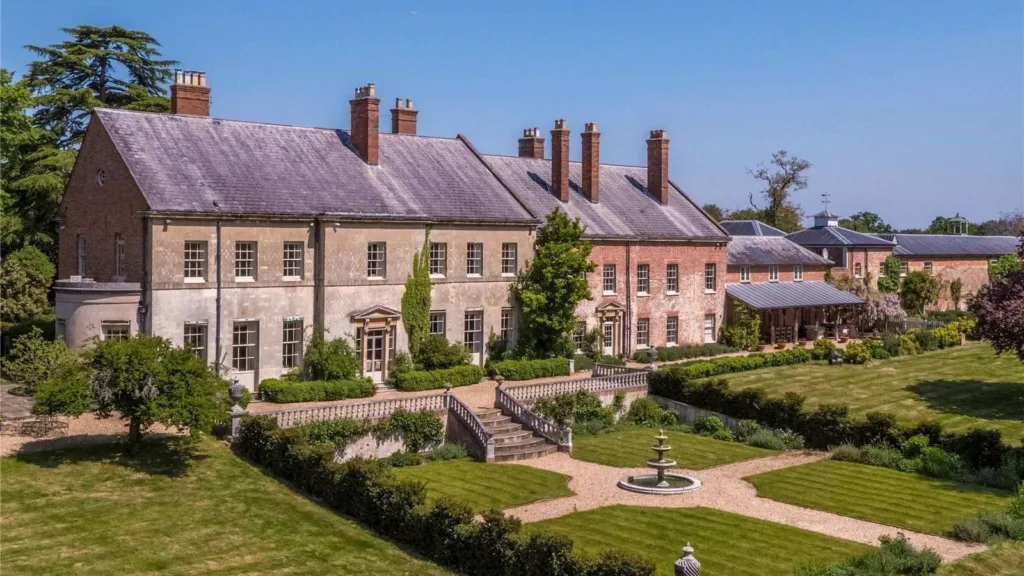
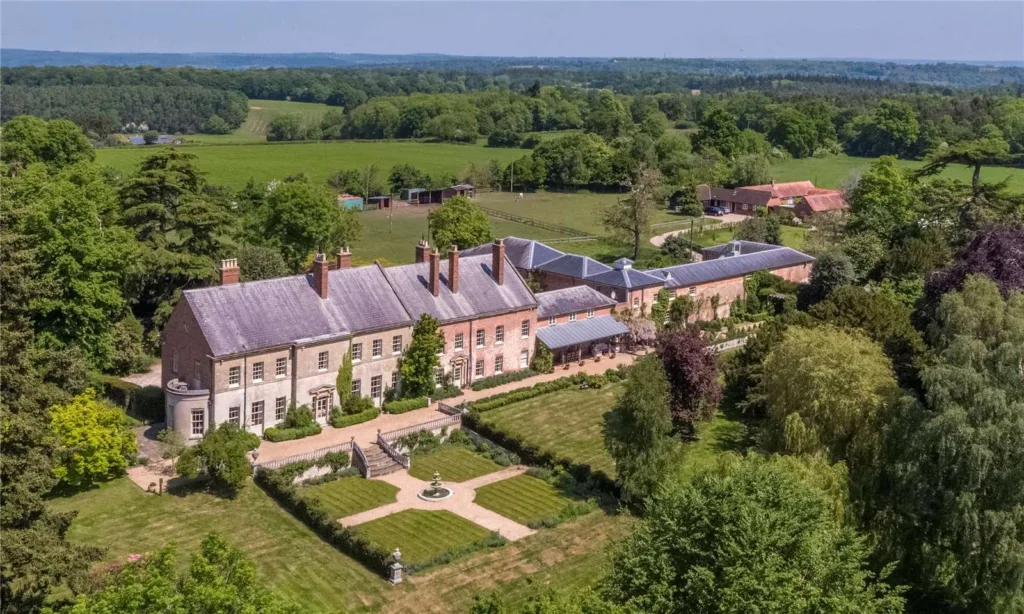
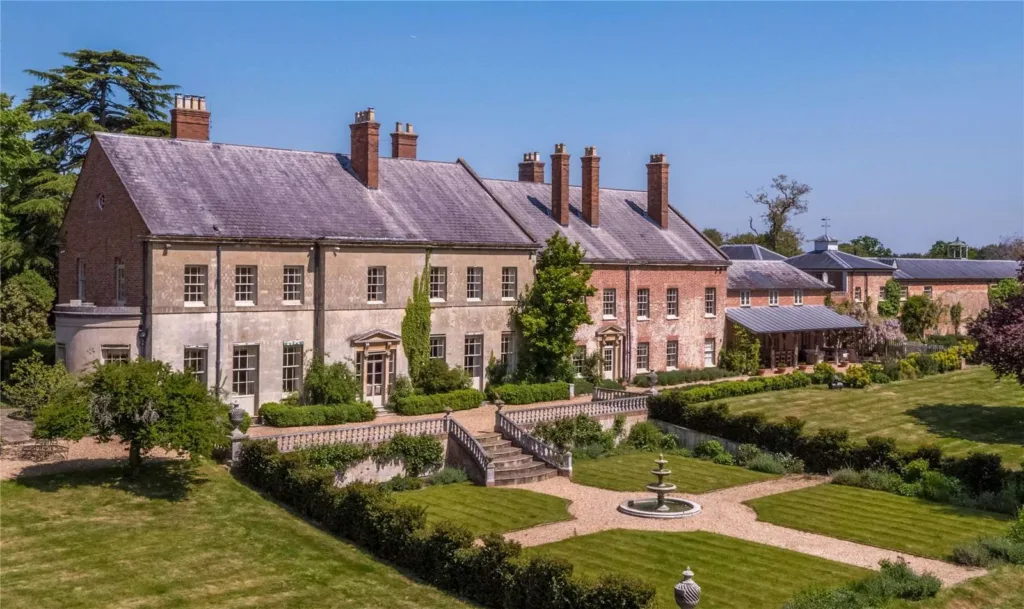
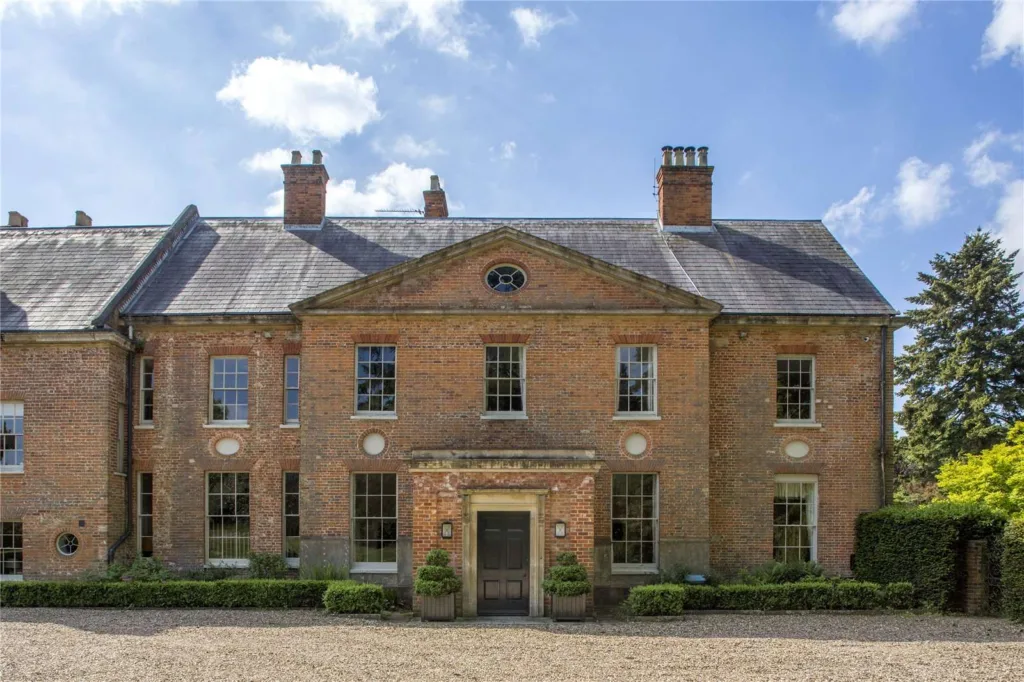
Holmwood is a house that announces itself with quiet confidence rather than grandeur alone. A distinguished Grade II listed Georgian country house, built in the early 1700s with later 18th-century additions, it stands on the edge of Binfield Heath in a setting that feels both composed and deeply rooted in the landscape.
There are homes where a single space defines the experience, but Holmwood resists that idea entirely. Instead, it unfolds through a sequence of moments – shifting light, framed views, and architectural balance – where each room contributes to a broader sense of proportion and ease. Set within grounds that open out towards the Thames Valley, it is a house that feels designed as much for outlook as for occupation.
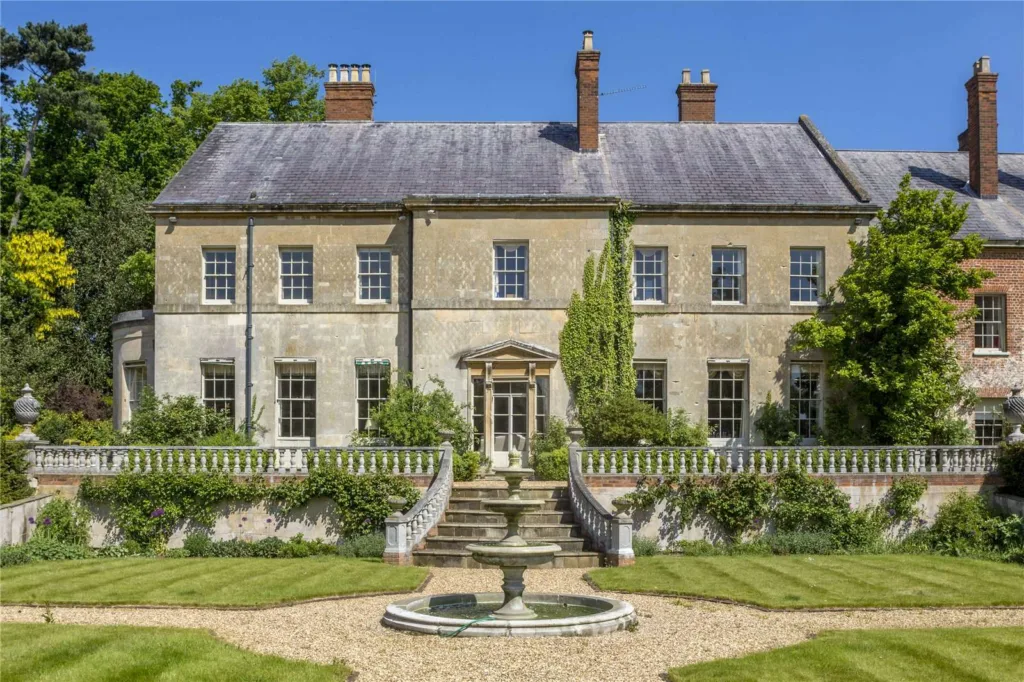
Constructed in elegant Flemish bond red brick with Bath stone detailing, Holmwood carries the restrained confidence of Georgian design. Yet it is the rear elevation that lingers most vividly: draped in mature wisteria, it opens towards carefully tended gardens that fall away into long, elevated views. It is here that the relationship between house and landscape feels most complete – structured, yet softened by time and growth.
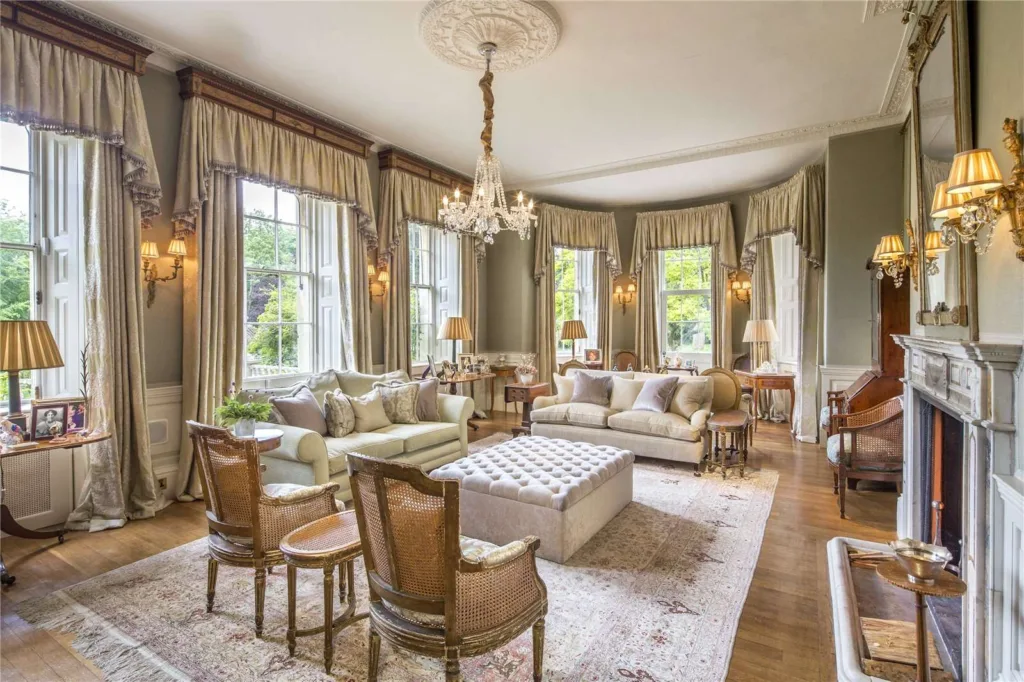
Inside, the house has been carefully and comprehensively refurbished by the current owners, preserving its Georgian character while allowing for a more contemporary way of living. Light moves easily through the principal reception rooms, where tall sash windows and period fireplaces define a rhythm of elegance and proportion. The drawing room, with its marble fireplace and curved extension, opens directly onto terraces that draw the garden into daily life, reinforcing the sense of connection between interior and exterior spaces.
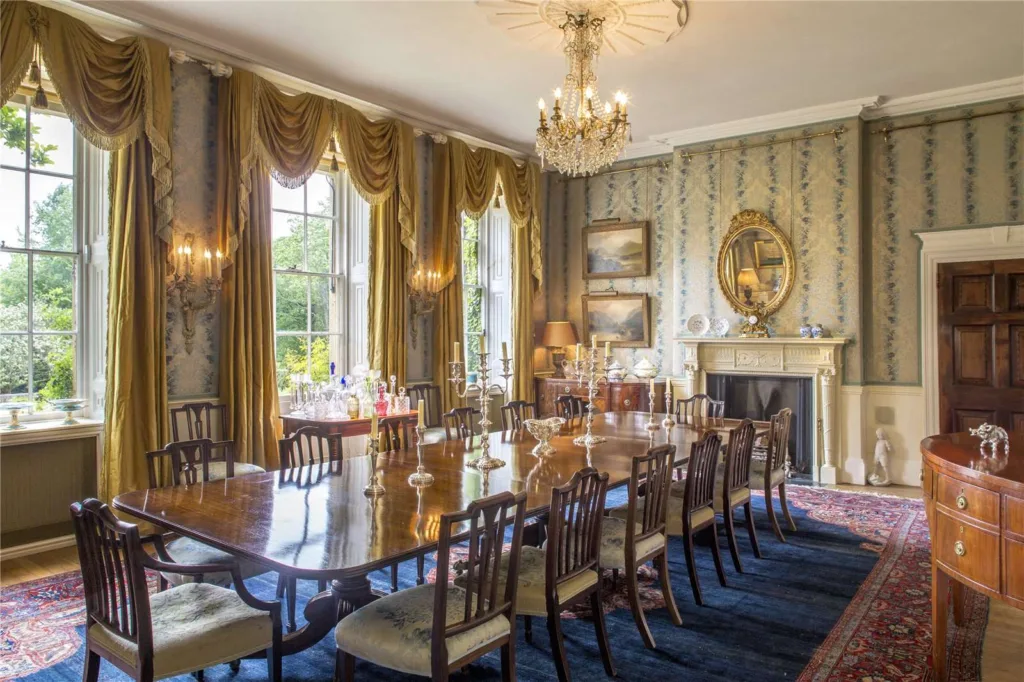
The principal reception rooms – including a dining room of notable scale and a more intimate sitting room – offer both formality and ease. Together with the limestone-floored hall, they create an impressive but welcoming central living and entertaining space, where French doors and sash openings ensure the garden is never far from view. A library and study add quieter, more reflective corners to the house, balancing its social scale with moments of retreat.
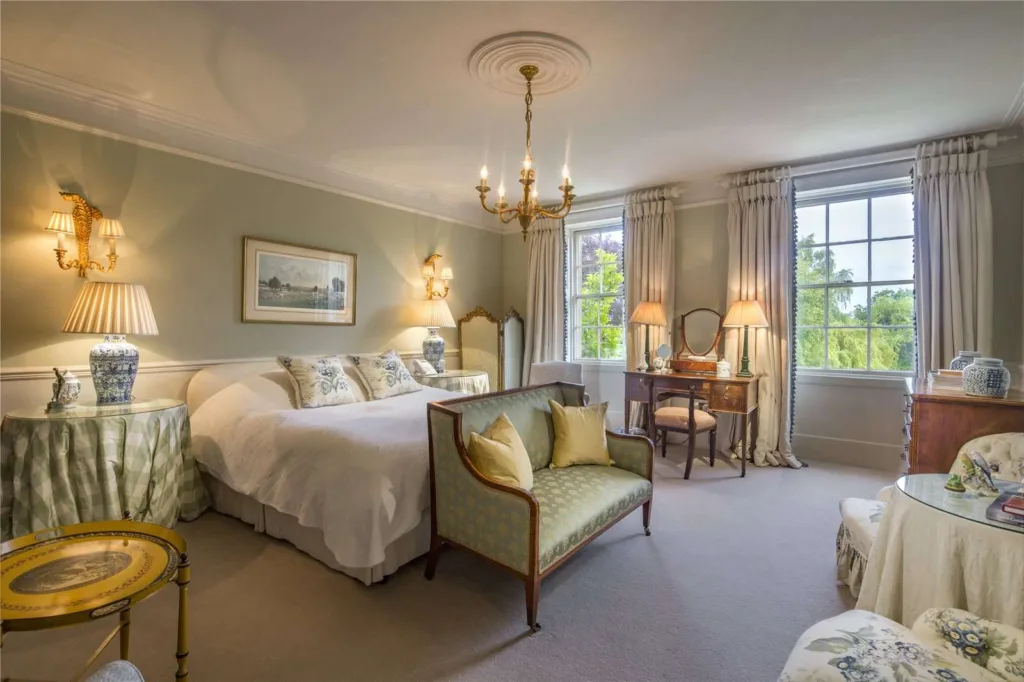
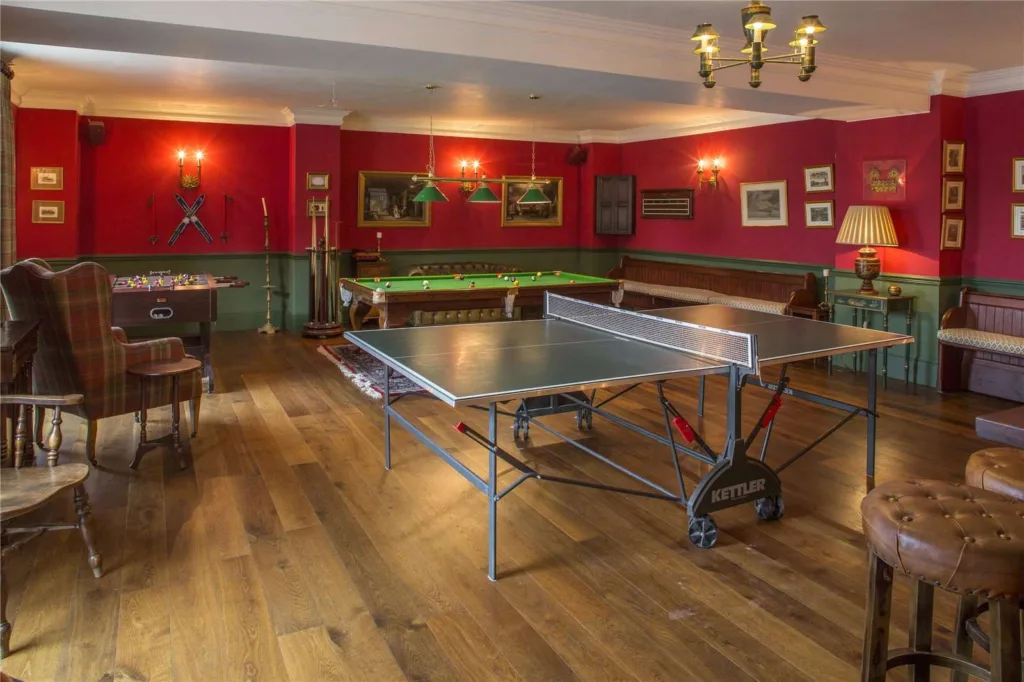
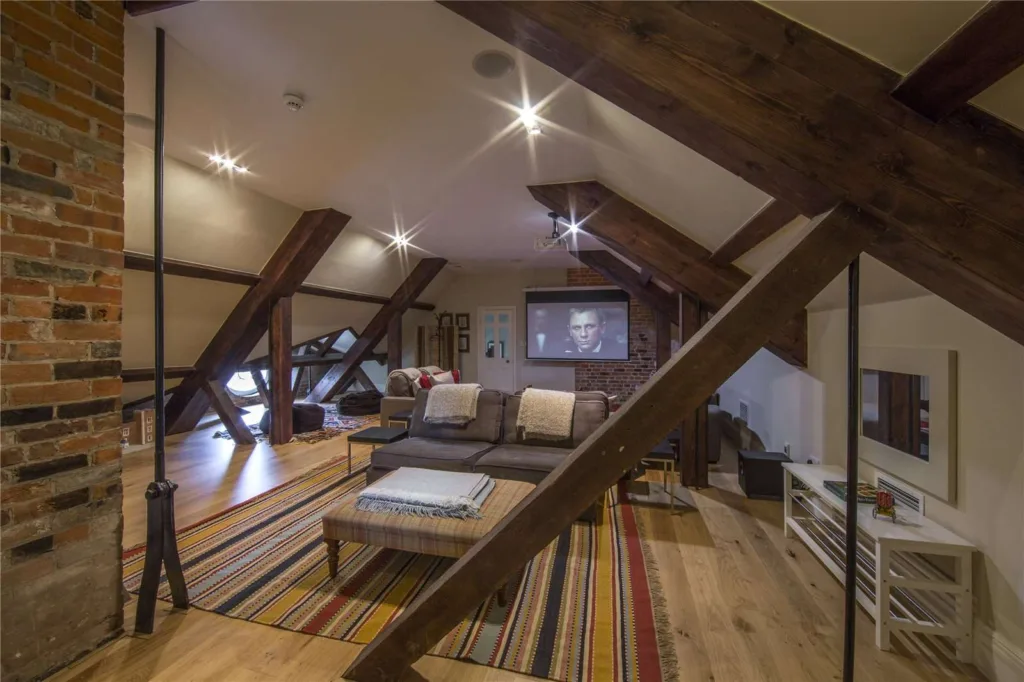
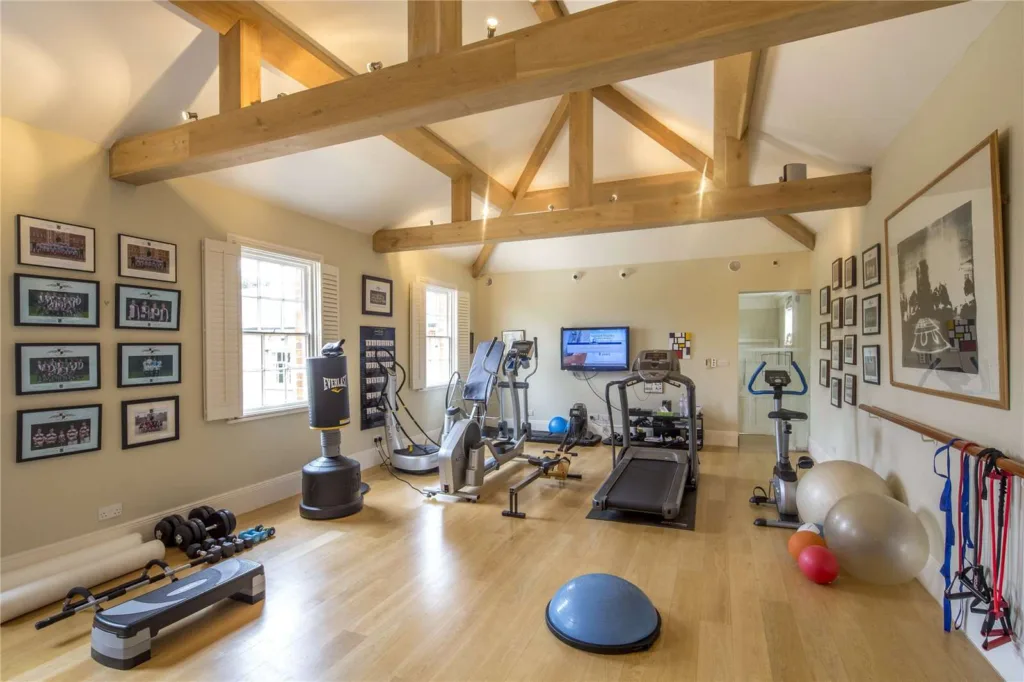
Accommodation is extensive, with eleven bedrooms, each with its own en suite bathroom – a rarity in a listed Georgian property. The sense of comfort continues through additional leisure spaces, including a games room, cinema and gym, allowing the house to function as both a family home and a place for hosting on a significant scale.
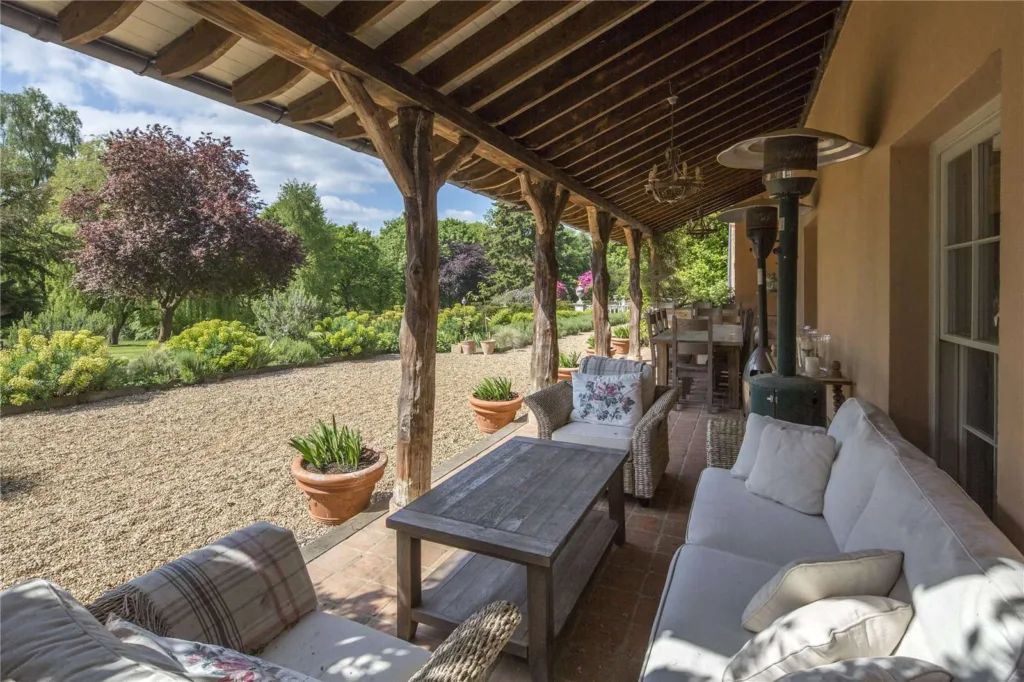
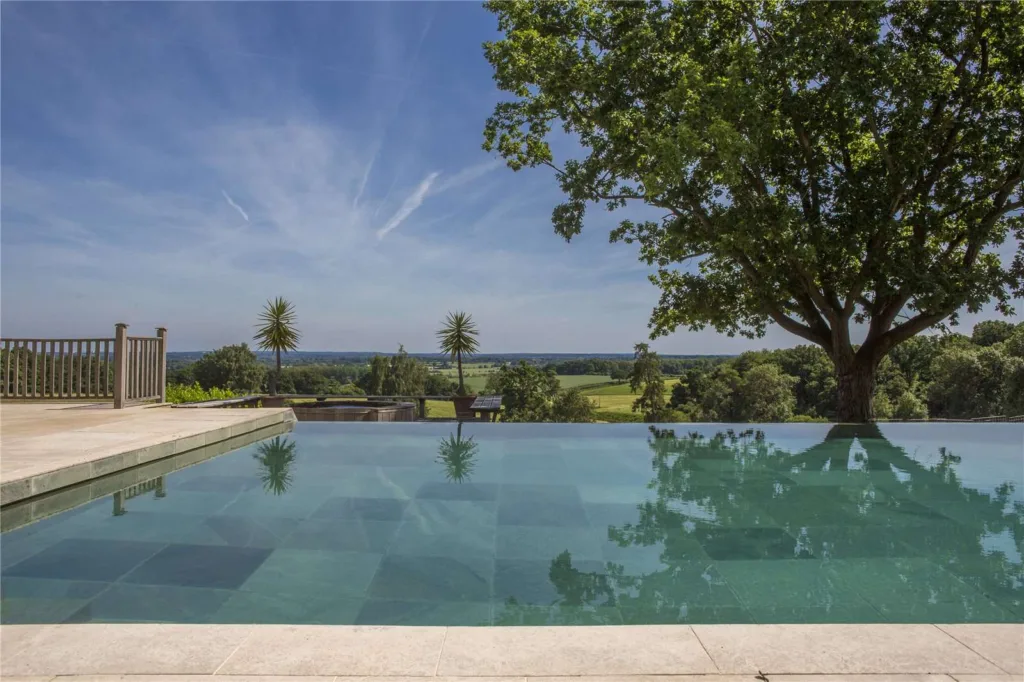
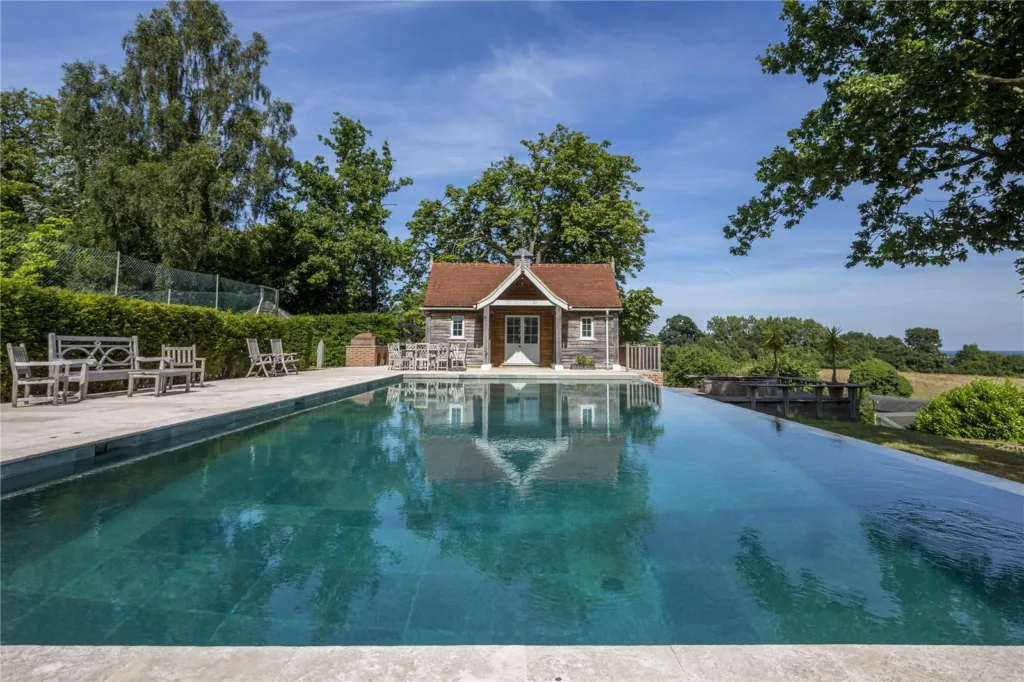
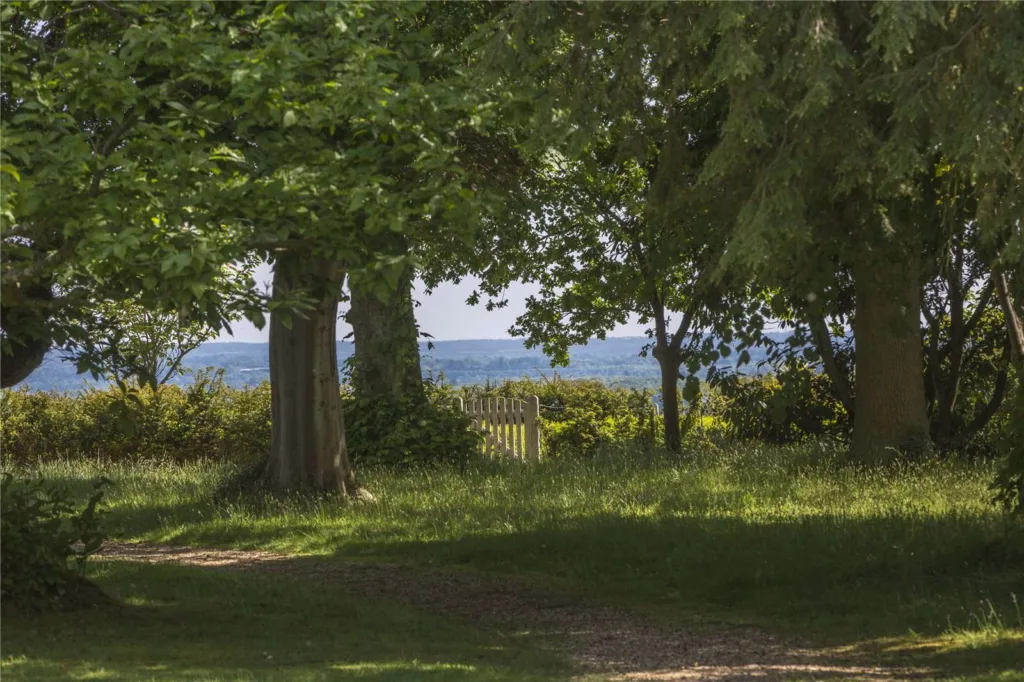
Beyond the main house, Holmwood expands into its grounds with an ease that feels almost village-like in its composition. A sweeping driveway leads through established planting to terraces, sunken gardens, and woodland walks, where rhododendrons, camellias and mature trees shape a series of outdoor rooms. A swimming pool, positioned to capture the long southerly views, forms a natural focal point for the warmer months, complemented by a pool house, tennis court, sauna and outdoor cooking areas that extend living beyond the walls of the house itself.
A notable feature of Holmwood is the presence of three separate ancillary dwellings – Coachman’s, Clock House and The Lodge – each with its own entrance and parking. These provide a rare level of flexibility, whether for extended family, guests or staff accommodation, while maintaining complete privacy from the main residence.
Despite its sense of seclusion, Holmwood is well-connected. Binfield Heath offers local amenities and dining, while Henley-on-Thames lies just a short distance away. Rail links via Shiplake provide access to Reading and London, and the wider road network connects easily to Heathrow and the motorway system. The area is also well regarded for schooling, sporting traditions and access to open countryside, reinforcing its long-standing appeal as a residential setting.
Holmwood is not simply a Georgian country house preserved in time, but a living estate that has evolved with care and intention – a place where architecture, landscape and lifestyle come together in a rare and cohesive whole.
Gallery