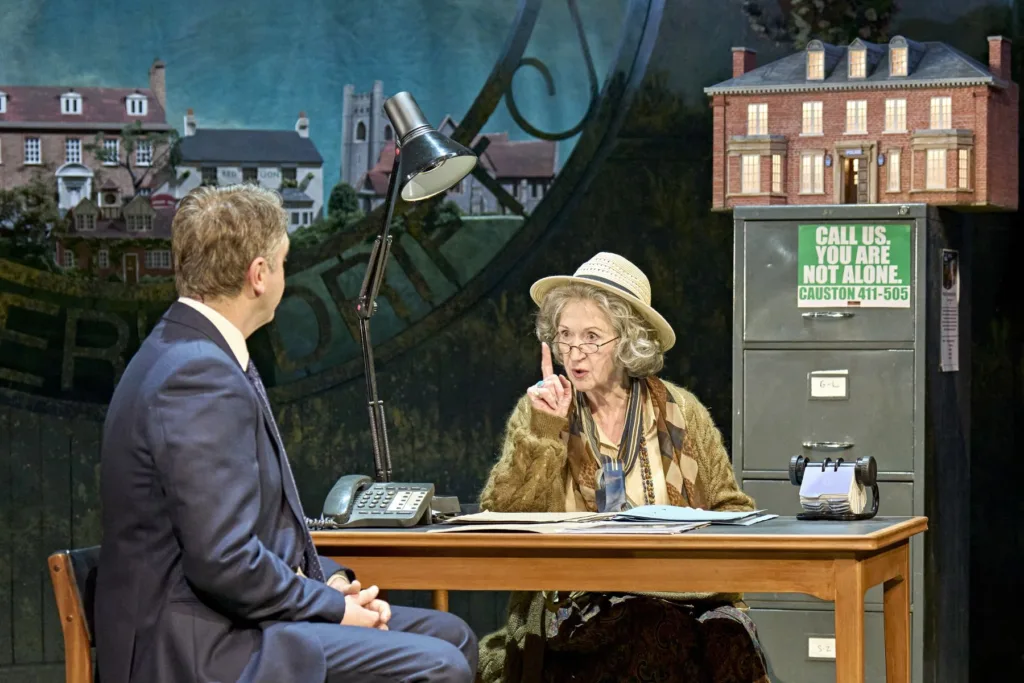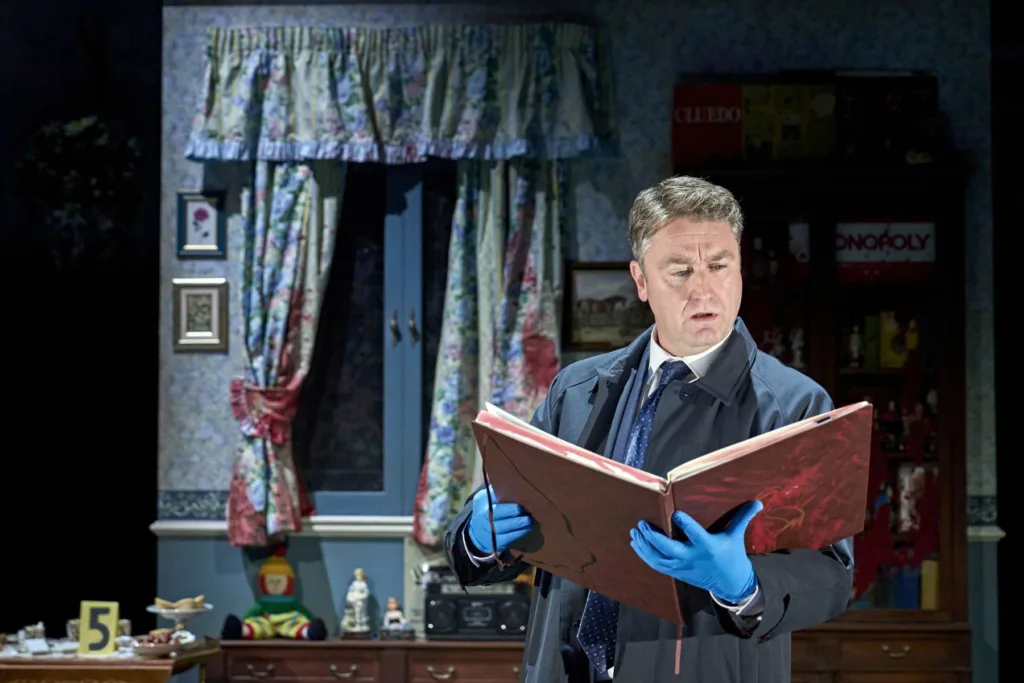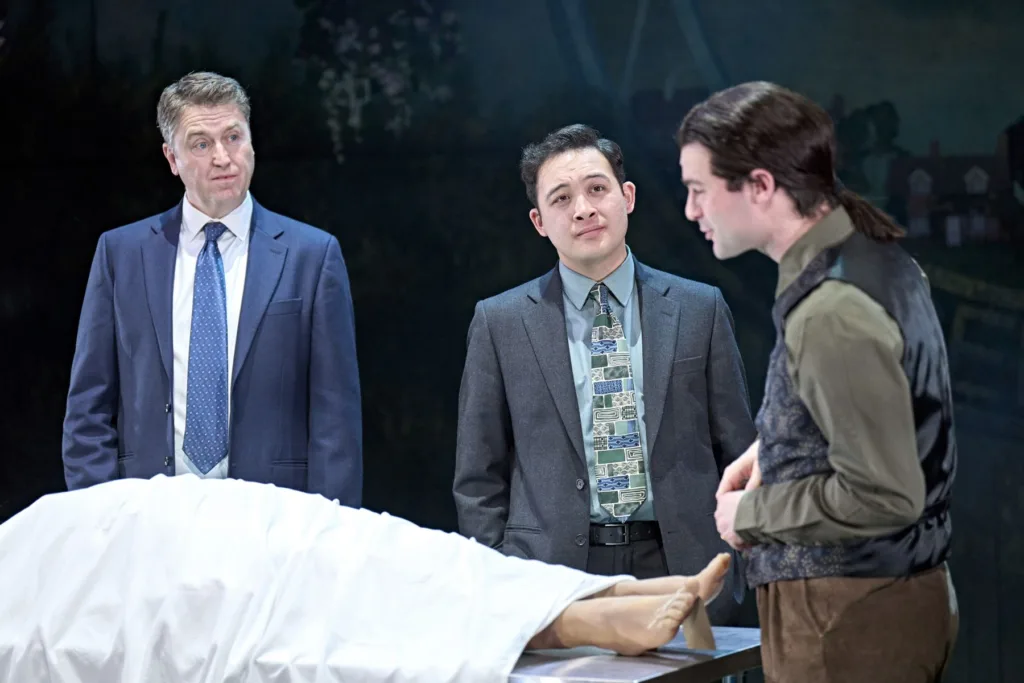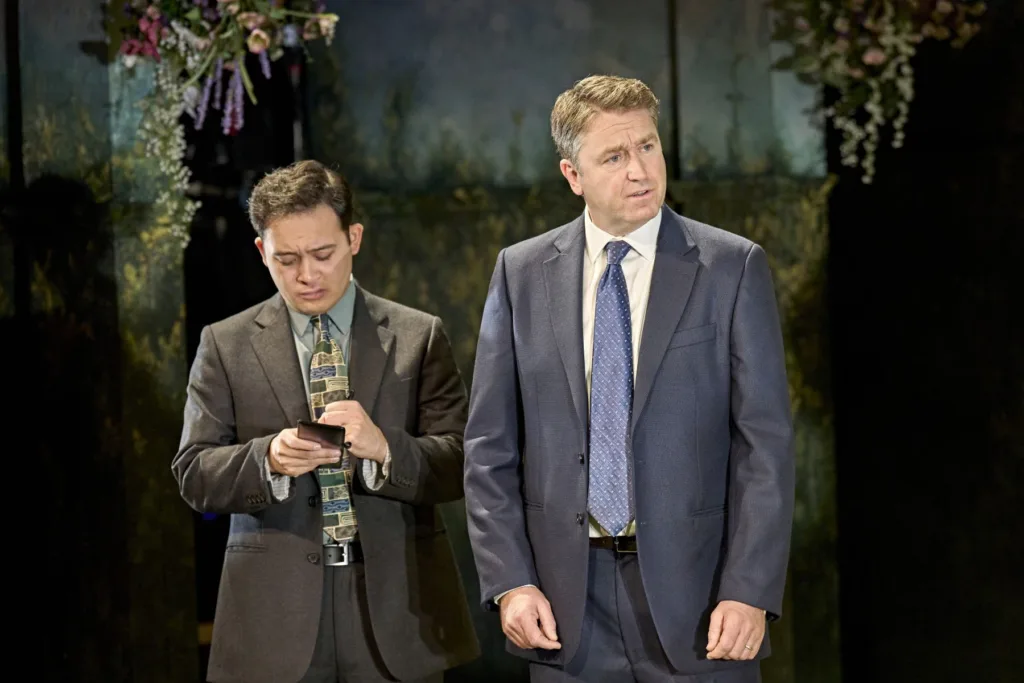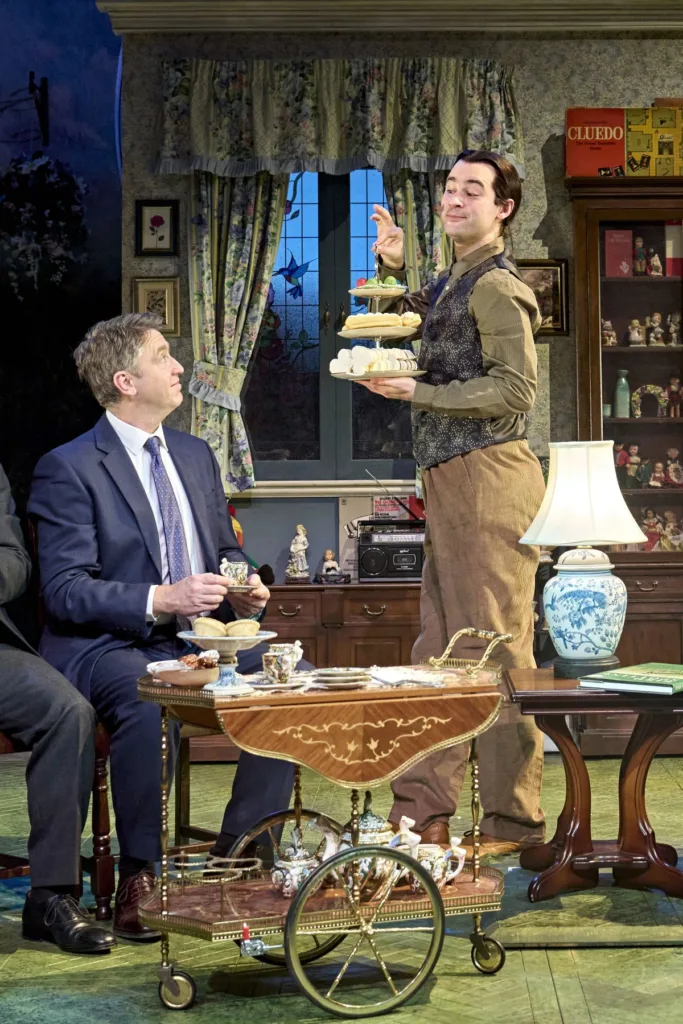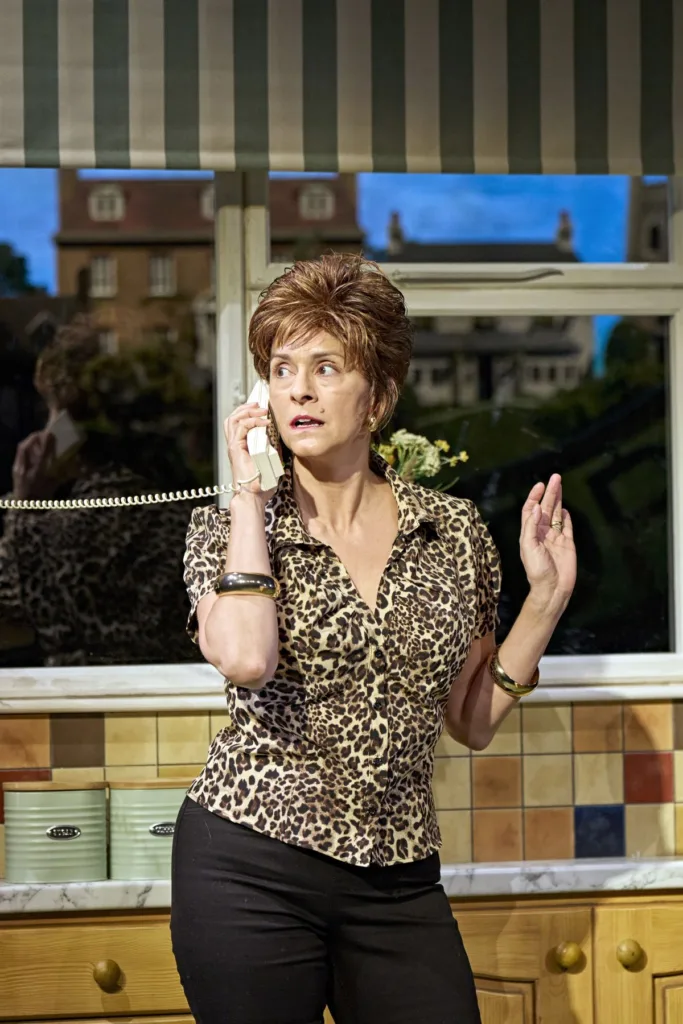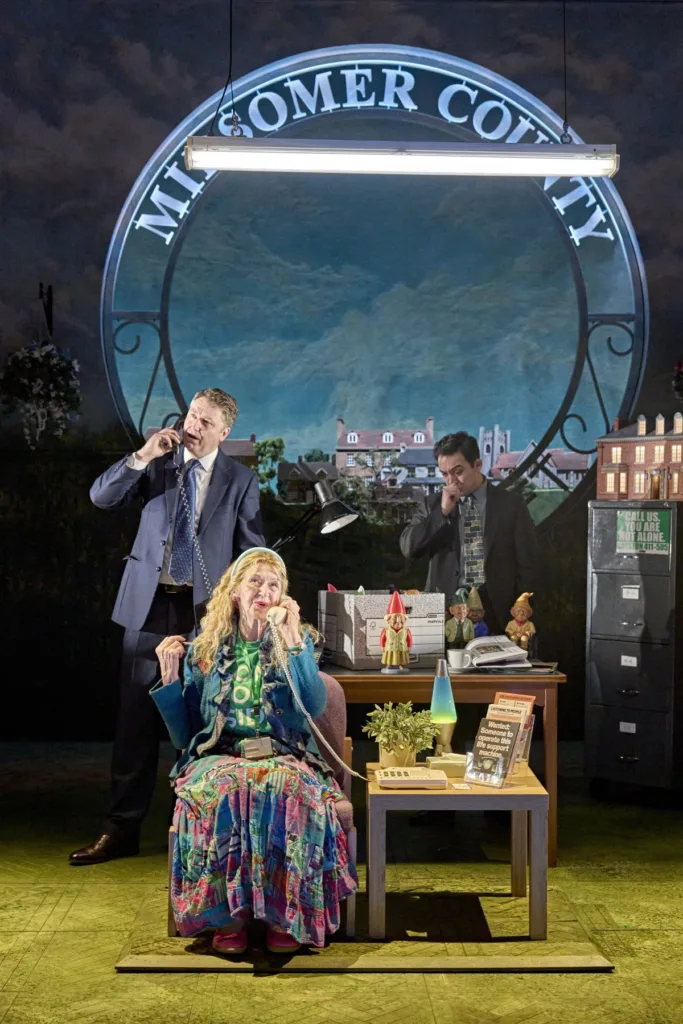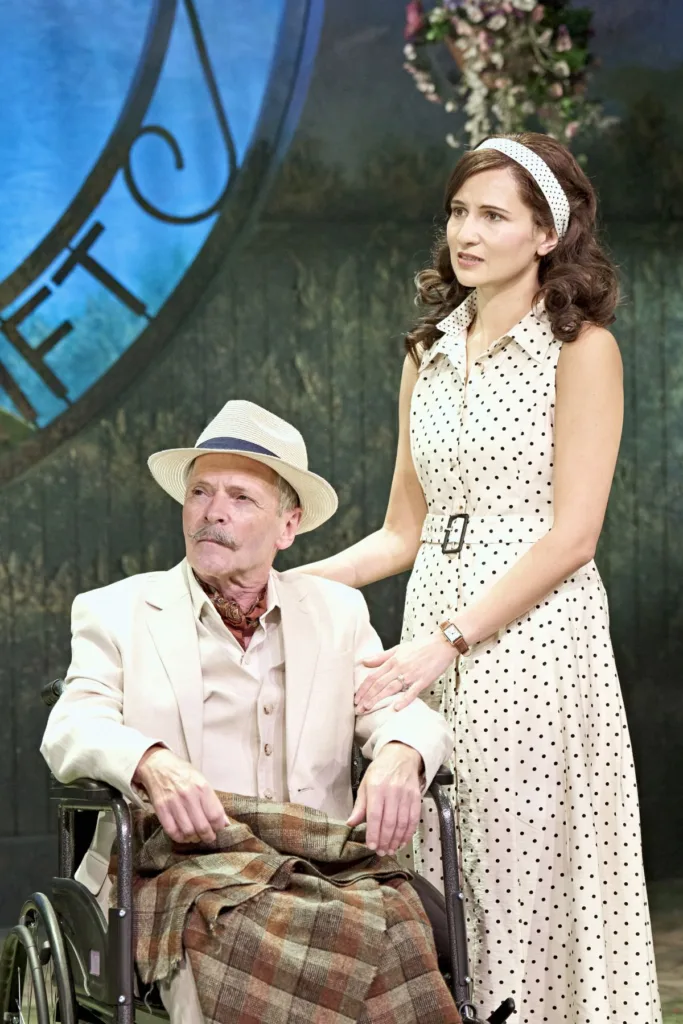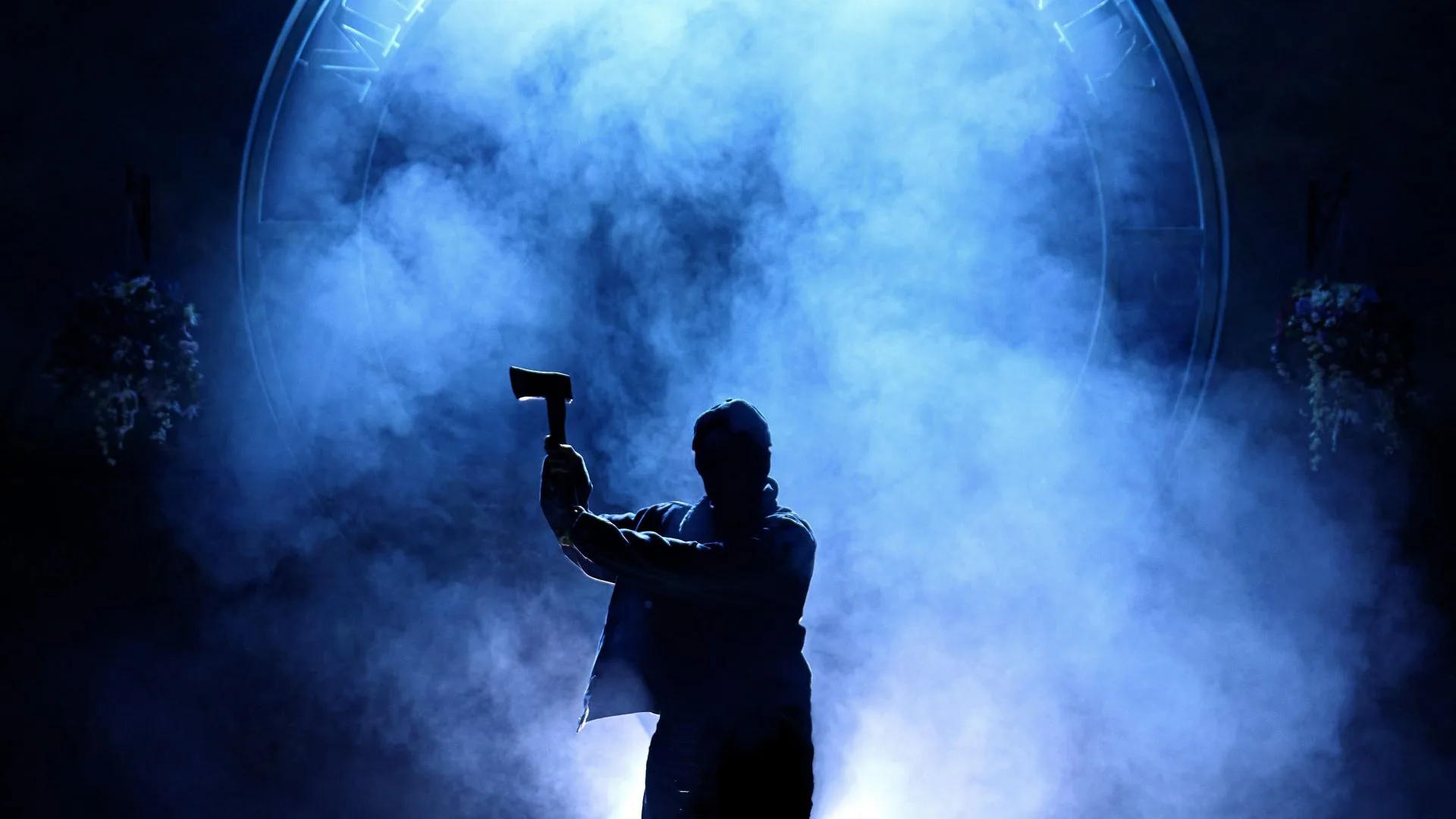
There are few British institutions as enduring – or as quietly peculiar – as Midsomer Murders. Its villages are postcard-perfect, its residents unfailingly polite, and yet the body count remains improbably high. Bringing that world to the stage is no small task, but The Killings at Badger’s Drift arrived at the New Theatre Oxford with a clear sense of identity: this was not a reinvention, but a knowing and affectionate celebration.
Adapted for the stage and directed by Guy Unsworth, and based on the original novel by Caroline Graham as well as the long-running ITV series, this production marked the first time Inspector Barnaby and Sergeant Troy had stepped onto the stage. That sense of occasion was palpable – not just in the audience’s anticipation, but in the production’s confidence in its source material.
A familiar mystery, freshly staged
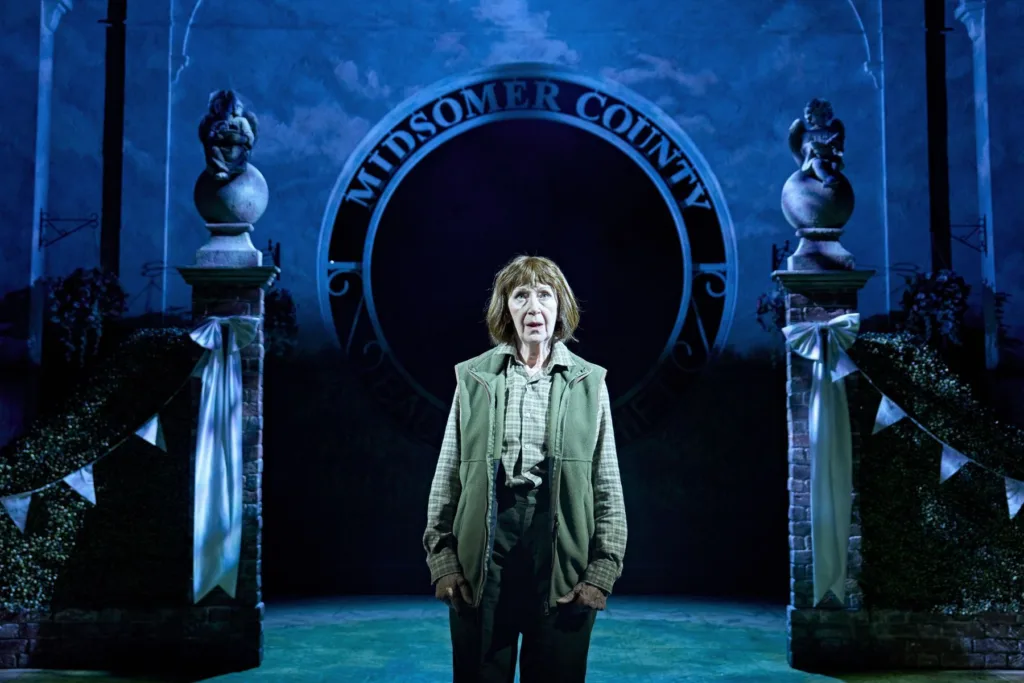
The story remains reassuringly intact. When well-loved spinster Emily Simpson is found dead in the idyllic village of Badger’s Drift, her friend Lucy Bellringer refuses to accept the convenient verdict of an accident. Enter DCI Tom Barnaby and his dependable colleague Sergeant Gavin Troy, whose investigation begins to unpick a web of hidden passions, long-buried secrets and quietly simmering rivalries.
It is, at its core, a classic whodunit – eccentric villagers, suspicious alibis, and an eventual reveal that ties together the threads with satisfying precision. But what became immediately clear in this stage adaptation is how naturally theatrical the material is. As Graham herself has observed, the story is “fast-paced and witty”, filled with “bizarre murders and a beautiful setting” – and that inherent theatricality translated effectively to the stage.
A full-circle moment for Daniel Casey
One of the production’s most compelling elements was its casting. Daniel Casey – who originally played Sergeant Troy in the television series from 1997 to 2008 – returned to the world of Midsomer, this time stepping into the role of DCI Tom Barnaby, first made famous by John Nettles.
It’s a clever and quietly poignant piece of casting, and one that brought a sense of continuity to the production. Casey’s Barnaby carried a measured authority, balanced with a lightness of touch that suited the tone of the piece. There was a clear understanding of the world he inhabited – not just as an actor, but as someone revisiting it from a different perspective.
That sense of history lent the performance an added layer: not imitation, but evolution.
There is something quietly poetic about Daniel Casey’s return to Midsomer Murders. For audiences who remember him as the dependable Sergeant Troy, his reappearance in The Killings at Badger’s Drift – this time as DCI Tom Barnaby – carries a sense of full-circle inevitability.
“So it’s a massive promotion, going from a detective sergeant to a chief inspector. I’ve certainly earned my spurs,” he says, with a wry awareness of the journey.
It is, however, more than a simple step up the ranks. The role of Barnaby is indelibly associated with John Nettles, who defined the character across 13 series of the television adaptation. For Casey, the transition is both deeply personal and professionally significant – rooted in a relationship that mirrors the very dynamic at the heart of the show.
“Barnaby and Troy had an almost father/son, mentor/pupil relationship and that is very much like my relationship with John,” he reflects. When Nettles heard the news, his response was characteristically understated: “Well, he’s learned at the feet of the master.”
“That is certainly true,” Casey adds. And with that lineage comes a clear guiding principle: “John’s advice to me has always been ‘Be true to yourself,’ so that is how I have approached playing Barnaby.”
Honouring the past, shaping the present
Casey is careful to strike a balance between reverence and originality. Having spent years observing Nettles at close quarters – “standing next to him, watching and listening” – he acknowledges the influence, but resists imitation.
“I think it is important not to do an impression, so I will be bringing my own ideas to the role, while honouring John’s original Barnaby’s essential attributes of honesty and integrity.”
Those qualities – steadiness, moral clarity, quiet observation – remain central to the character, and Casey’s interpretation leans into them with a subtle confidence. It is less about reinvention and more about continuity, filtered through experience.
Returning to Midsomer
Revisiting the world of Midsomer Murders was not, by Casey’s own admission, part of the plan. Having left the series in 2003 to pursue other opportunities, he had assumed that chapter was closed.
“I never thought that I would revisit it,” he says. “I had such a happy time playing Troy… but when I made the decision to leave to pursue other things I thought that was that.”
It was only when director Guy Unsworth approached him about the stage adaptation that the possibility resurfaced. Even then, it took a moment of clarity – a workshop reading – to convince him.
“Sitting down and reading Barnaby out loud, it just felt right.”
Now, stepping into the role at a similar age to Nettles when the original episode aired, the experience carries an added resonance. “It brought back so many memories from a really lovely part of my career.”
The enduring appeal of Midsomer
Part of that nostalgia is tied to the show’s remarkable longevity. Syndicated in over 200 territories worldwide, Midsomer Murders has achieved a rare cross-generational appeal – something Casey believes is rooted in its distinctive tone.
“It’s set in the modern day yet it has a kind of 1940s or 1950s feel to it. It’s a wonderful form of escapism… It’s good versus evil, right versus wrong.”
There is, too, a uniquely British quality to its world: the idyllic countryside, the eccentric characters, the quiet tension beneath polite society. “It’s full of eccentrics, which British actors play so well,” he notes – a sentiment that feels particularly apt in the context of a stage production, where those characters can be amplified and explored in new ways.
Theatre, transformation, and the joy of touring
For Casey, the move to theatre is not simply a return, but a reaffirmation of a long-held passion. With an extensive stage career alongside his television work, he relishes the immediacy and unpredictability of live performance.
“I love being part of a company of actors… the challenge is to keep something fresh, real and immediate every night, and I like that challenge.”
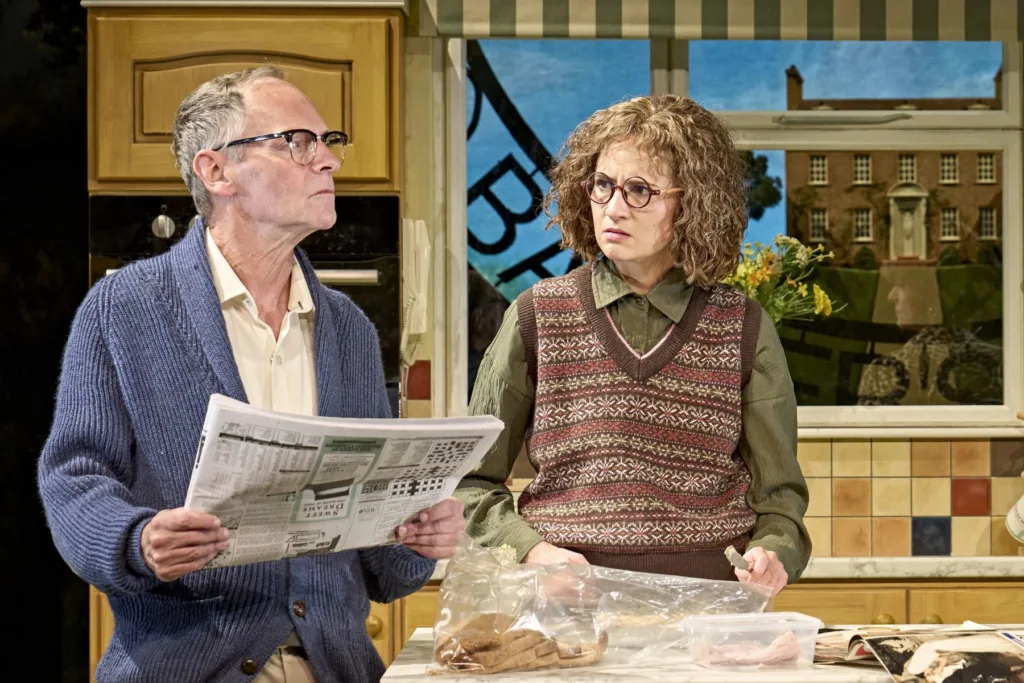
That sense of dynamism is at the heart of The Killings at Badger’s Drift, where a multi-rolling cast shifts seamlessly between characters. It is, Casey suggests, part of the production’s appeal.
“We have a fantastic cast of actors who are multi-roling… I challenge the audience to guess how many actors there are in the cast as they transform into so many different characters between scenes!”
Touring, too, offers its own rewards – not least the connection with audiences. “It’s lovely to be able to meet the audience afterwards – especially with something like Midsomer Murders that’s got such a loyal fan base.”
A world worth returning to
Ultimately, Casey’s return to Midsomer is underpinned by something simple: affection. For the character, for the story, and for the experience that shaped a formative part of his career.
“I never expected to revisit the world of Midsomer, with its weird and wonderful characters and all their dark, twisted secrets,” he has said elsewhere. And yet, in stepping into Barnaby’s shoes, he has done precisely that – bringing with him both the weight of legacy and the freedom of rediscovery.
For audiences, it is an opportunity to see a familiar world through a slightly different lens. For Casey, it is something perhaps rarer: a return that feels earned.
Comfort crime with a theatrical wink
Rather than attempting to sharpen the material into a tense, brooding thriller, this adaptation leaned into something more distinctive – a gently self-aware tone that embraced both the charm and the eccentricity of Midsomer Murders. There was humour threaded throughout, often dry and occasionally playful, allowing the audience to engage with the story as both mystery and entertainment.
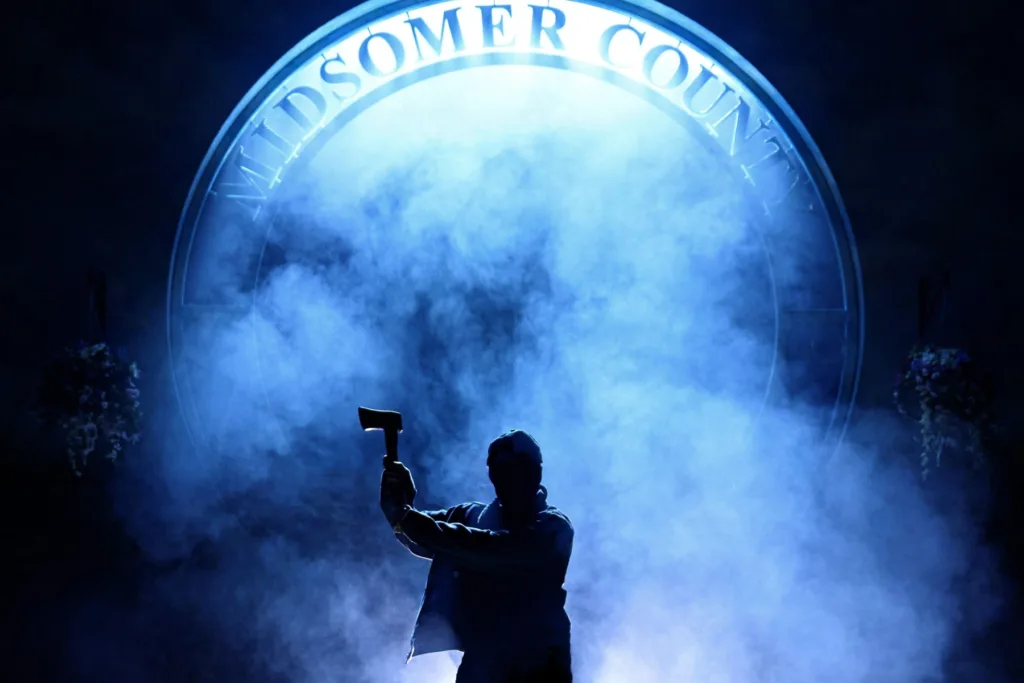
This proved to be one of the production’s strengths. It is understood that Midsomer has never been about fear; it is about familiarity. The intrigue lies in the slow unravelling of village life, in the quiet exposure of secrets beneath polite surfaces, and in the satisfaction of seeing order restored.
Ensemble ingenuity over spectacle
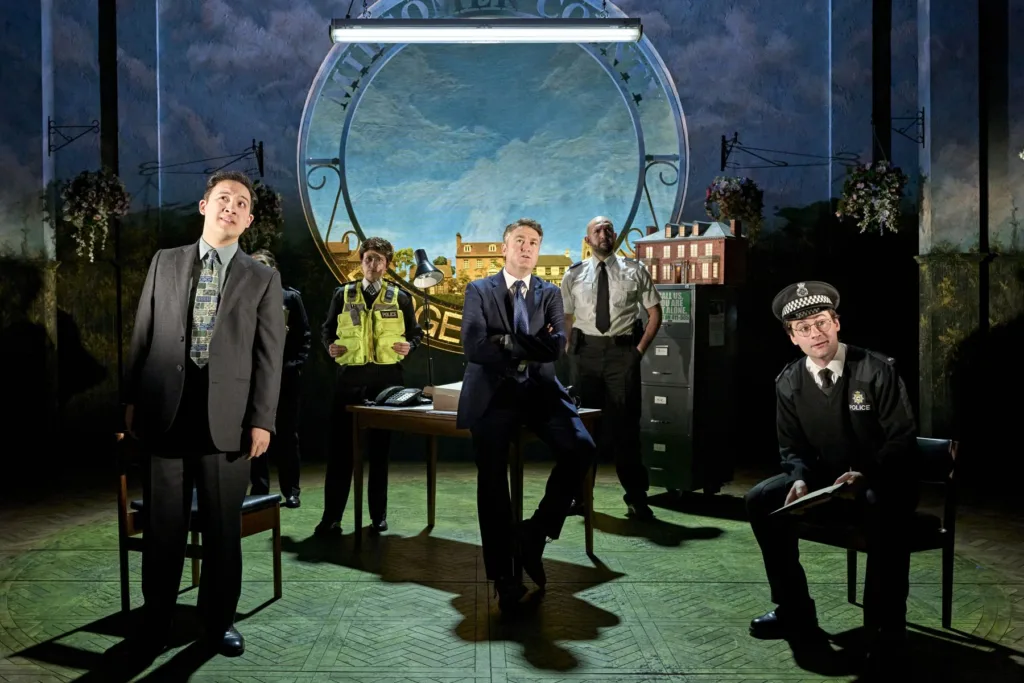
Staging was notably economical, relying on a compact ensemble cast that moved fluidly between roles. Quick costume changes and precise physical shifts allowed characters to emerge with clarity, while transitions between scenes were handled with efficiency rather than excess.
There was a pleasing theatricality in this approach – a sense that the production trusted its audience to meet it halfway. Without the luxury of television’s close-ups or location shooting, it leaned into suggestion and rhythm, creating a pace that kept the narrative engaging even as the plot grew increasingly intricate.
Behind the scenes, the creative team supported this effectively: design by David Woodhead provided a flexible visual framework, while lighting (Matt Haskins) and sound (Ella Wahlström) added texture without overwhelming the action.
A world you settle into
What ultimately defined this production was its tone. It neither parodied nor overstated; instead, it gently amplified the quirks that have always existed within the world of Midsomer. The result was something that felt both faithful and freshly considered – a version of Badger’s Drift that acknowledged its own eccentricities without losing its identity.
If there was a trade-off, it lay in the level of tension. The stakes rarely felt urgent, and the mystery – while neatly constructed – didn’t aim to unsettle. But that restraint felt intentional. This was theatre designed to be enjoyed rather than endured: an evening of intrigue, humour and quiet nostalgia.
The Oxford Magazine’s Verdict
The Killings at Badger’s Drift proved to be an assured and affectionate stage debut for a much-loved British franchise. With thoughtful casting, a confident tonal balance, and a clear respect for its origins, it delivered exactly what audiences hoped for – and perhaps exactly what they needed.
Not a reinvention, but a welcome return.
Gallery