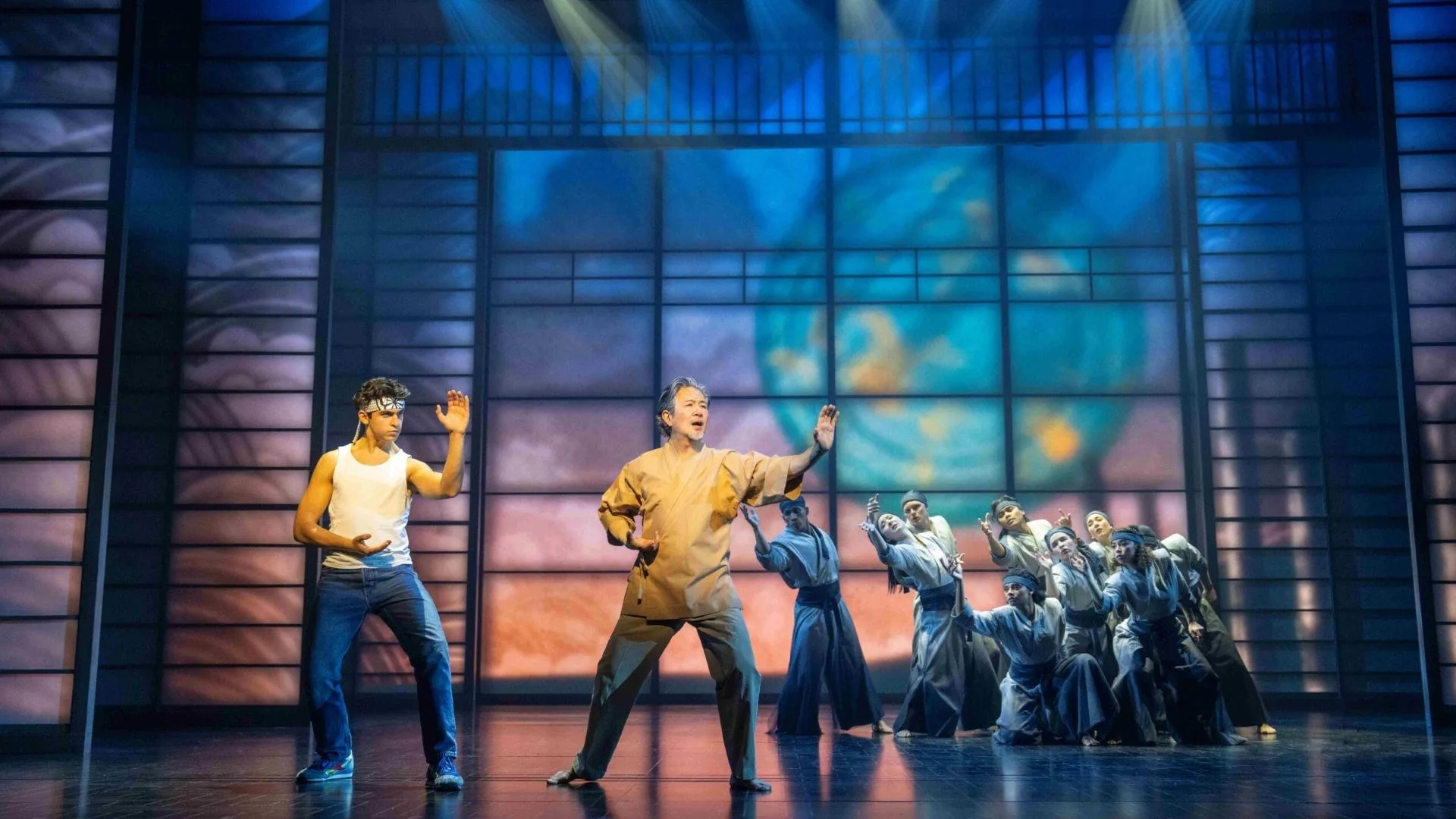
At first glance, The Karate Kid – The Musical arrives at the New Theatre Oxford as a familiar piece of 1980s nostalgia reimagined for the stage.
But beneath the high kicks and dojo discipline lies something more considered and unexpectedly timely: a story about identity, belonging, and the uneasy balance between strength and restraint in a divided world.
Part coming-of-age drama, part cultural fable, the production resists being reduced to a simple martial arts spectacle. Instead, it leans into the idea that karate here is never really about fighting at all. As Mr Miyagi reminds us, it is about balance, dignity and respect — a philosophy that quietly anchors the entire show.
A story reframed through memory and perspective
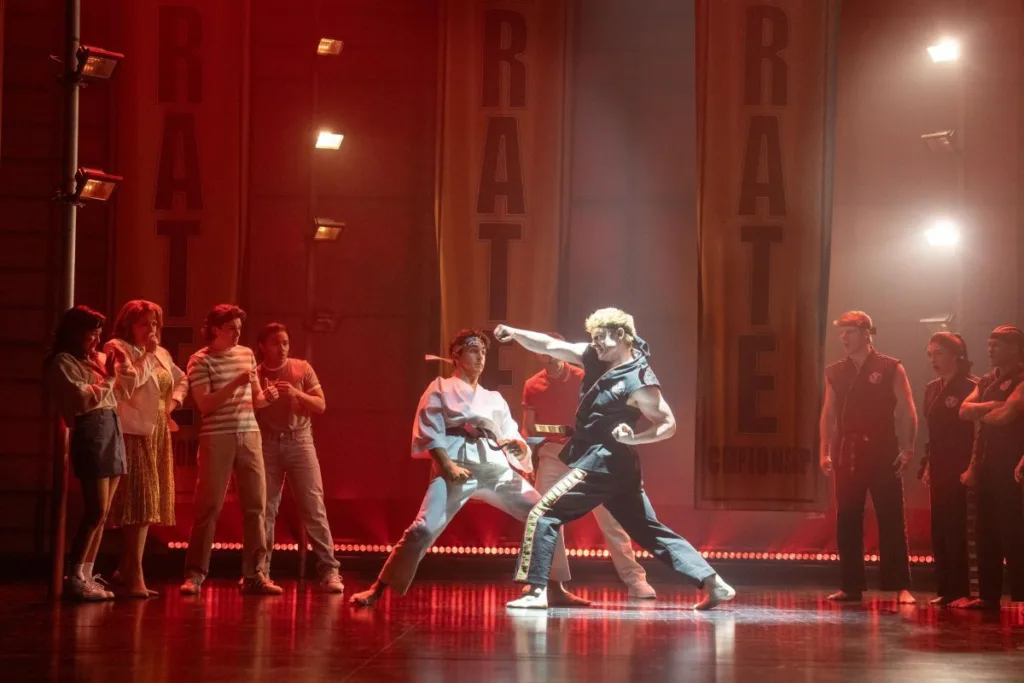
Adapted from the iconic 1984 film, the musical traces Daniel LaRusso’s move to California and his uneasy integration into a new environment, where he quickly finds himself targeted by Cobra Kai students. But one of the more interesting dramaturgical shifts is the way the story plays with perspective.
What begins as something that feels rooted in Mr Miyagi’s recollection and worldview gradually settles into Daniel’s perspective. That transition is subtle but significant. It slightly reframes Miyagi’s role from storyteller to guide, placing Daniel’s emotional journey more firmly at the centre. While this is structurally effective for a musical format, it does mean that some of the philosophical weight carried by Miyagi’s presence occasionally feels diffused as the show progresses.
Adrian Pang anchors the production
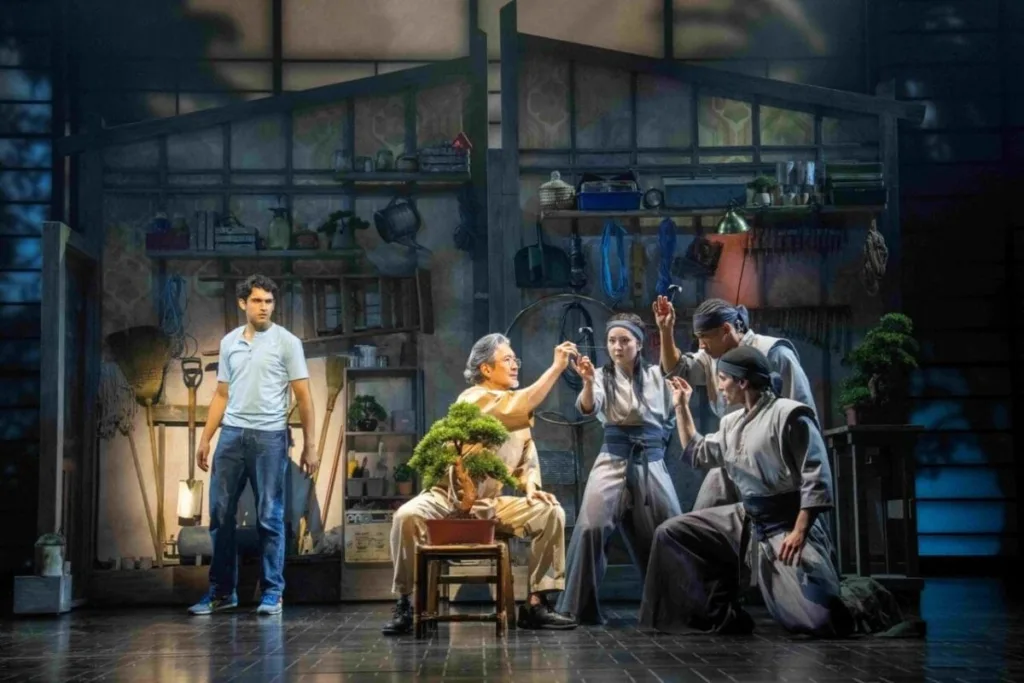
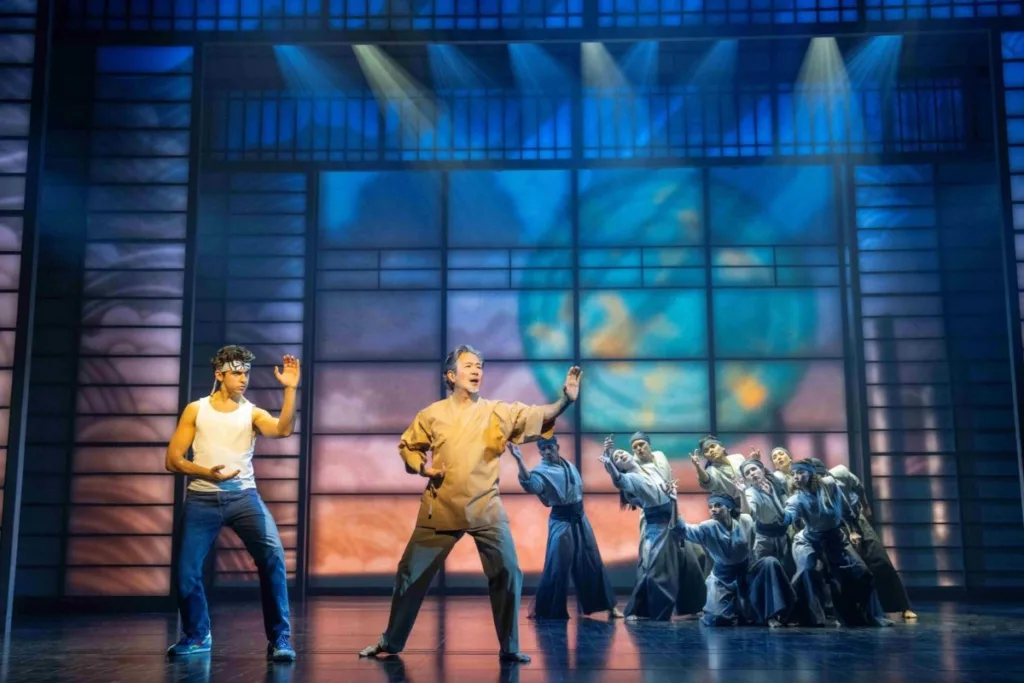
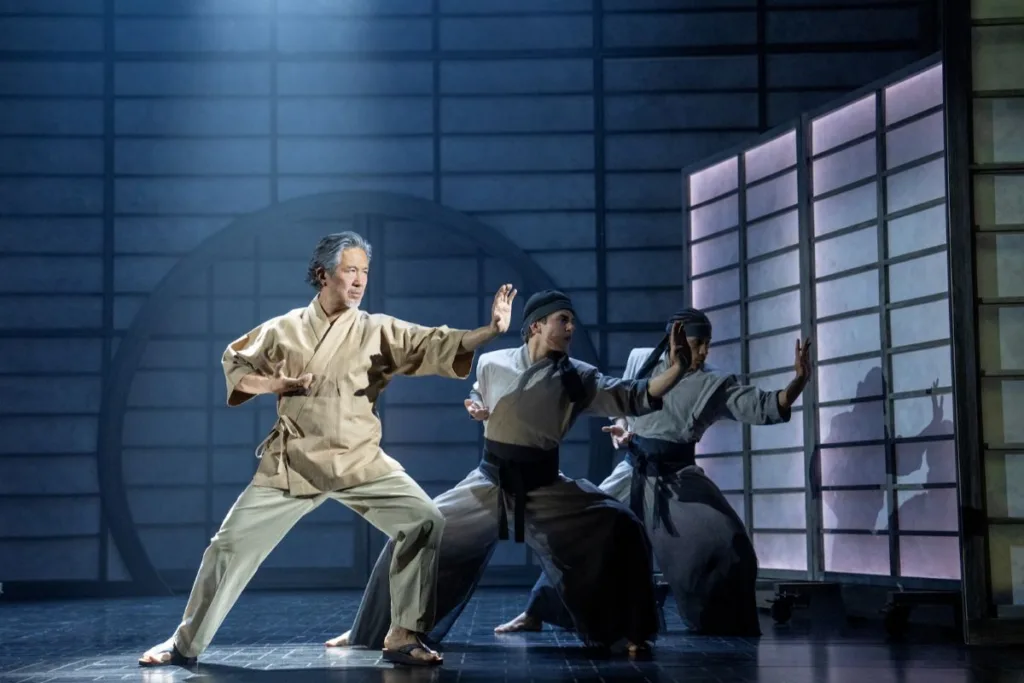
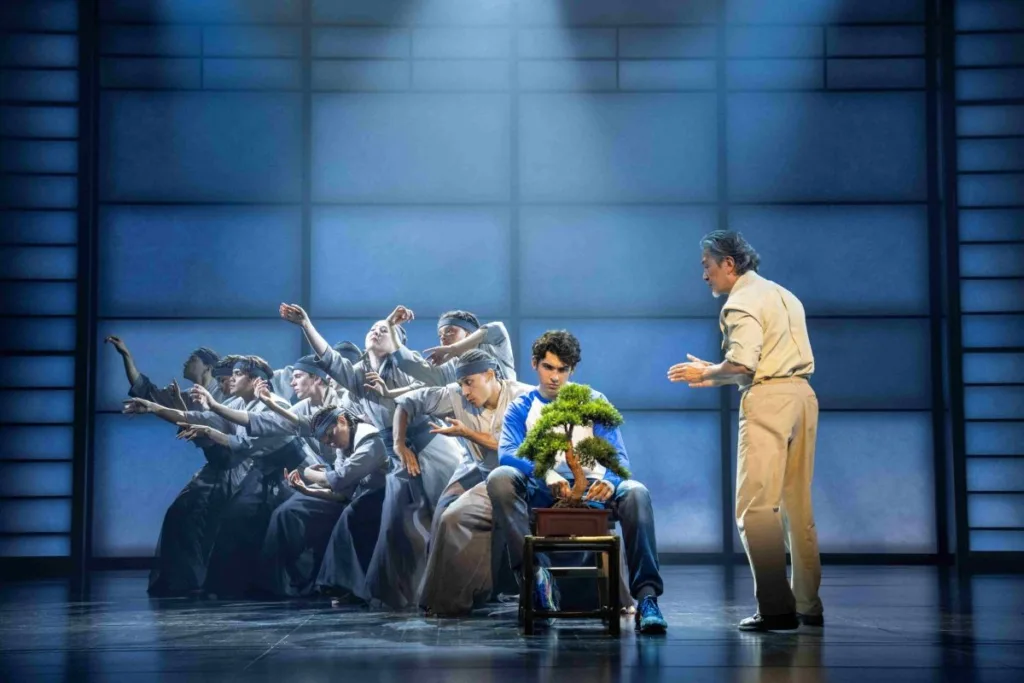
The production’s greatest strength is unquestionably Adrian Pang as Mr Miyagi. He holds the stage with an unforced authority, balancing stillness with warmth and offering moments of quiet humour that cut through the production’s more heightened emotional beats. His performance provides the production with its emotional and thematic centre of gravity.
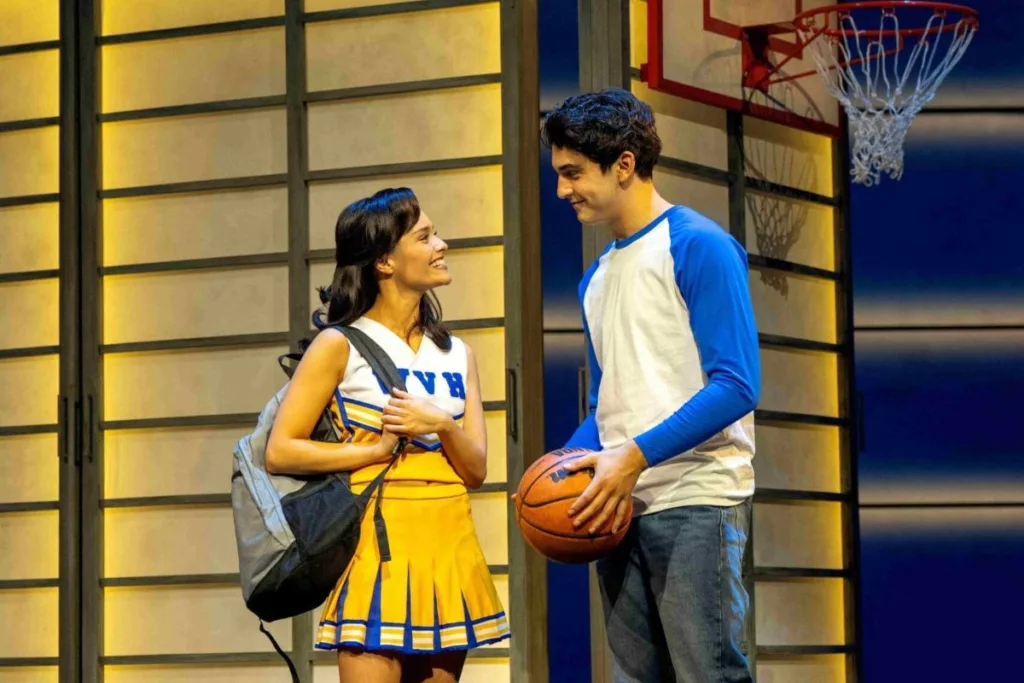
Opposite him, Gino Ochello makes a compelling professional stage debut as Daniel LaRusso. There is a sincerity to his portrayal that suits the material well, capturing both teenage frustration and the search for belonging. Abigail Amin’s Ali Mills brings clarity and grounded charm, while Joe Simmons’ Johnny Lawrence effectively leans into the character’s volatility without losing sight of the insecurity beneath it.
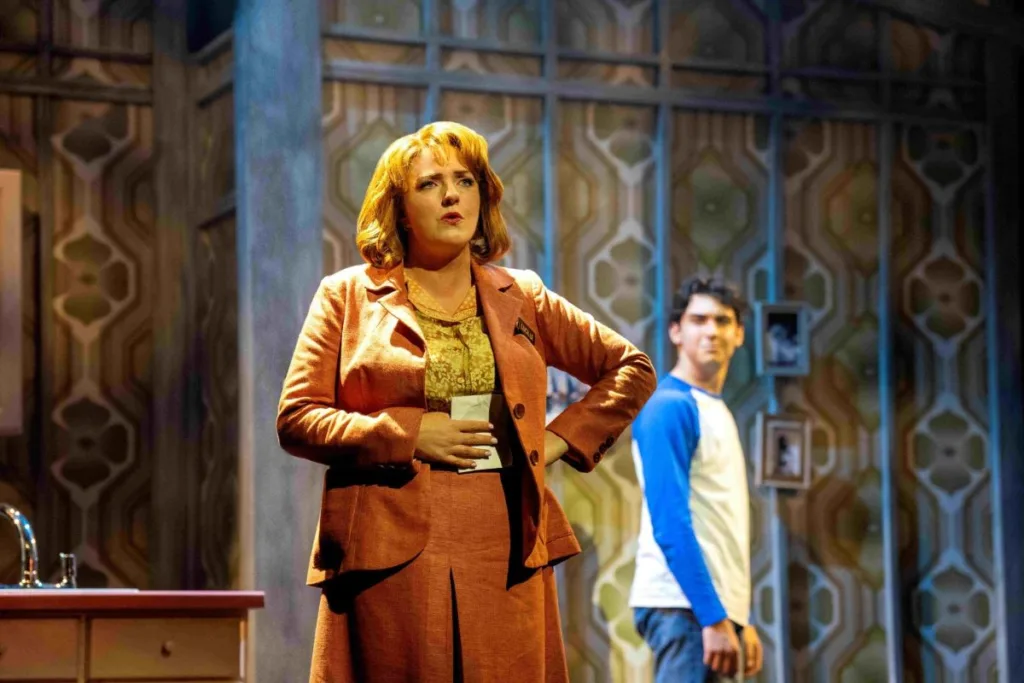
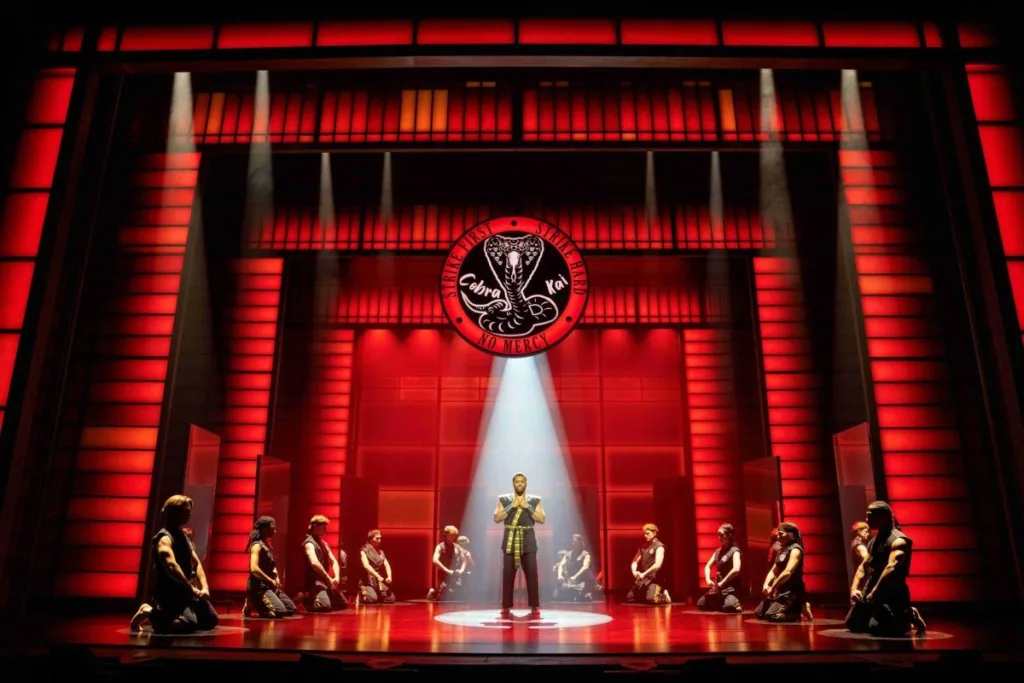
Matt Mills as John Kreese provides the necessary antagonistic force, while Sharon Sexton as Lucille LaRusso offers a measured and supportive presence that helps ground Daniel’s home life. Finley Oliver’s Freddie Fernandez adds lighter moments that help balance the production’s emotional register.
Movement, transitions, and visual storytelling
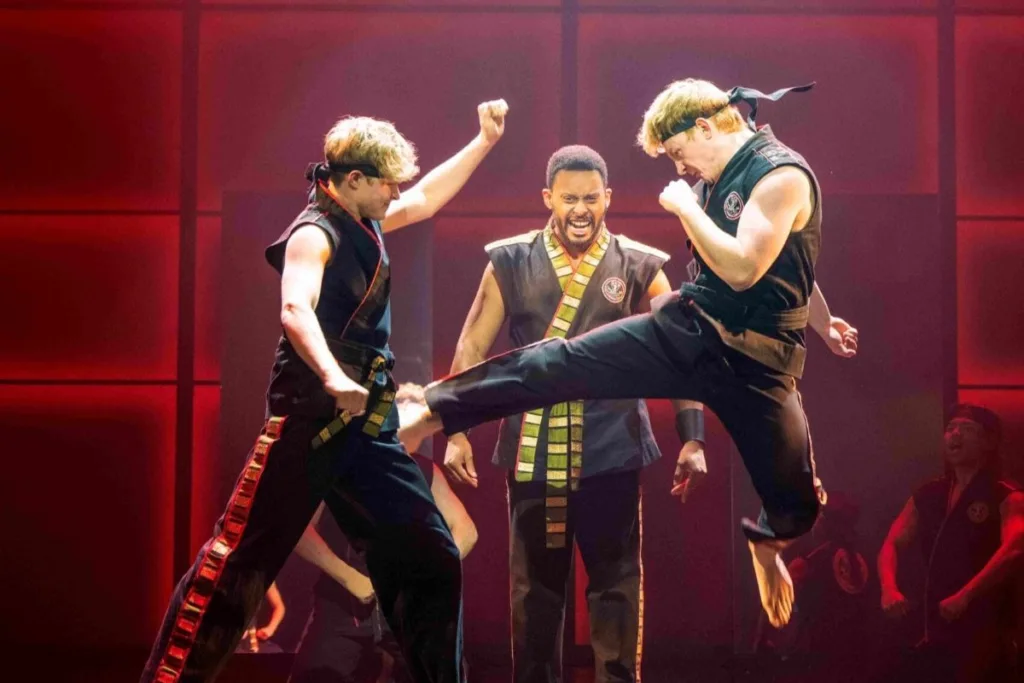
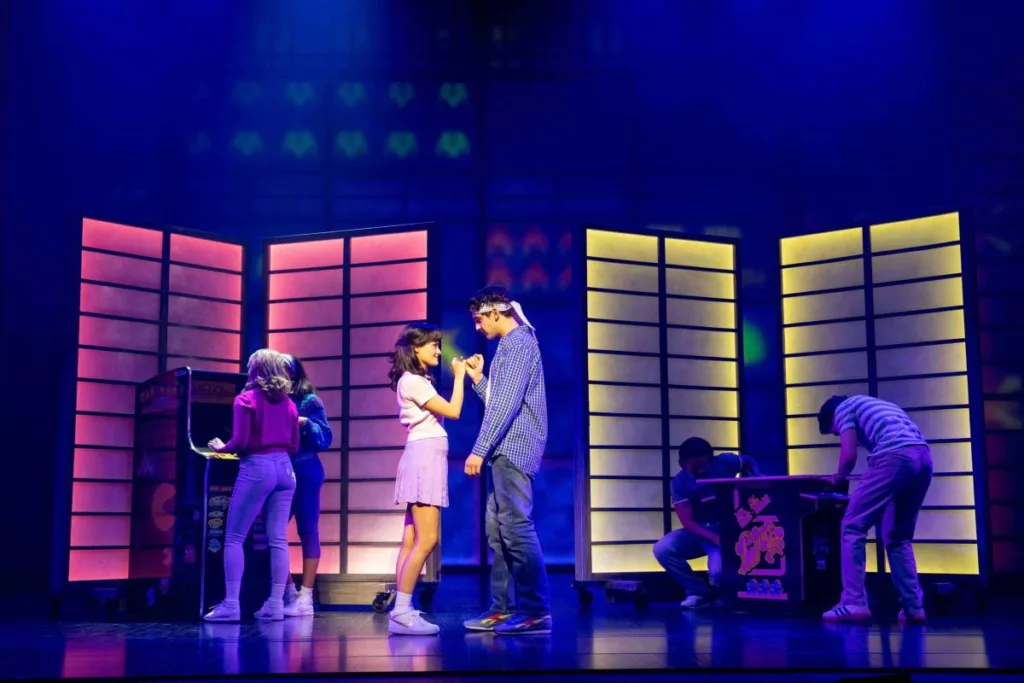
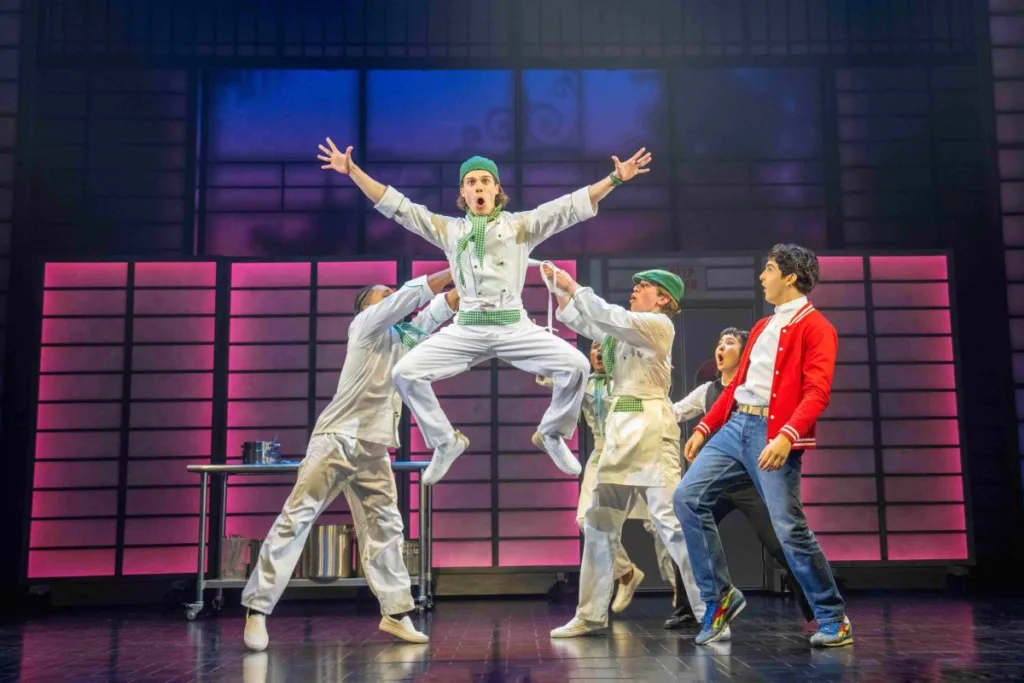
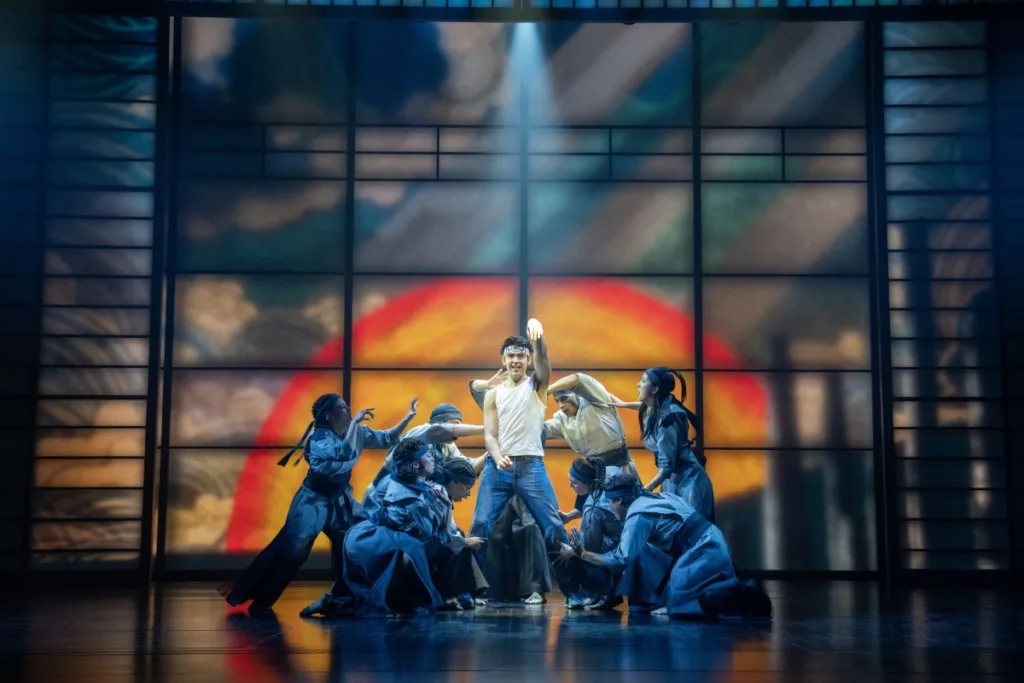
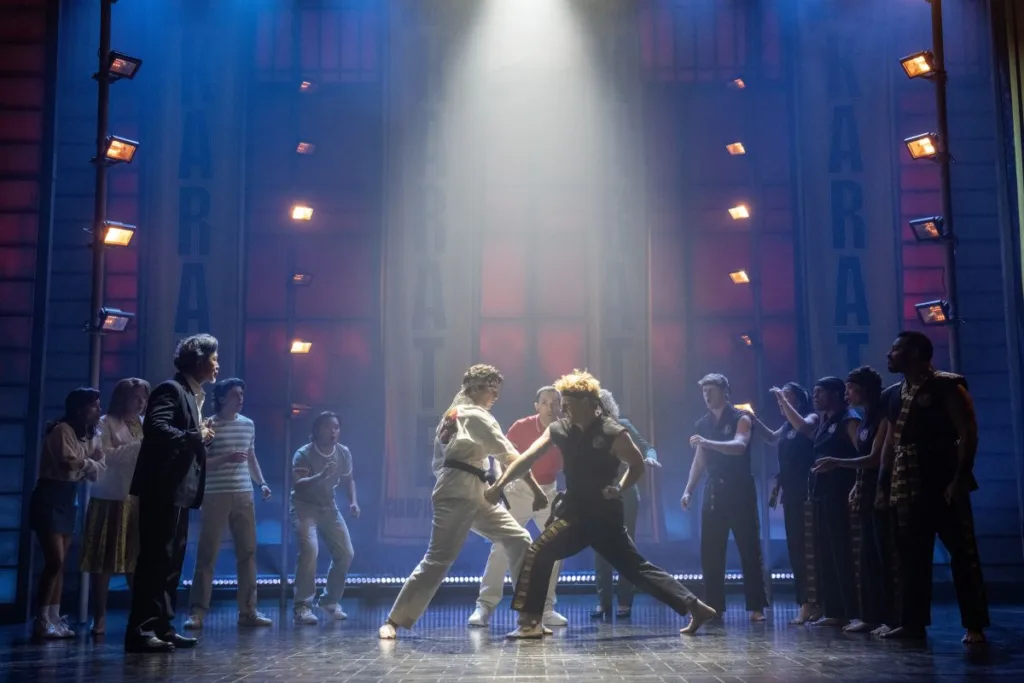
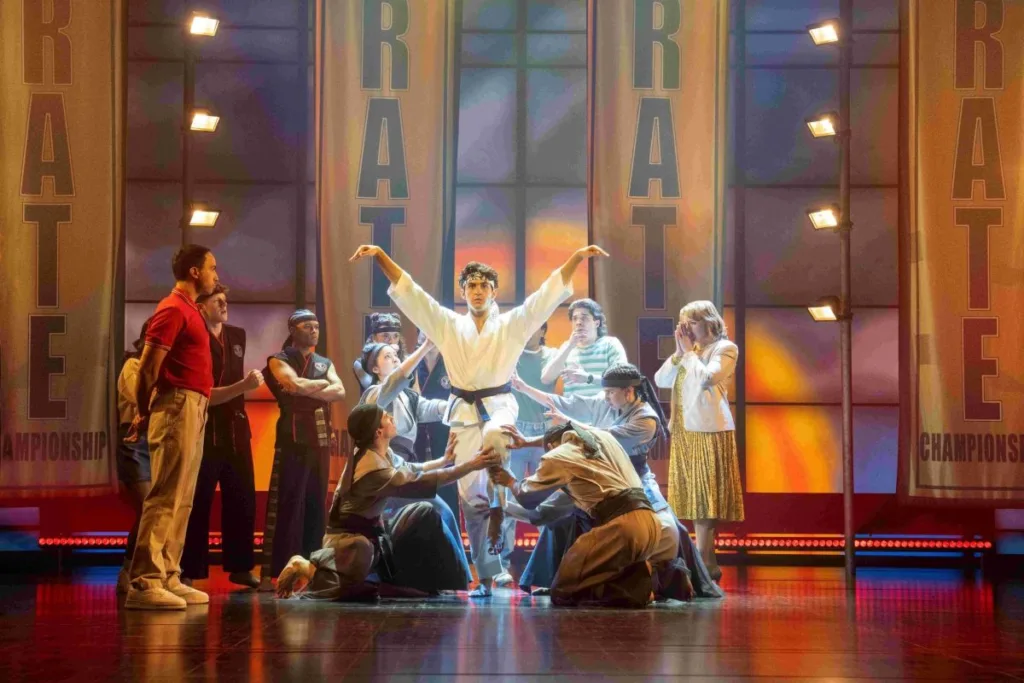
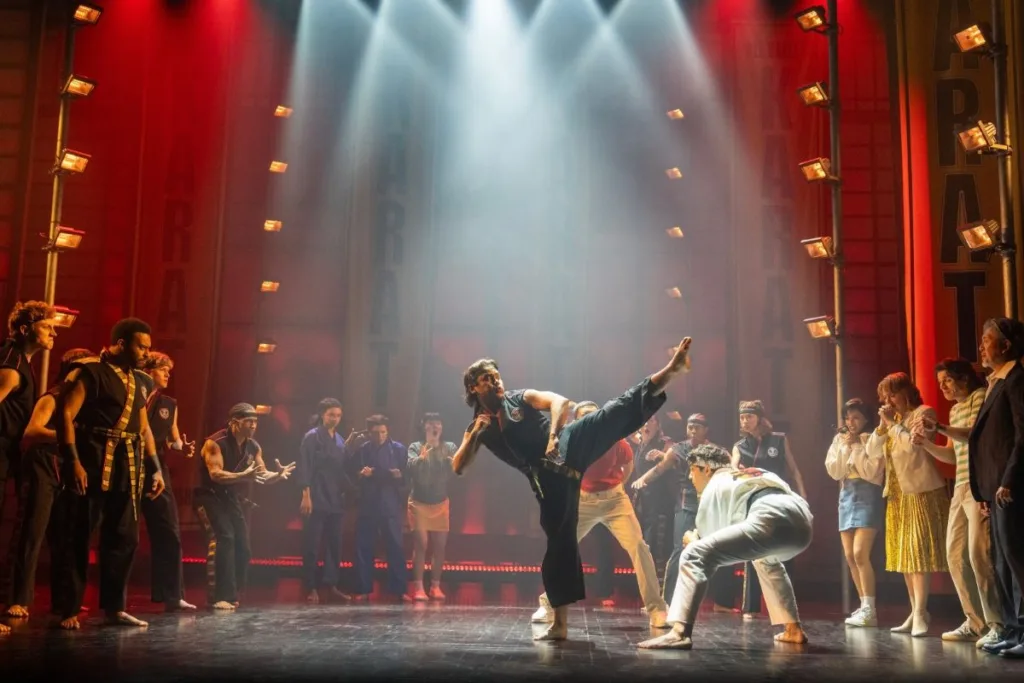
If the emotional arc is anchored in performance, the visual storytelling is where the production most consistently excels. Scene transitions are particularly well executed — fluid, dynamic, and often more expressive than the dialogue they connect. There is a strong sense of kinetic energy running through the staging, with movement used not just for fight sequences but as a narrative language in its own right.
The choreography gives the production its momentum. Training sequences and dojo philosophy are conveyed through disciplined physicality, reinforcing the idea that repetition, restraint, and focus are as important as confrontation. At its best, the staging communicates character development through movement rather than exposition, which feels entirely in keeping with the source material’s ethos.
Music: familiar, functional, but uneven
The musical score, however, is more divisive.
Much of it carries a contemporary, polished musical theatre sound that at times edges towards a Disney Frozen-like tonal quality — particularly in ensemble numbers that prioritise clarity and emotional accessibility over complexity. There is nothing inherently wrong with this approach, but it does create a sense of homogeneity across sections of the show.
As a result, some numbers blur together rather than standing distinctly in memory. The exception lies in quieter, more character-driven moments — particularly those involving Mr Miyagi and Lucille LaRusso — where the music allows space for emotional texture rather than broad sentiment.
Part of the issue may lie in the ensemble’s age profile, with several younger performers contributing to the production’s overall tone. This brings energy and commitment, but also contributes to a sense of uniformity in vocal texture that, at times, limits contrast.
A story about more than conflict
What gives The Karate Kid – The Musical its contemporary relevance is its attempt to position the story within broader questions of tolerance, identity and inherited conflict. The contrast between “strike first, strike hard, no mercy” and Miyagi’s philosophy of restraint becomes more than a plot device — it reads as a commentary on cycles of violence and the difficulty of breaking them.
There is even a sense, particularly in the framing of community and environment — whether one lives “in the valley or on the hill” — that the production is gesturing towards social division more broadly. In a world marked by political fragmentation and ongoing conflict, the show’s insistence on empathy and discipline feels quietly pointed.
Final thoughts
Ultimately, The Karate Kid – The Musical succeeds most when it trusts its quieter instincts. It is strongest in its performances, its movement language, and its central relationship between Daniel and Mr Miyagi. While the score does not always match the memorability of the story it supports, the production’s sincerity carries it through.
This is not just a retelling of a cult film. It is an exploration of how discipline, mentorship and restraint can shape identity in a world that often rewards the opposite. And when it lands, it does so with clarity, heart, and a surprising amount of emotional resonance.
Rating: ★★★★☆ (4/5)
Gallery
Click to enlarge