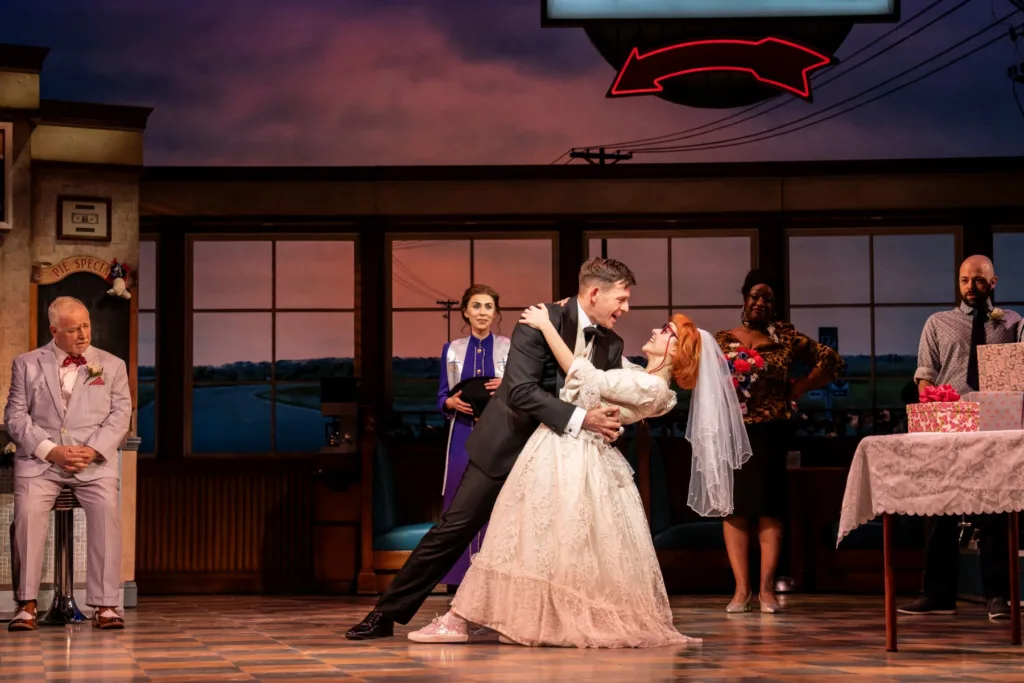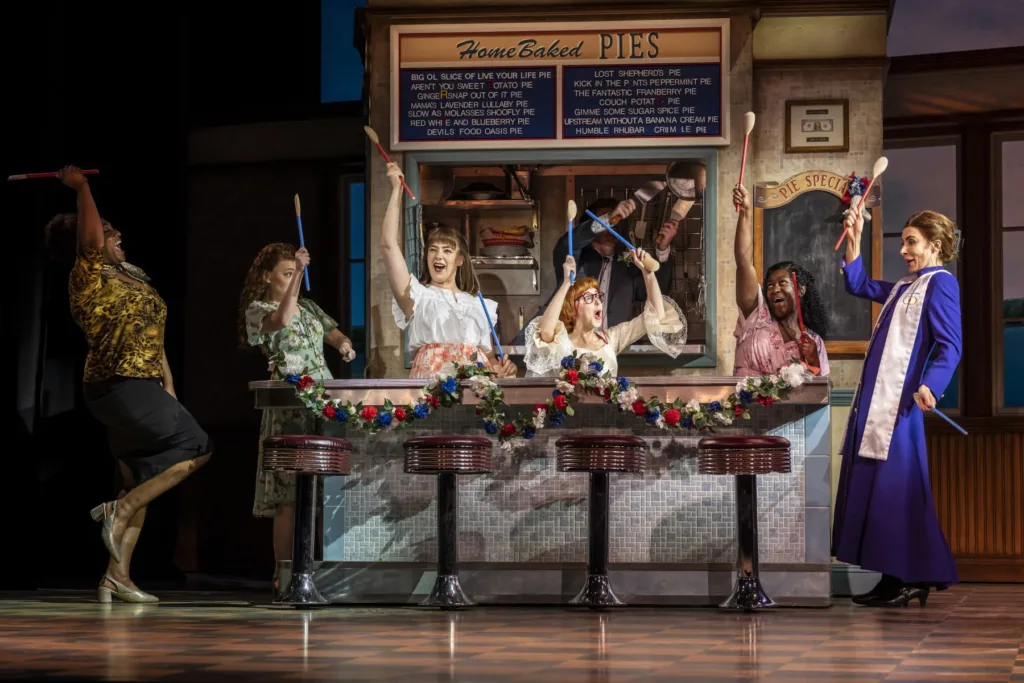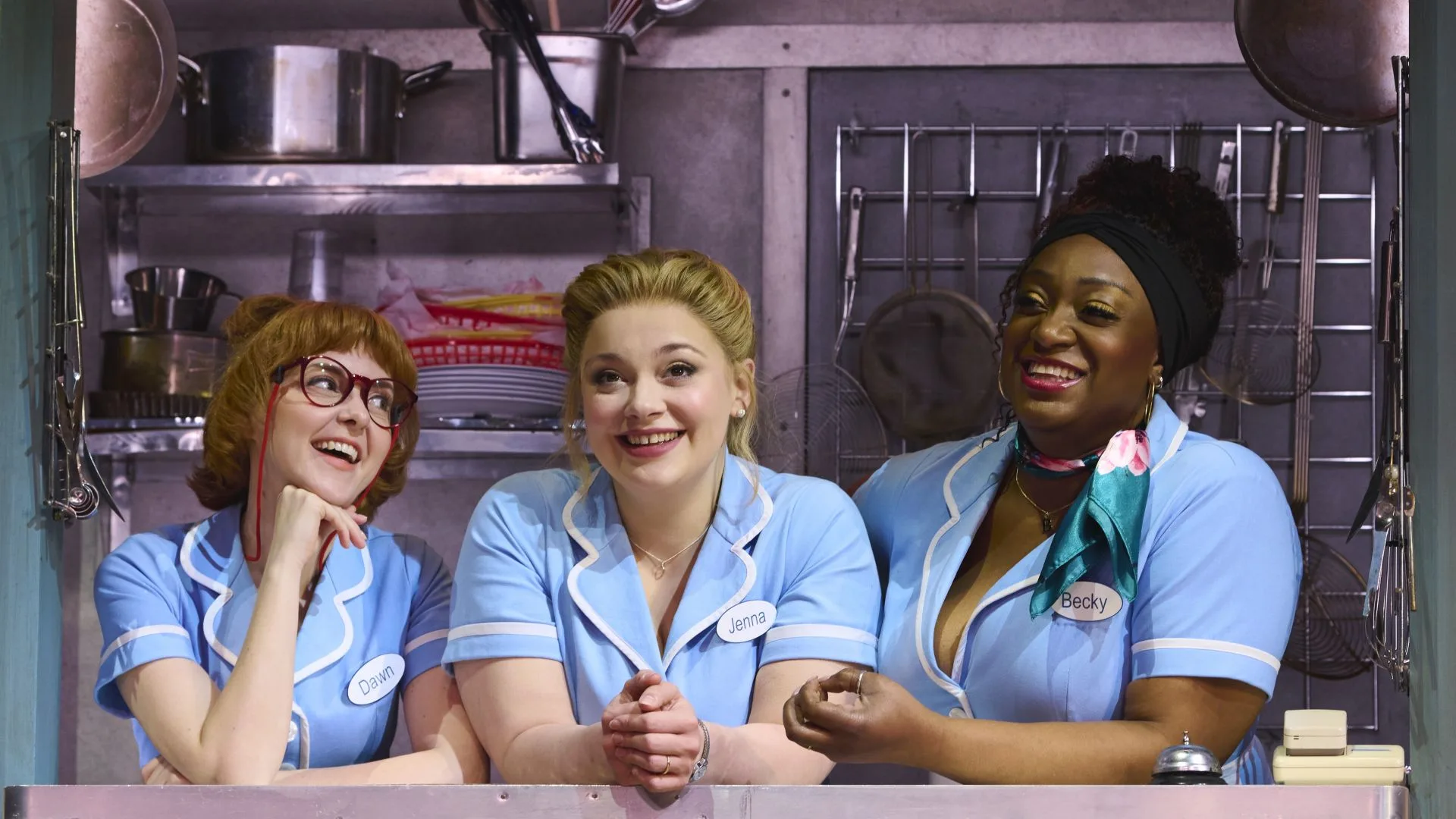
Waitress is a richly textured musical about the many forms love can take, told through the interconnected lives of a small-town diner. Led by Carrie Hope Fletcher as Jenna and featuring standout supporting performances, the production reflects its diverse characters, each searching for connection in their own way.
There is a particular clarity that comes when a musical understands exactly what it is about. In Waitress, that clarity is not rooted in plot mechanics or theatrical spectacle, but in something more quietly persistent: the way people, in all their contradictions, attempt to give and receive love in the circumstances they find themselves in.
Seen at New Theatre Oxford, the musical revealed itself less as a single narrative centred on Jenna than as a mosaic of emotional lives, each character negotiating intimacy in a different key. What emerges is a work shaped by diversity not only in casting or characterisation, but in emotional temperament — and that diversity extends directly into the score itself, which shifts fluidly between styles, tones and musical registers to accommodate them.
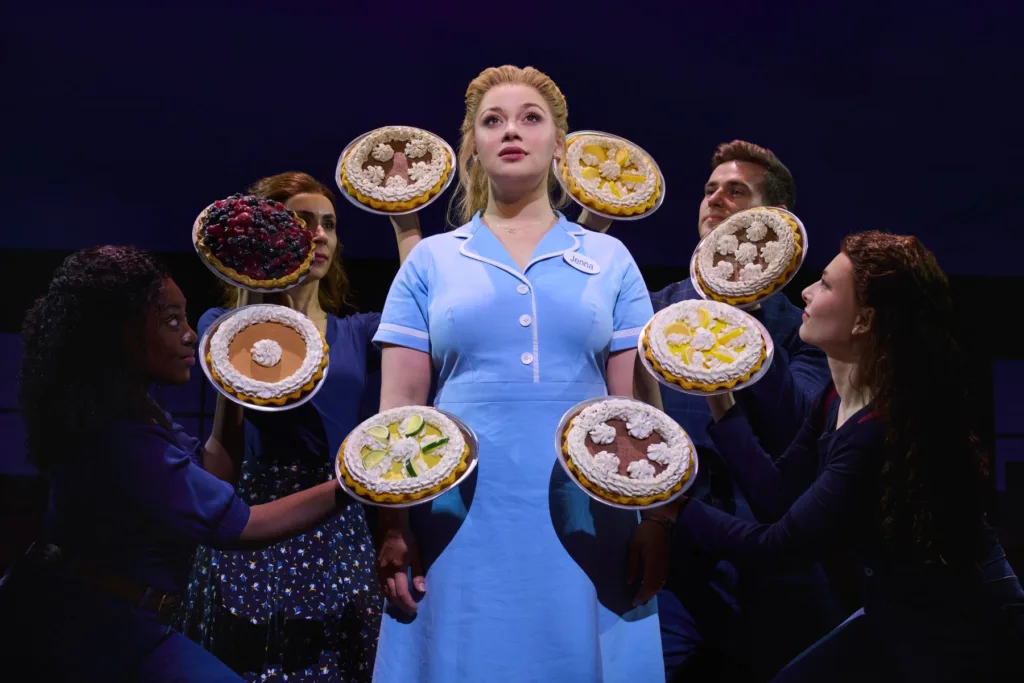
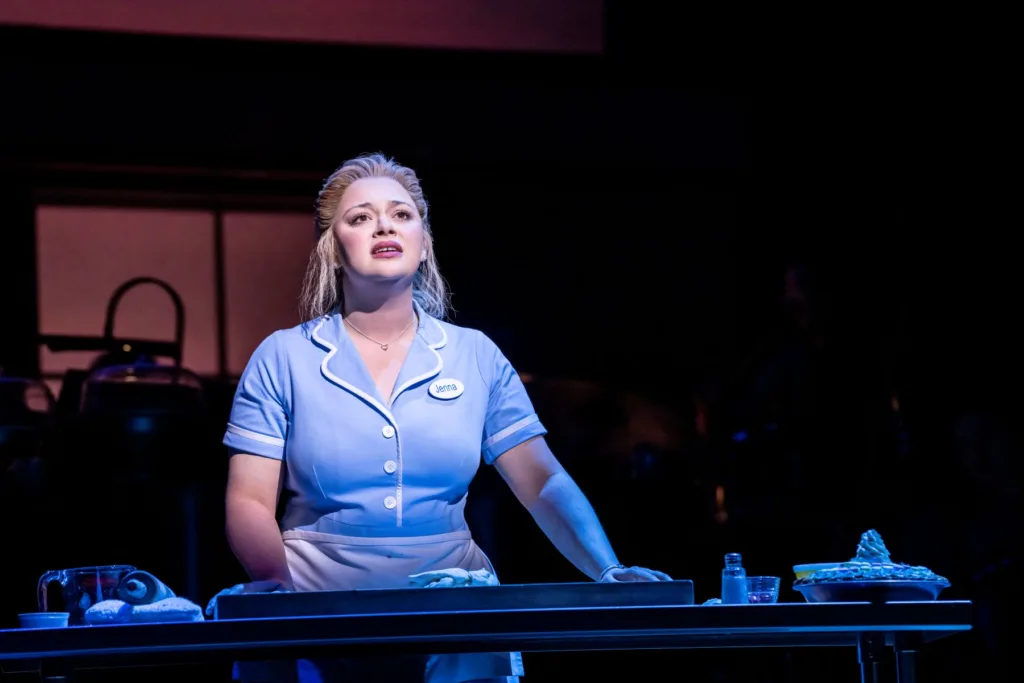
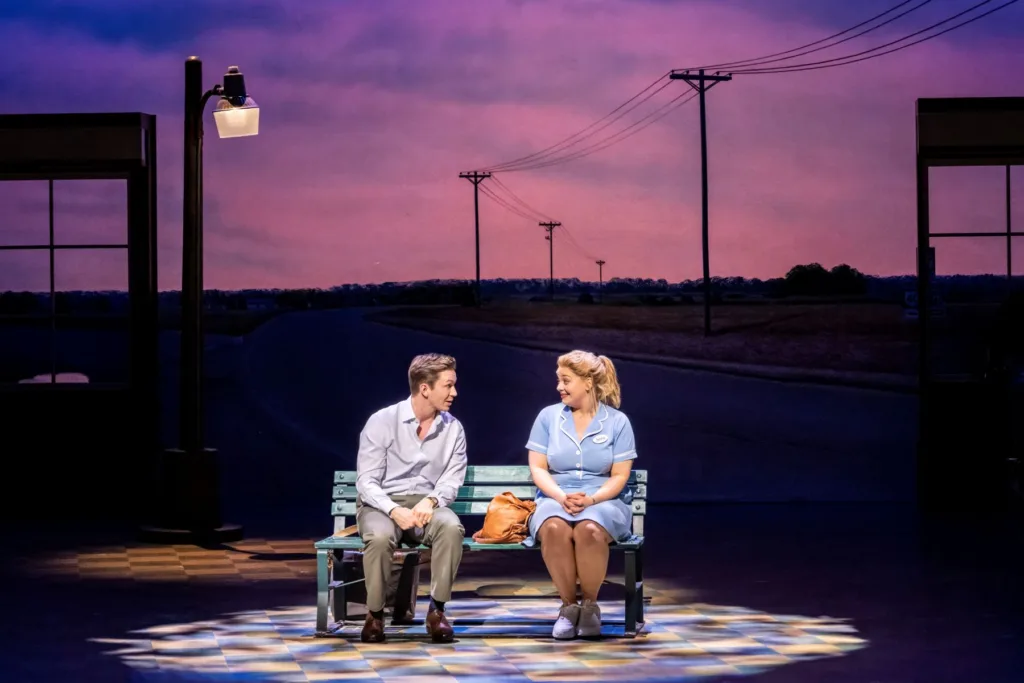
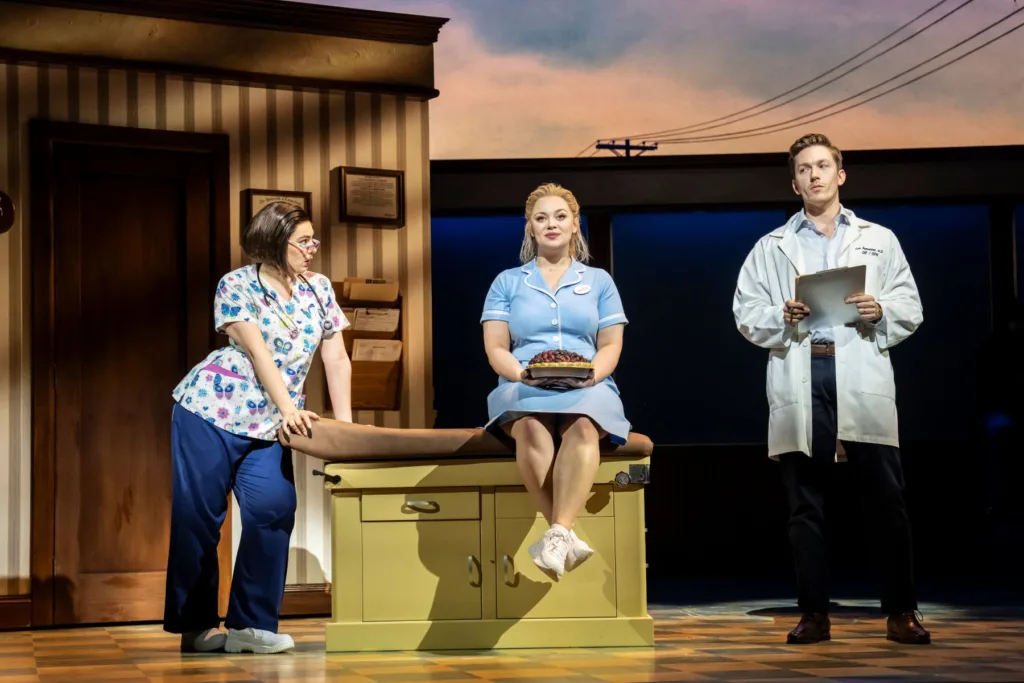
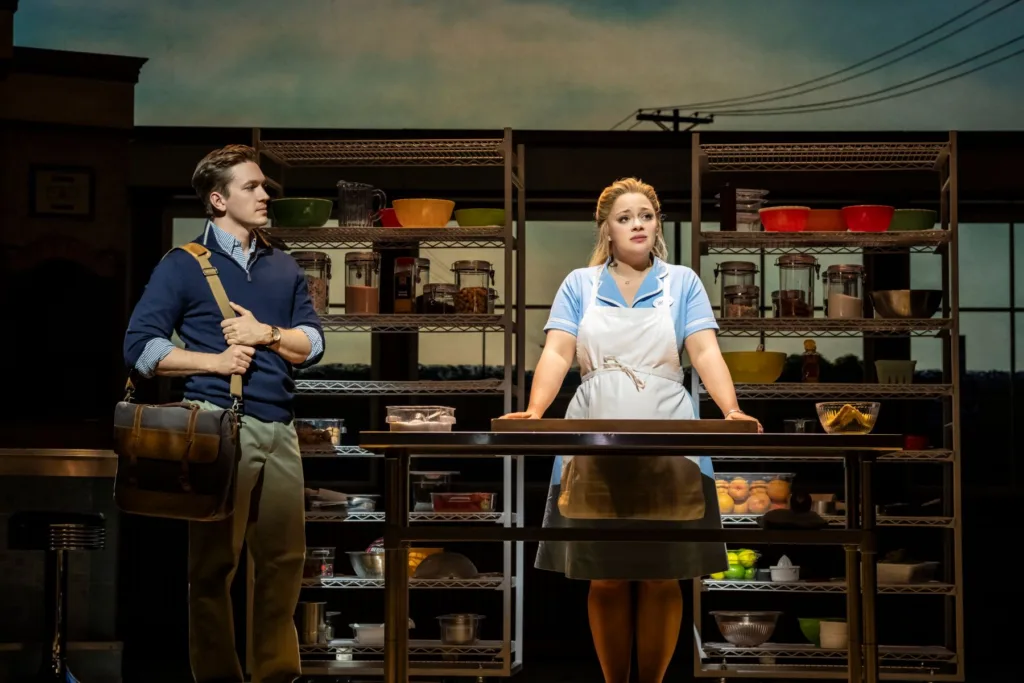
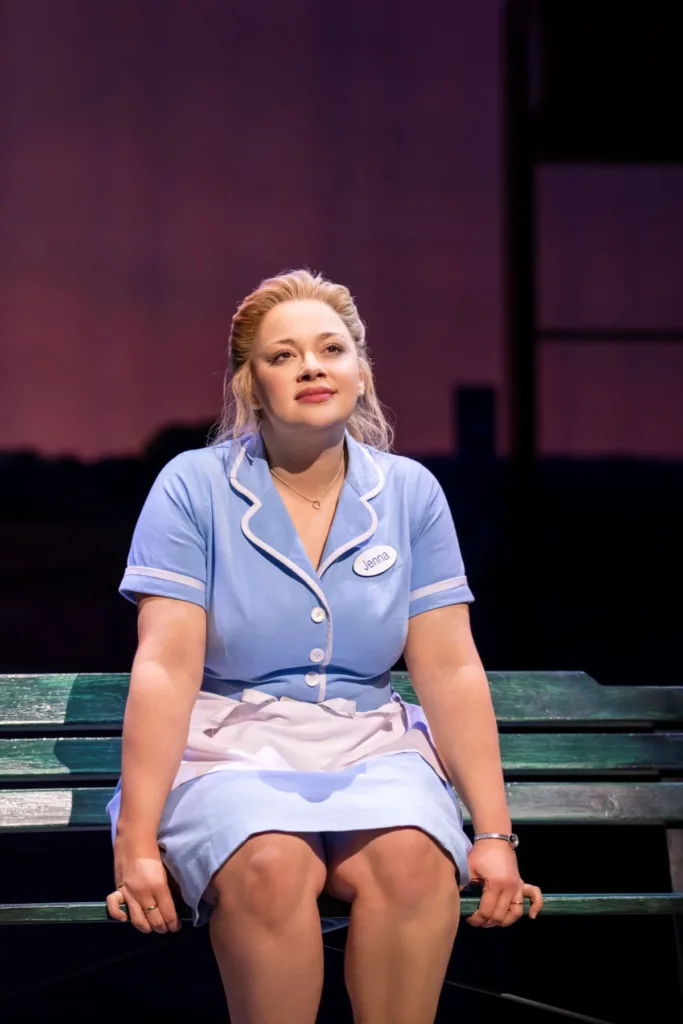
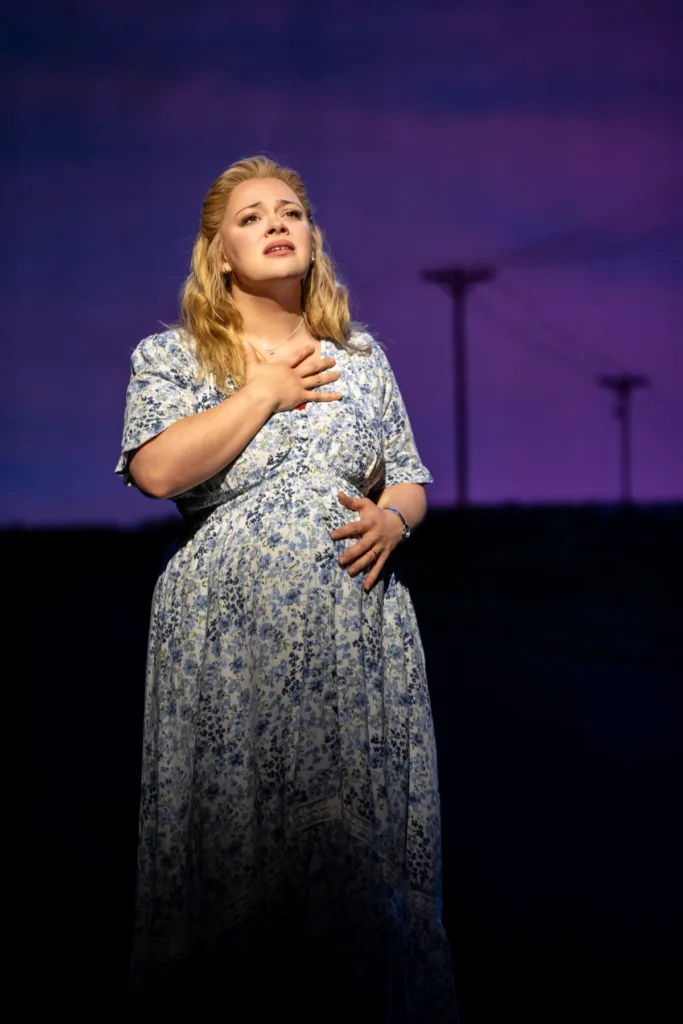
At the centre is Jenna, played by Carrie Hope Fletcher, whose performance feels entirely instinctive — as if the role fits her without resistance. There is a natural ease to her portrayal, a sense that she is not reaching for the character so much as inhabiting her from within. Fletcher brings a steady emotional intelligence to Jenna’s internal conflict, balancing restraint with vocal clarity and allowing the character’s quieter moments to carry as much weight as her musical peaks. It is a performance that feels complete in its control, but never over-calculated.
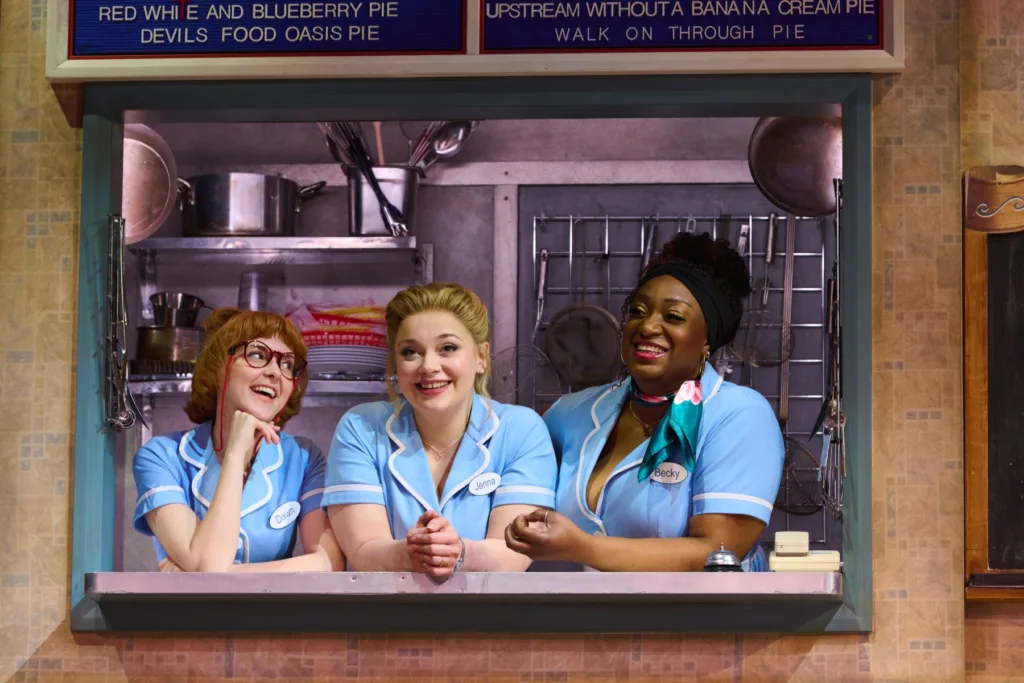
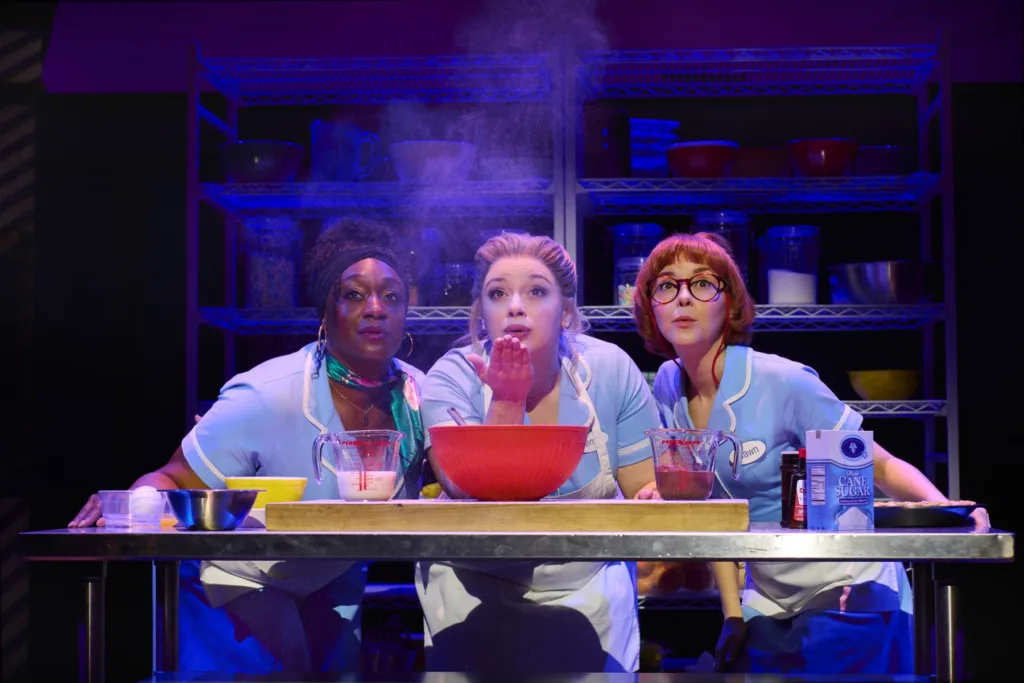
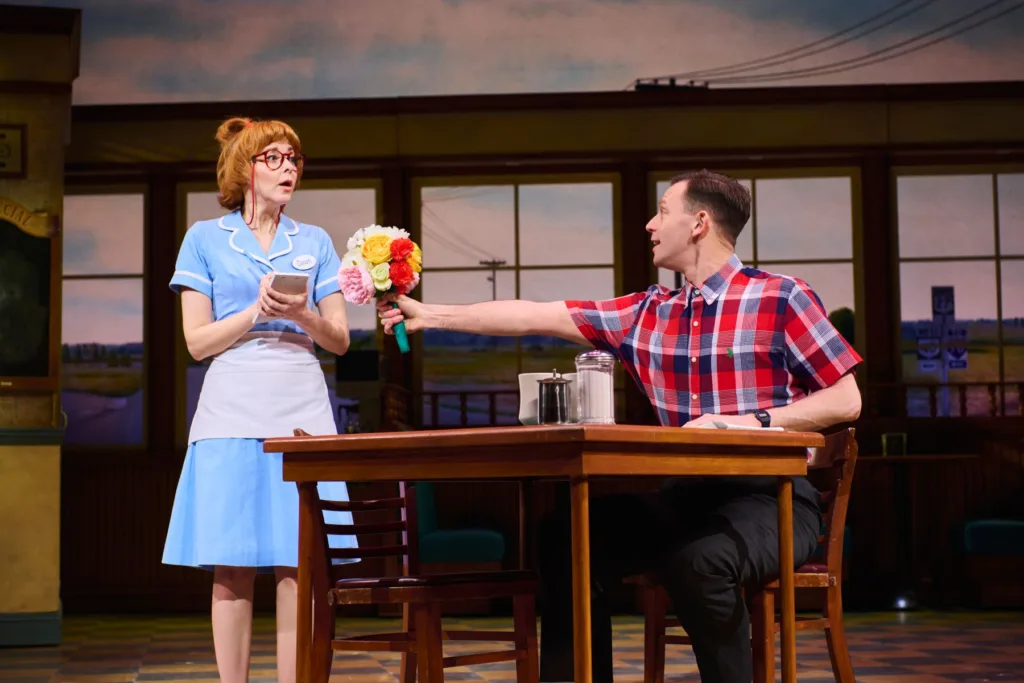
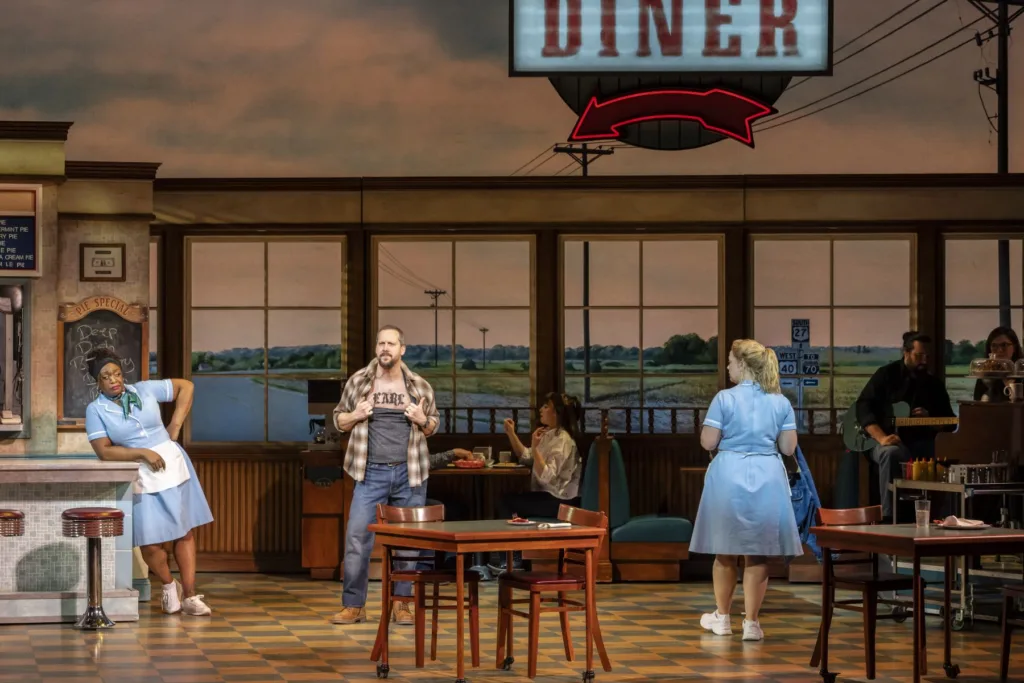
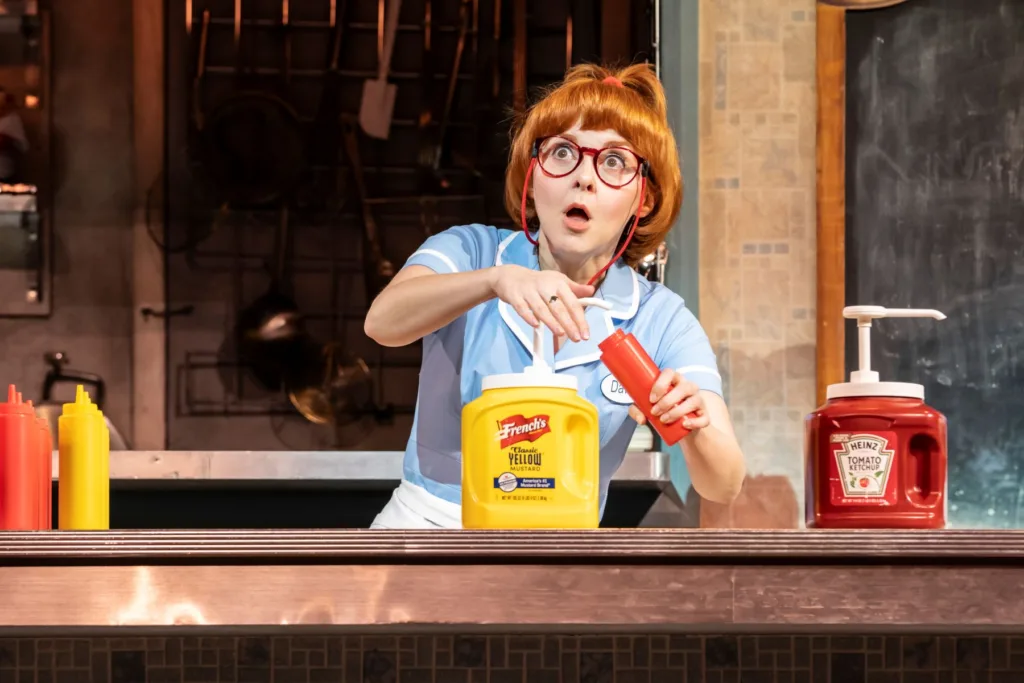
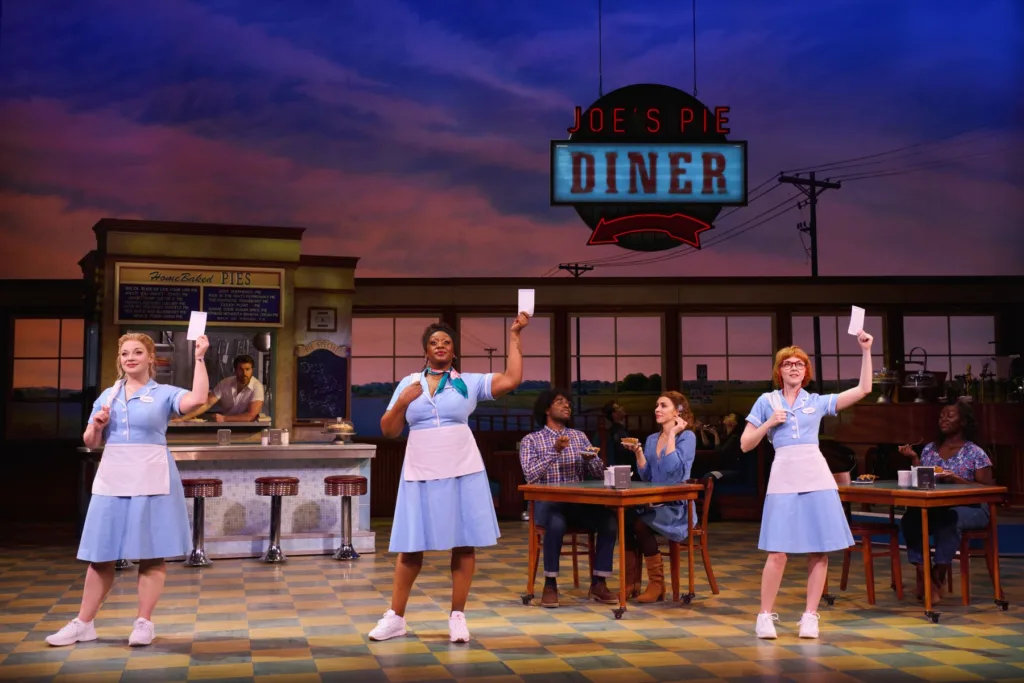
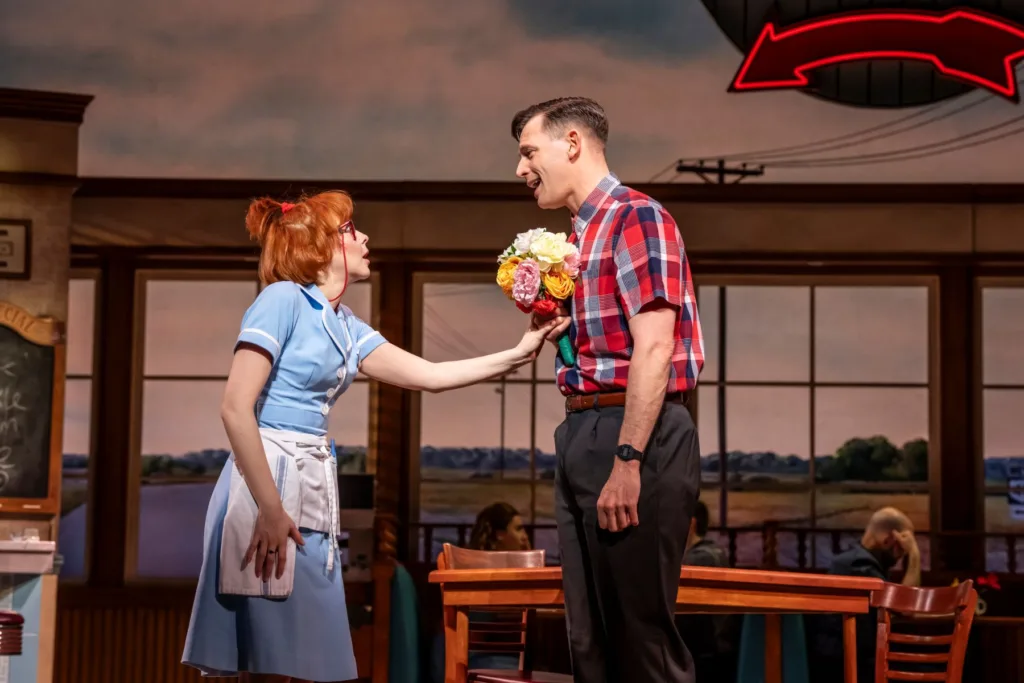
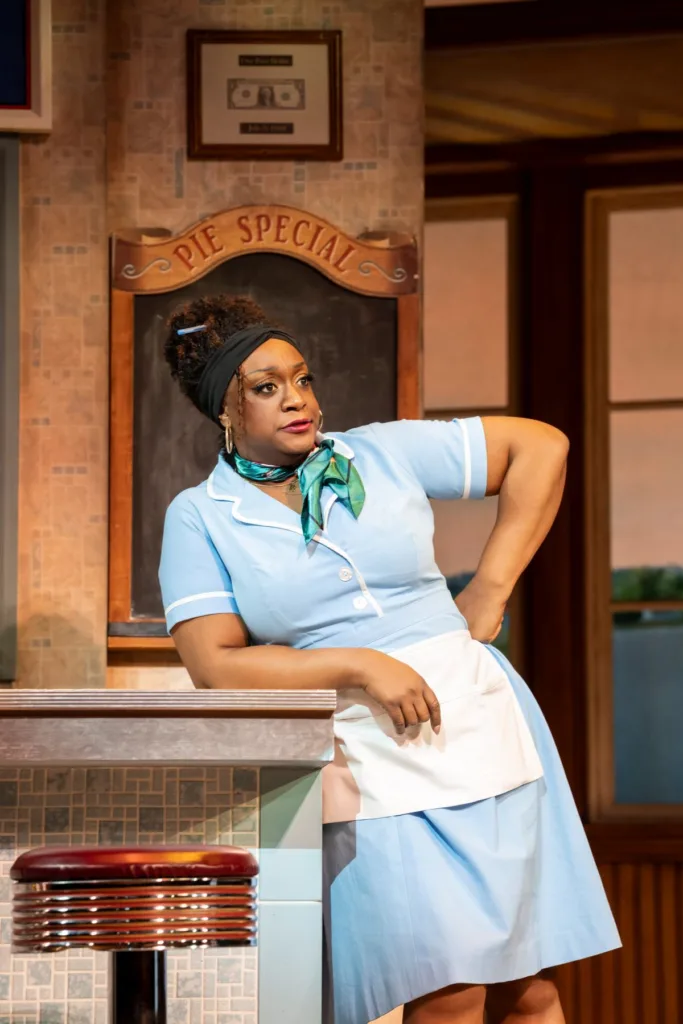
Around her, the diner world functions as a kind of emotional ecosystem, where other forms of longing exist in parallel rather than competition. Becky (Sandra Marvin) and Dawn (Evelyn Hoskins) are not narrative foils so much as distinct emotional frequencies. Becky’s grounded pragmatism carries a lived-in weariness, but also a refusal to be diminished by circumstance. Dawn’s nervous optimism, by contrast, is tentative and self-protective, her relationship with Ogie (Mark Anderson) unfolding in a deliberately awkward, sincere and unguarded register. Each character is, in their own way, working out what it means to be loved without having to become someone else in the process.
Among these performances, Sandra delivers one of the evening’s most memorable tunes. Her rendition of I Didn’t Plan It in the second act stands out as a defining moment — not just vocally assured, but emotionally unguarded in a way that shifts the temperature of the entire production. It is delivered with a sense of hard-won self-knowledge. In that moment, Becky steps fully into focus as a character whose emotional life is as complex and unresolved as Jenna’s, but expressed with a very different kind of clarity.
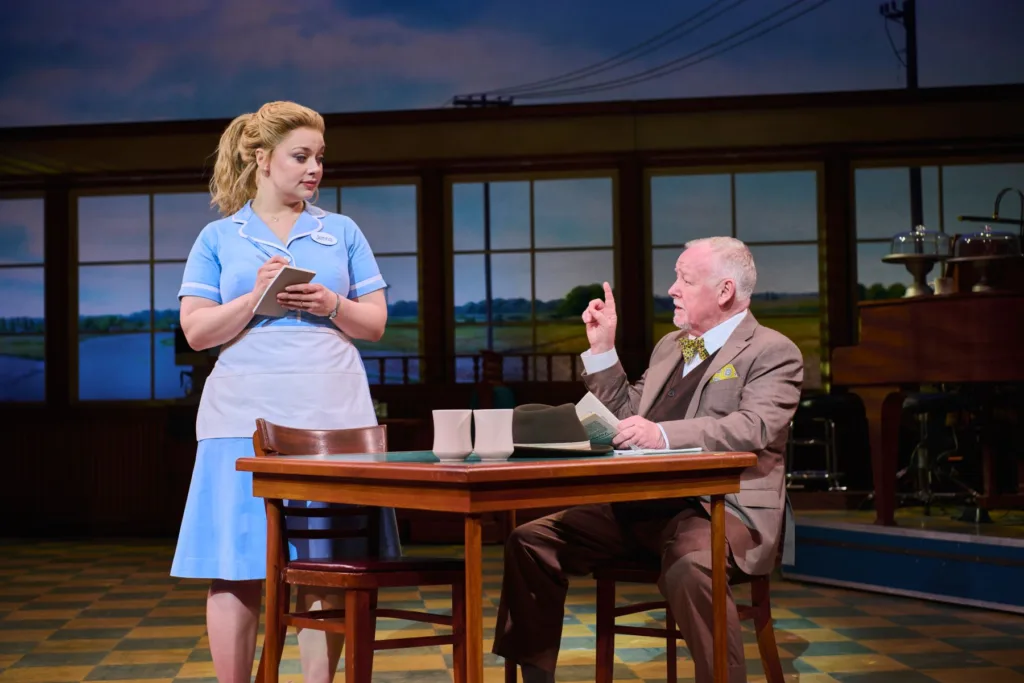
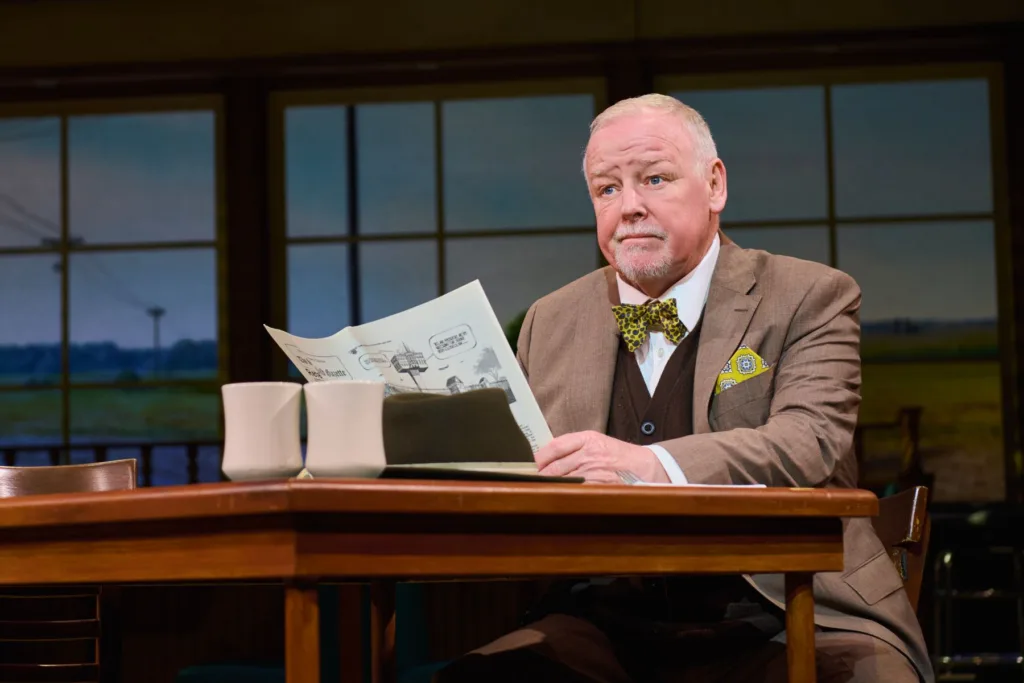
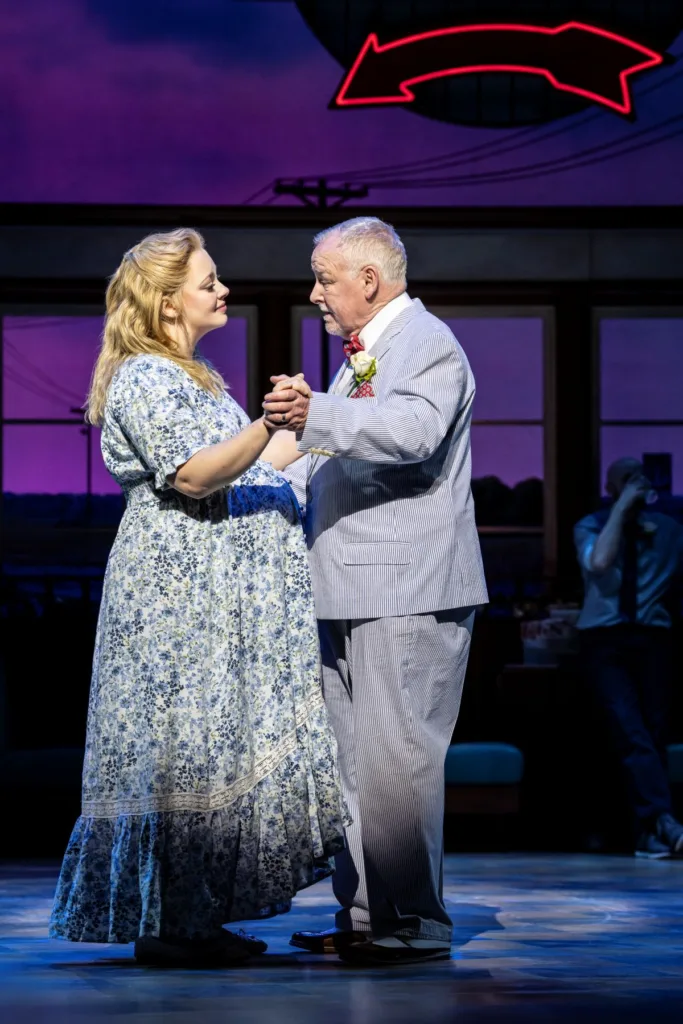
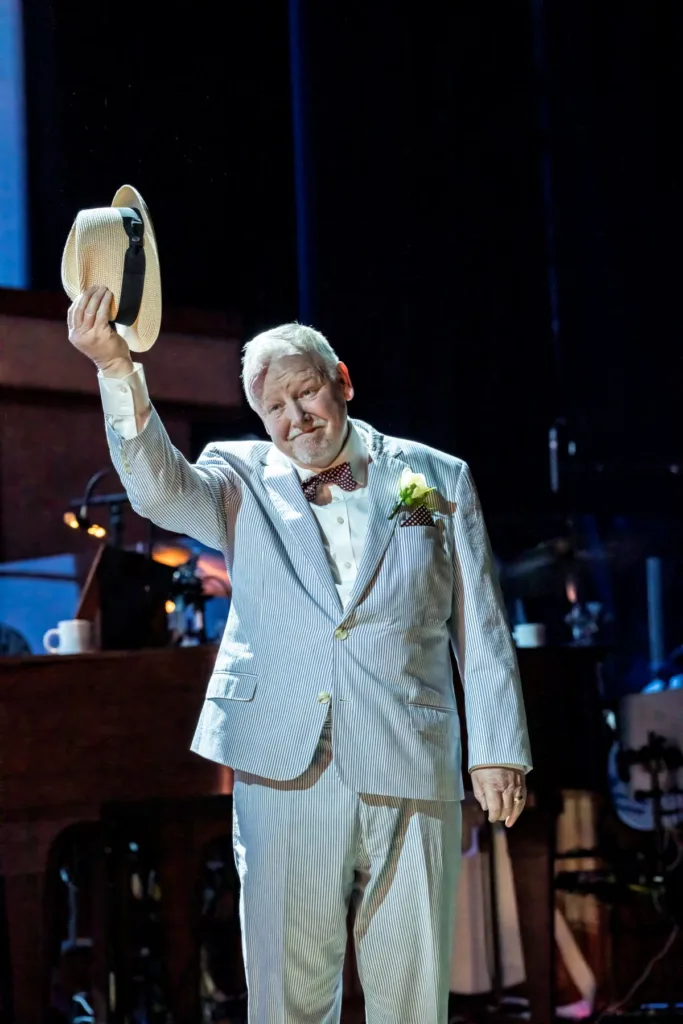
Even the male characters are written into this same emotional architecture, though with different pressures attached. Les Dennis’ Joe, the diner’s owner, occupies a quieter space within the narrative, but one that feels essential to its emotional balance. He is a man shaped by time and loss, but not defined solely by either. His presence is observational rather than directive, and his understanding of Jenna is filtered through recognition rather than instruction — a form of care that is understated but significant.
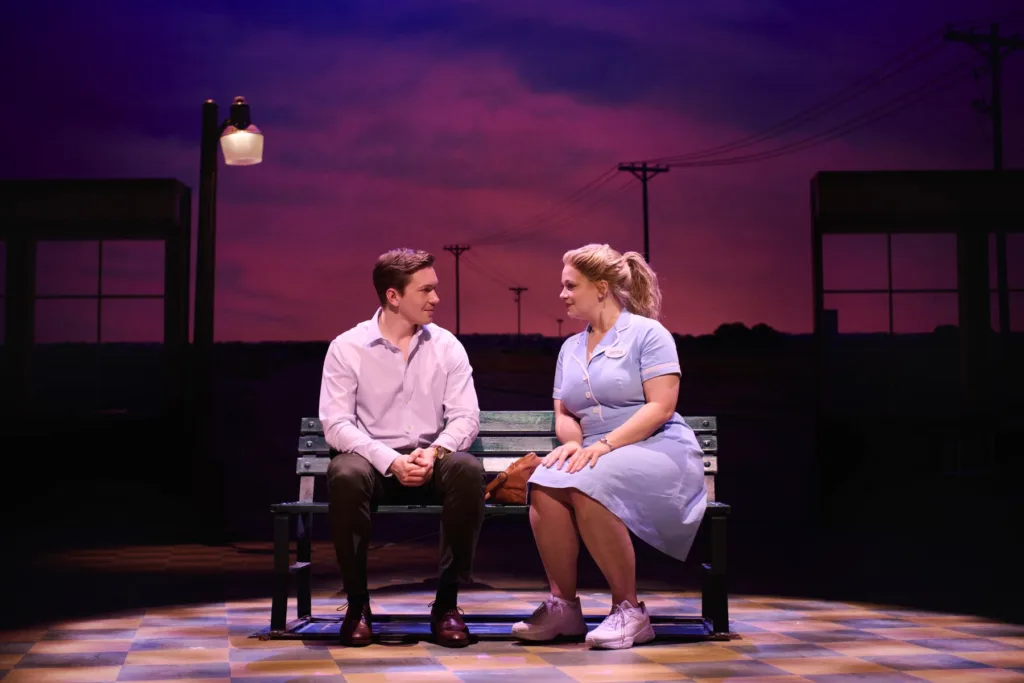
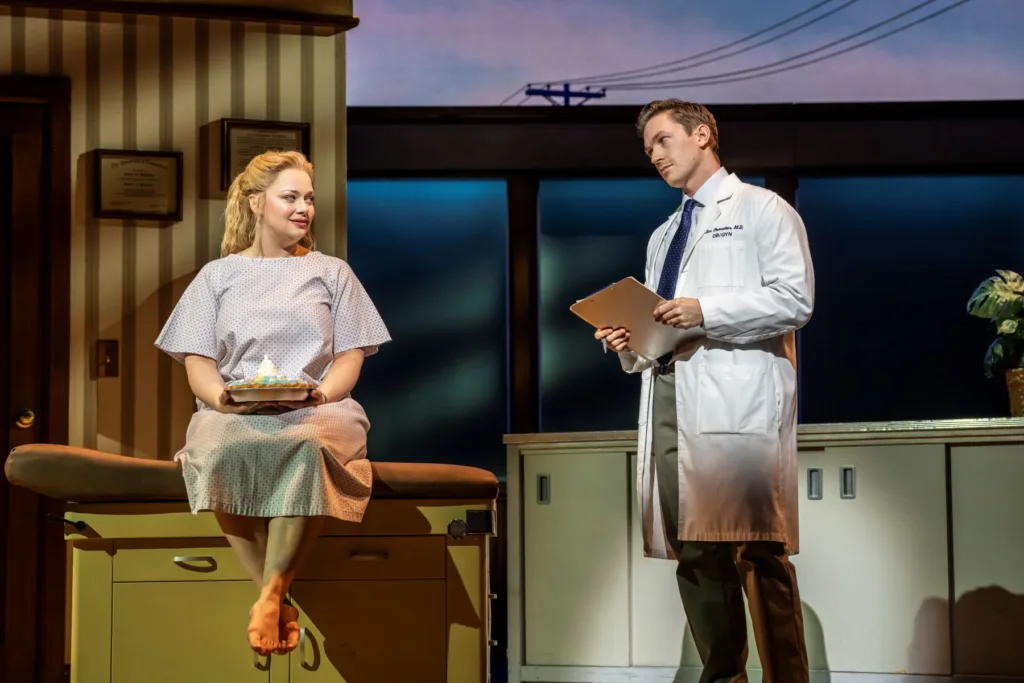
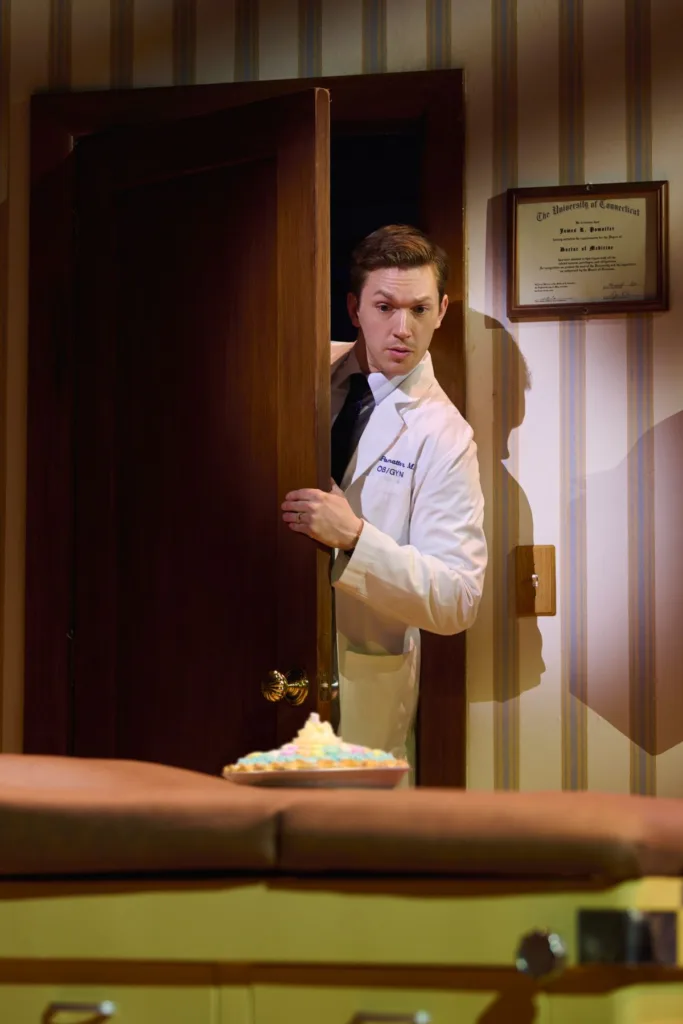
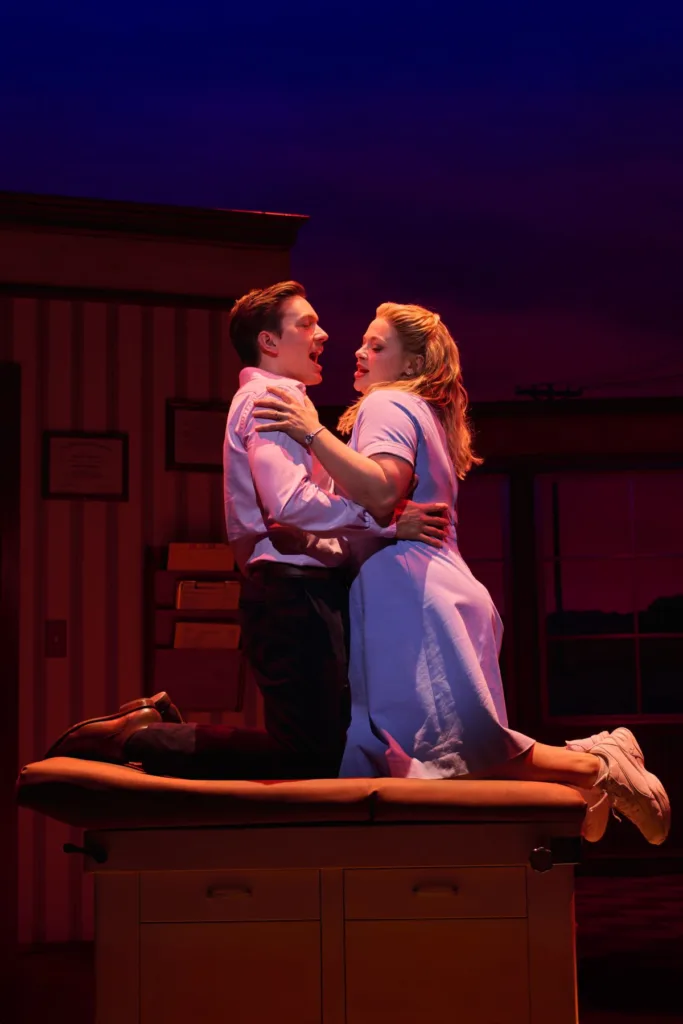
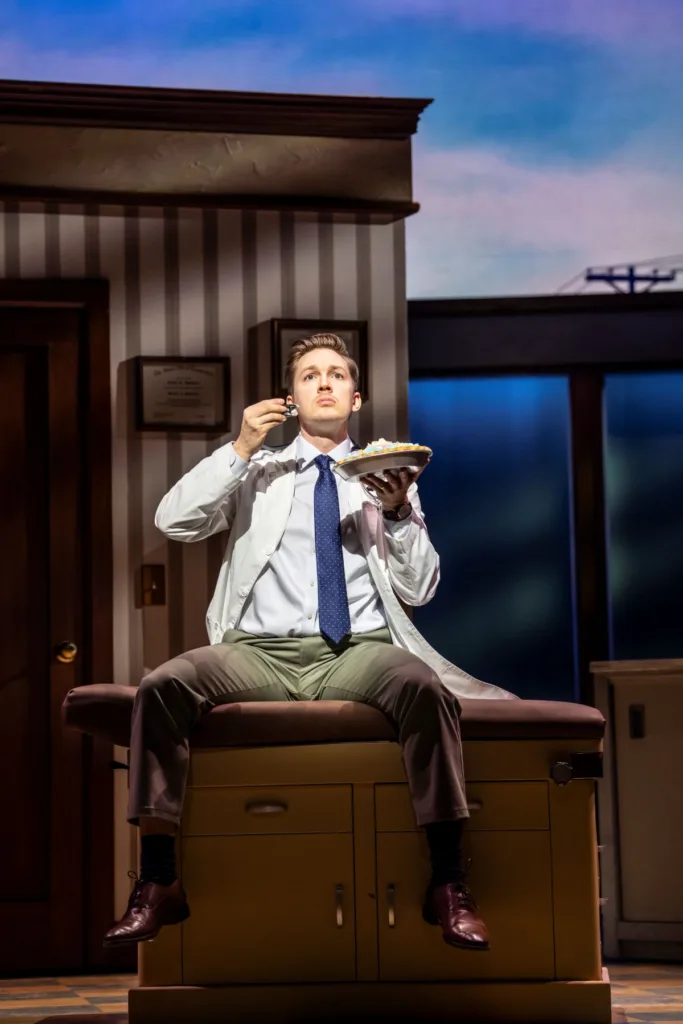
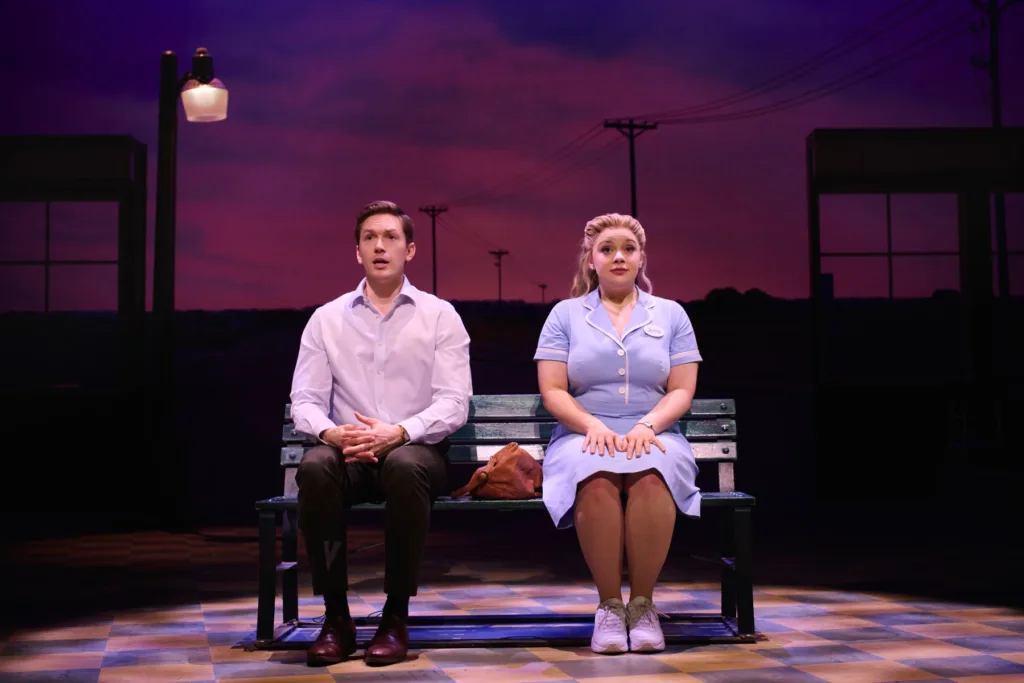
Dr Pomatter (Dan Partridge) exists in that uneasy space between desire and consequence, capturing the character’s indecision and guilt without ever flattening him into caricature. There is a nervous, self-conscious energy to the performance that keeps him perpetually slightly off-balance, caught between impulse and responsibility. Even Cal (Dan O’Brien) — the diner manager and clear figure of authority and discipline — is not immune to the same emotional undercurrents that run through the rest of the diner, quietly navigating his own need for connection too.
What becomes striking over the course of the evening is how deliberately Waitress resists emotional uniformity. There is no single language of love in the show; instead, there are multiple dialects, each shaped by personality, history and circumstance. Romantic love appears alongside friendship, dependency alongside autonomy, self-protection alongside vulnerability. The musical does not attempt to resolve these tensions into a singular truth. Instead, it allows them to coexist.
That structural diversity is mirrored in Sara Bareilles’ score, which remains one of the most distinctive elements of the piece. Rather than adhering to a single musical style, the composition shifts in tone to reflect character perspective. Jenna’s material often carries a melodic introspection that feels close to confessional songwriting, while Becky’s lines are grounded in rhythm and conversational cadence. Dawn’s musical world is lighter, more tentative, often leaning into nervous repetition and rhythmic hesitation. Even ensemble moments feel calibrated to emotional texture rather than genre consistency.
One of the most quietly distinctive aspects of this production is its use of a live band and visible musicians, which adds an immediate, tactile quality to the performance. Rather than feeling mediated or pre-packaged, the score carries a sense of breath and presence in the room, reinforcing the intimacy of the storytelling. The music does not sit beneath the action so much as alongside it, responding in real time to shifts in tone and emotion. It is a reminder that, in theatre, sound is not simply accompaniment but part of the emotional architecture of the piece.
It is this responsiveness — this willingness to let musical form bend to character — that gives Waitress its emotional range. Songs such as She Used to Be Mine have, understandably, taken on a life beyond the show itself, but within the theatrical context they function less as set pieces and more as emotional disclosures. They arrive not to resolve tension, but to articulate it.
Diane Paulus’ direction and Lorin Latarro’s choreography support this emphasis on intimacy rather than scale. Movement is understated, often rooted in everyday behaviour rather than stylised theatricality. The diner feels lived-in rather than designed, and the staging consistently privileges proximity: conversations happen close enough to feel overheard rather than performed.
Ultimately, what holds the production together is not narrative resolution but emotional recognition. Each character is, in their own way, seeking a form of love that does not require self-erasure. That may be romantic, but it is equally about friendship, acceptance, stability or self-regard. The musical’s strength lies in its refusal to rank these desires or treat them as interchangeable.
By the end of the evening, what lingers is not a single emotional arc but a collection of them — intersecting, diverging, occasionally unresolved. Waitress does not insist on neatness, and in that refusal it finds its particular honesty. It suggests that love, in its many forms, is rarely singular or tidy, but layered, inconsistent and ongoing.
What remains is a work that understands its characters not as types, but as people trying — sometimes clumsily, sometimes beautifully — to be understood. And in that sense, it is less a story about escape than about attention: who we notice, how we care, and what it costs to keep reaching for connection amidst ordinary life.
Waitress runs at New Theatre Oxford until Saturday 04 July 2026, with limited tickets available via the ATG Tickets website.
Gallery