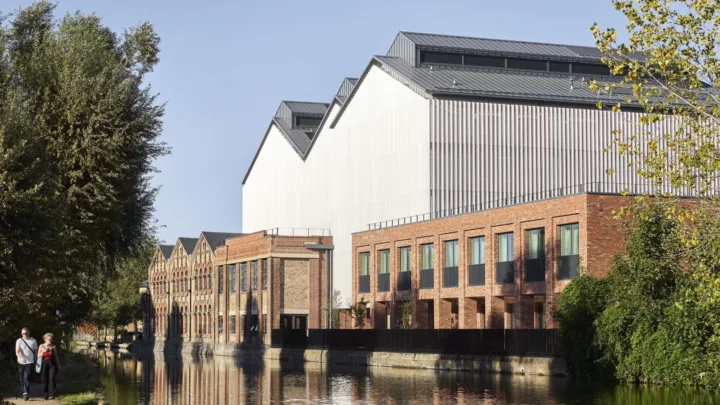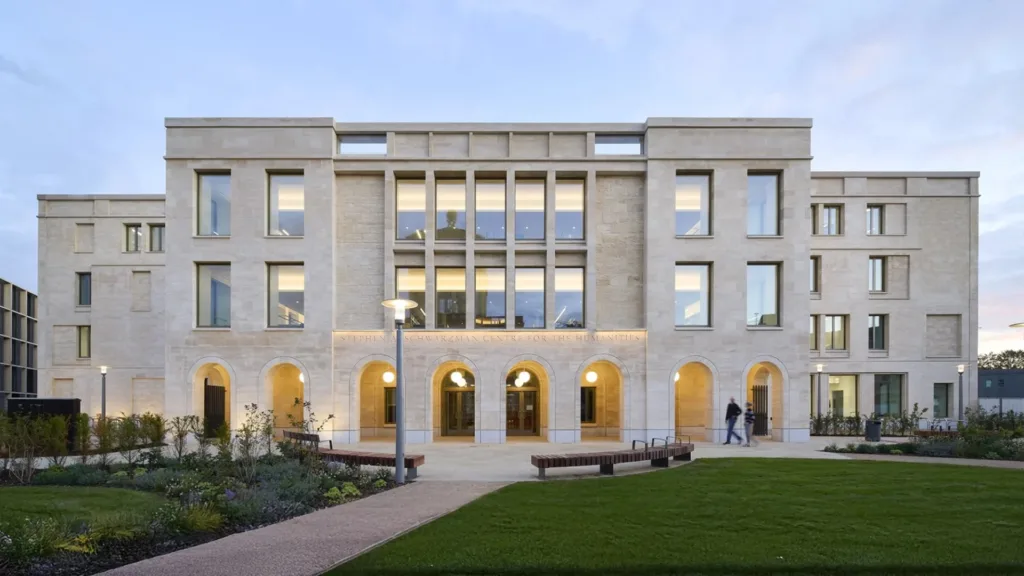
Oxford University’s new arts and humanities centre has officially opened its doors to the public, marking a historic first for the institution, according to our Local Democracy Reporter Esme Kenney.
The Stephen A. Schwarzman Centre for the Humanities, located in the Radcliffe Observatory Quarter, brings all the University’s humanities departments together under one roof, including the newly established Institute for Ethics in AI.
The centre will be officially launched on 13 October at the start of term, but both students and members of the public are already using its wide range of facilities.
Among its highlights are a 500-seat Sohmen Concert Hall, a 250-seat theatre, a black box space for immersive performances, a dance studio, a cinema, and an exhibition area.
Visitors arriving via Woodstock Road are welcomed into a spacious Great Hall with seating, a café, and a bar.
Programming will begin in April 2026 with an ambitious line-up, including a 360-degree immersive audio experience with Icelandic post-rock band Sigur Rós, performances by American street dance star Lil Buck, and a series of conversations about AI, creativity, and music chaired by journalist and broadcaster Samira Ahmed.
Professor Dan Grimley, Head of Humanities at University of Oxford, said he hoped the centre would enhance Oxford’s cultural and tourism appeal. He said:
“Don’t just come for the day and wander around our pretty buildings – come and see an exhibition, come and see a concert, come and have those life changing experiences.
“Spend the night here if you’re not from Oxfordshire and really immerse yourself in that cultural offer.
“Then I think people will have a much more rewarding experience being here, and that’s absolutely what makes Oxford a global city.”
Professor Grimley also stressed that the centre could help make arts and humanities, as well as the University itself, more accessible to the public. He added:
“I went to a state comprehensive school, and I feel really passionately about access to arts, culture, languages and history.
“I worry that there’s been so much pressure on those subjects in the school curriculum that the version of me going through school now might not have that same opportunity, and that feels wrong to me.
“If there’s a way in which we can use this space to accelerate that access, I think that would be a really important part of our mission as a University.”
The centre is already working with local schools and organisations who may want to use the facilities, and is exploring opportunities for apprenticeships and internships. The Bate Collection of historic musical instruments will also be available for the public to view and even try playing.
Musicians in Oxford have previously said they hoped the centre would help boost the city’s music scene after a number of popular venues closed. Professor Grimley said:
“I hope we can offer a suite of spaces that supports a diverse range of music, whether its south Asian or jazz or folk, through to contemporary and classical.
“In and of itself that’s not enough – what I want us to be able to do is help advocate for live music again, because what we really want to see the richest range of venues across the city.
“If by supporting artists and creating opportunities to get involved, we can help reinvigorate that community, that’s really important.
“I think there’s a national sense in which the public rightly want to see the social benefits of what universities can offer.
“It’s also about making the case for the humanities. It will take time, but I think we can really do it and seize the opportunity.”
The development was made possible by a £185 million donation from Stephen Schwarzman, co-founder of Blackstone. The building is open to the public from 8.00am until 8.00pm every day, without the need to sign in or make a booking.