Graven Hill’s pioneering approach to wildlife protection is delivering exceptional results, with its bat population almost doubling in just a year.
The development, located on the former MOD site in Bicester, has seen remarkable ecological gains thanks to a long-term conservation strategy designed to protect native bat species.
When redevelopment plans for the site began in 2015, an ecological survey by Waterman Infrastructure & Environment revealed roosts belonging to protected pipistrelle and long-eared bats within several buildings earmarked for demolition.

As a result, the wider Graven Hill development was required to secure a European Protected Species Licence from Natural England before any construction could proceed. The licence mandated extensive mitigation measures, including the creation of alternative roosts, ecological enhancements, and ongoing population monitoring.
Central to this strategy was the installation of 45 new bat boxes in 2021, carefully positioned across the site to encourage the bats to relocate. Over the last decade, Waterman’s ecologists have monitored the success of these boxes, and the results from recent years show a thriving and increasingly diverse bat community.
The 2024 bat census revealed eight active roosts, including 15 common pipistrelle (Pipistrellus pipistrellus) and one natterer’s bat (Myotis nattereri). In 2025, roost numbers grew to 11, supporting 14 common pipistrelle, 3 soprano pipistrelle (Pipistrellus pygmaeus), 10 natterer’s bats, and 4 brown long-eared bats (Plecotus auritus).
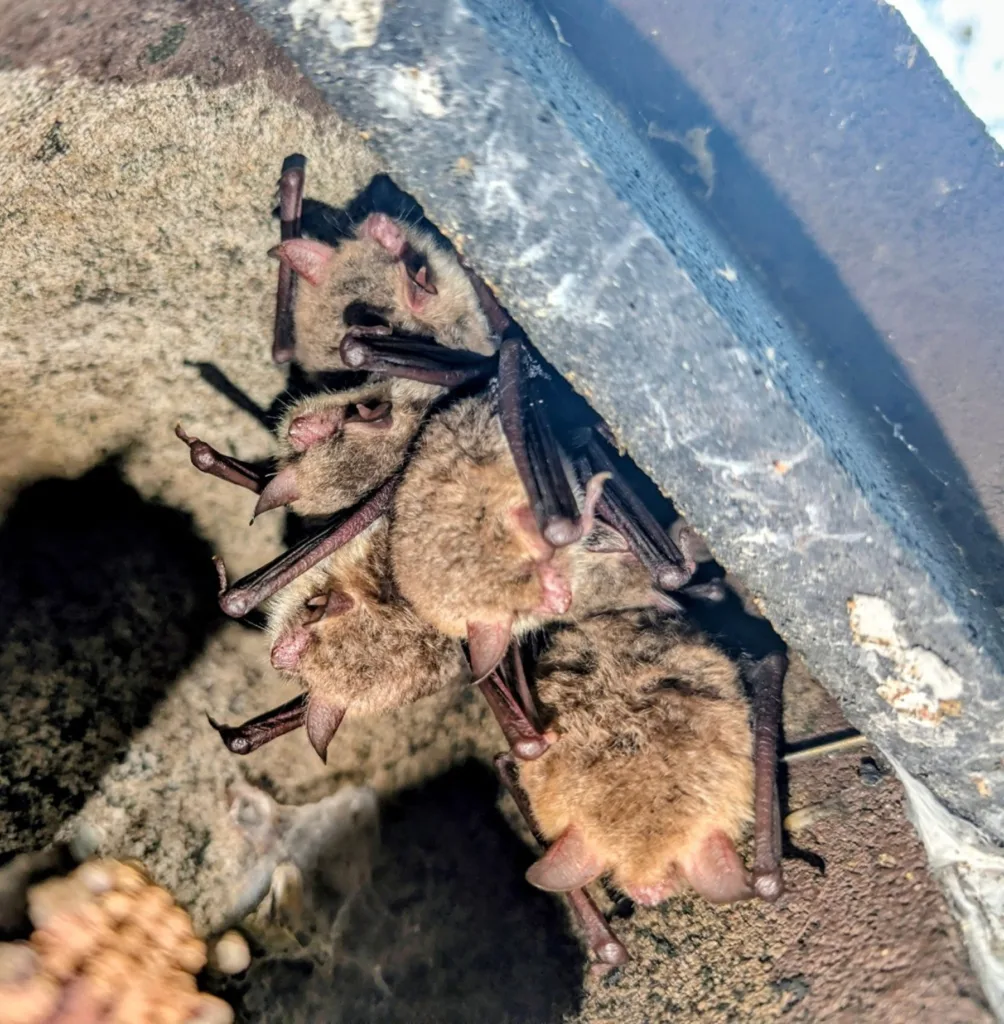
Bat droppings found in several additional boxes suggest that even more roosts are likely to be occupied in 2026.
Gemma Davis, Customer Experience Director at Graven Hill Village Development Company (GHVDC), said:
“We’re incredibly proud of the positive environmental impact we’re achieving at Graven Hill. The bat project is a fantastic example of how thoughtful planning, ecological expertise, and community awareness can deliver lasting benefits.”
Simon Dowell, Principal Ecologist at Waterman, added:
“It’s wonderful to see so many bat boxes being colonised… Protecting these areas long-term will be key to sustaining this growing bat population.”
The bat boxes around Graven Hill are designed to mimic natural roosting environments and are positioned away from lighting and disturbance to support successful habitation. Advanced monitoring tools help Waterman assess bat welfare and guide future conservation work.
Historic survey data indicates that the Graven Hill site supports more than half of the UK’s native bat species—including the rare barbastelle—further cementing its reputation as a nature-forward housing development.