Oxford’s transition to electric buses has been recognised with a major national award, highlighting the city’s progress in reducing emissions and improving air quality.
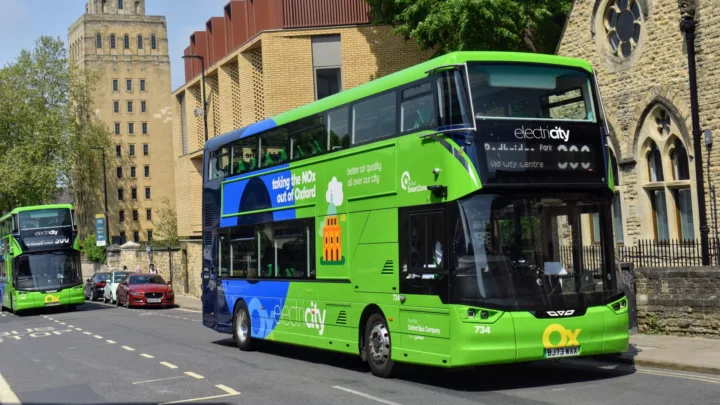
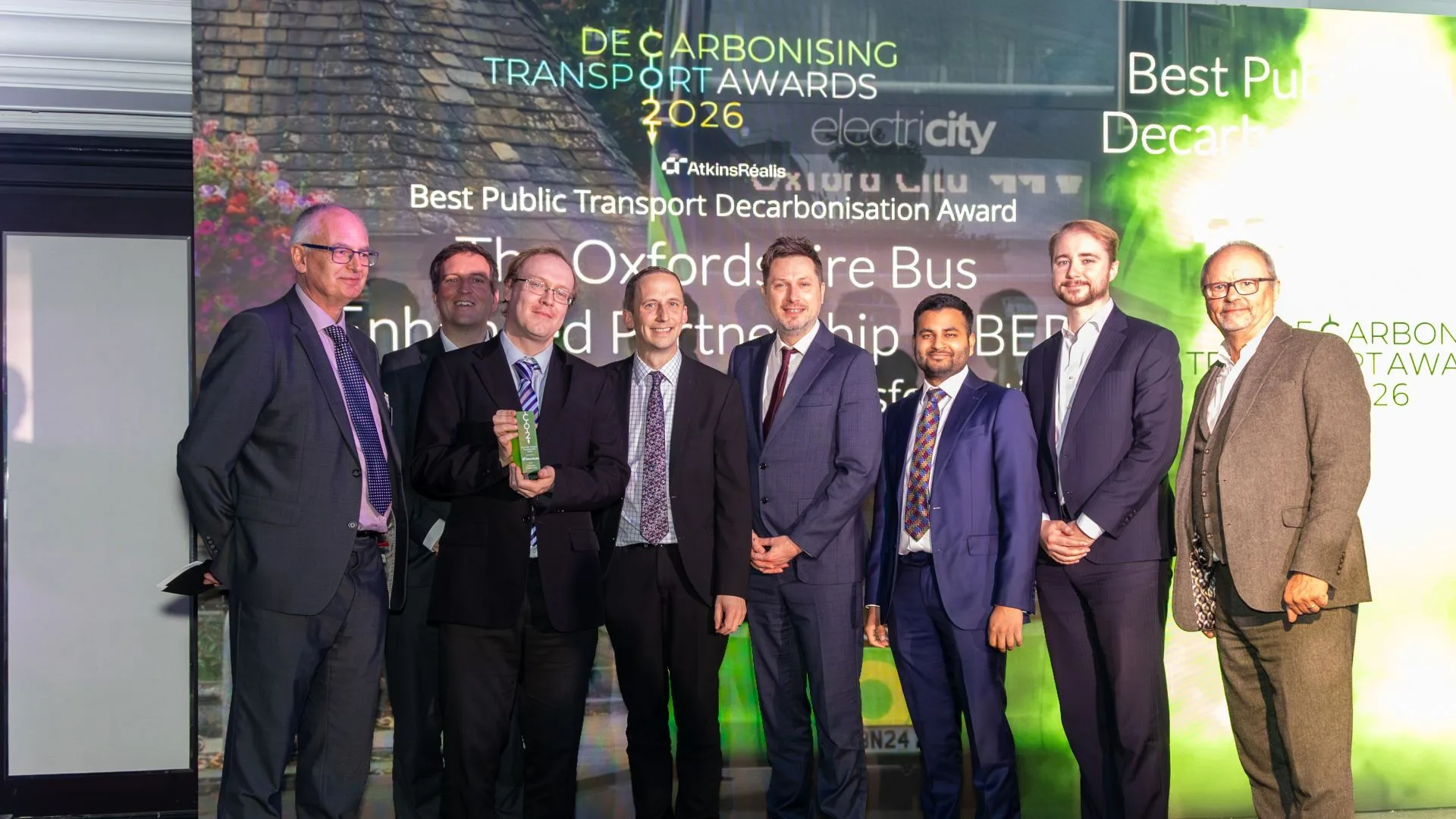
A partnership between Oxford Bus Company, Oxfordshire County Council and Stagecoach has won the ‘Best Public Transport Decarbonisation Award’ at the inaugural Decarbonising Transport Awards. The accolade celebrates a large-scale initiative that has brought 159 electric buses to Oxford’s roads.
The project forms part of the wider Oxfordshire Enhanced Bus Partnership and was backed by a combined investment of £82.5 million. Funding included £32.8 million from the government’s Zero Emission Bus Regional Areas (ZEBRA) scheme, £43.7 million from bus operators and £6 million from the county council.
Representatives from all three organisations attended the awards ceremony in London, held at the Royal Lancaster Hotel near Hyde Park, where the scheme was praised by organisers as “an excellent example of building on government funding to deliver a wide range of benefits”.
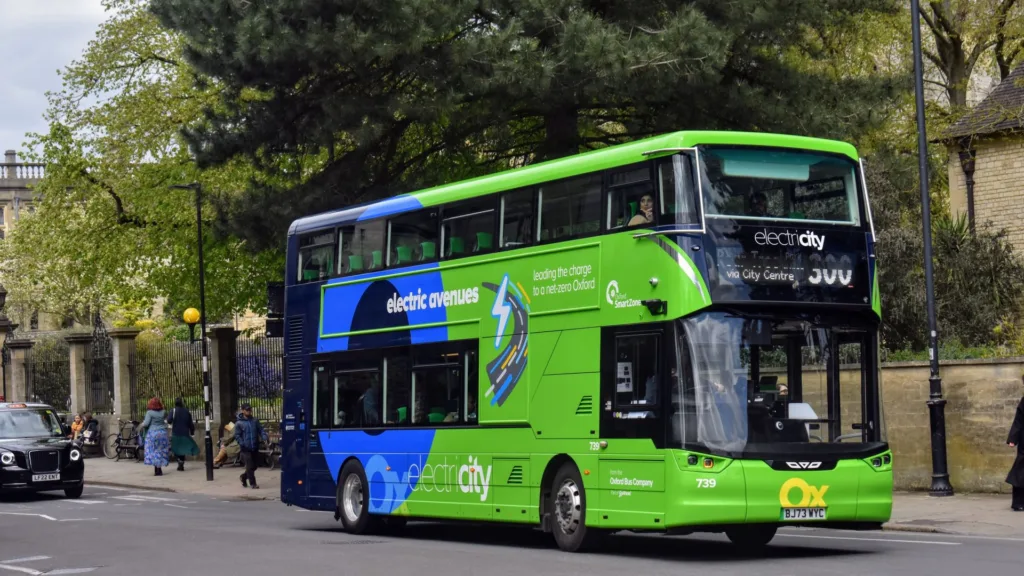
Early data suggests the initiative is already delivering measurable environmental improvements.
Provisional figures indicate that roadside nitrogen dioxide levels across Oxford fell by an average of 10 per cent between 2023 and 2024, rising to as much as 24 per cent in high-traffic areas such as High Street and St Aldates. Each electric bus produces zero tailpipe emissions, contributing to cleaner air and reduced noise pollution.
The findings are supported by analysis from the Public Health Intervention Responsive Studies Teams in partnership with the University of Oxford, which examined changes in air and noise pollution before and after the introduction of battery electric buses.
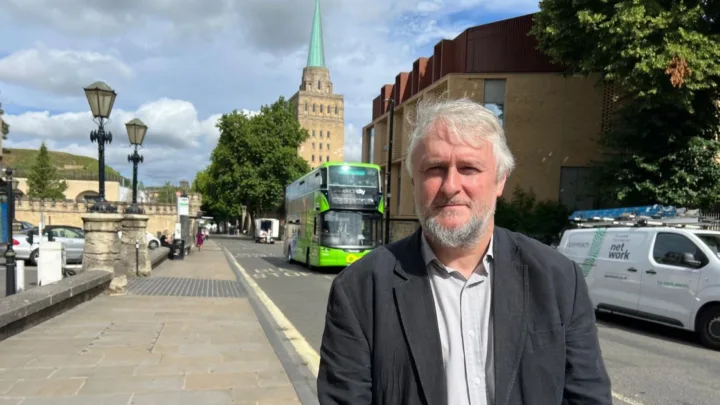
Luke Marion, Managing Director of Oxford Bus Company, said:
“This partnership is delivering exactly what it set out to do, so it’s therefore pleasing to see it get the recognition it deserves.
“Electric buses are making a significant difference when it comes to reducing emissions and improving air quality in Oxford.
“The community continues to benefit from this progressive initiative, demonstrating what is possible when key stakeholders are aligned and have a shared vision.”
Dave Harrison, Oxfordshire County Council’s Public Transport Team Leader, said:
“The introduction of 159 electric buses in Oxford has saved 7,233 tonnes of carbon dioxide annually and has also resulted in a 24 per cent reduction in roadside nitrogen dioxide concentrations, reduction in city noise, and measurable health and economic benefits for residents.
“We’re thrilled that all the parties involved have been recognised with this award, and even more pleased with how popular the vehicles are with passengers – and the fact that there are now even more on the road thanks to our partnership with the bus operators.”
As part of the rollout, Oxford Bus Company introduced 104 vehicles from Wrightbus, including double-decker, single-decker and open-top buses, supported by 104 charging points at its Cowley depot.
Stagecoach added a further 55 vehicles supplied by Alexander Dennis, with matching charging infrastructure at its Network Oxford site.
Chris Hanson, Managing Director of Stagecoach West, said:
“This award is a fantastic recognition of what can be achieved when operators and local authorities work together with a clear, shared ambition.
“At Stagecoach, we’re proud to have played a key role in bringing zero-emission buses to Oxford at scale, helping to transform the city’s air quality and customer experience.
“The results we’re now seeing are incredibly encouraging, and this milestone is just the beginning.
“We remain committed to investing in cleaner, greener transport and supporting communities across the region as we move towards a fully sustainable bus network.”
The initiative continues to expand, with an additional 13 electric buses recently introduced following a £5.1 million investment. These vehicles will operate on routes including the 35 to Abingdon, 46 to Great Milton, ST2 to Wytham, and the 21 between Bicester and Chesterton.