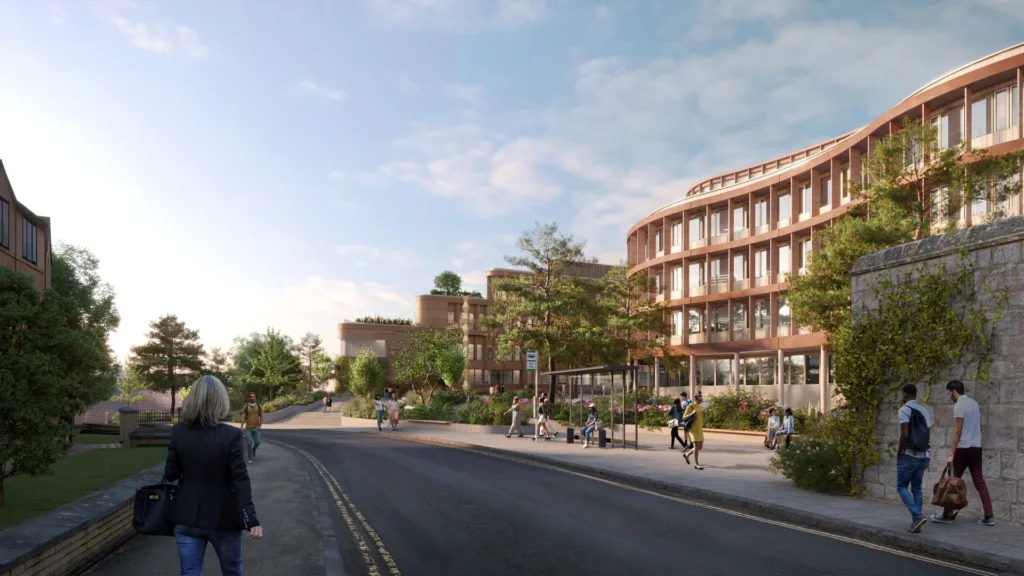
Image: A CGI of Warneford Park view towards proposed link building. Image source: Cityscape Digital for Eric Parry Architects
Plans to transform the historic Warneford Hospital site in Headington have been reapproved following a review by Oxford City Council, despite sustained cross-party objections and the prospect of a judicial review from local campaigners.
The decision, reaffirmed on Tuesday 16 June, follows earlier approval granted in April for a major redevelopment that would reshape the 200-year-old hospital into a combined mental health, research and education campus.
The hybrid application—backed by Oxford Health NHS Foundation Trust and the University of Oxford—proposes more than 60,000m² of new development to the east of the existing site.
Expanded campus plans
As part of the wider transformation, further new buildings would provide en-suite accommodation for around 250 students, alongside academic offices, meeting rooms, teaching spaces, a performance and rehearsal space, a dining hall, informal study areas and a library.
The scheme would also see the existing 199-year-old hospital buildings repurposed into a postgraduate college for medical sciences, bio-engineering and related disciplines.
Parking and community opposition
Despite broad support for the principle of modernising mental health services, the proposals remain contentious due to transport and environmental concerns.
A key point of dispute is the planned increase to 548 parking spaces — an uplift of 186 compared with the current site. Twelve councillors from the Green Party, Labour and Liberal Democrats called the application in for review, reflecting cross-party concern over the scale of the increase.
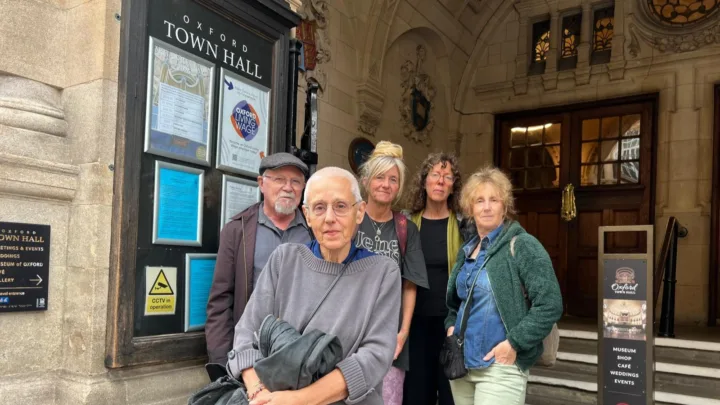
Campaigners from Oxford Livable Streets and Headington Livable Streets argued at the meeting that there had been a “misapplication” of planning policy to justify parking provision linked to commercial research tenants rather than clinical need.
Local opposition has also included a petition launched in September 2025, which gathered close to 500 signatures.
Road safety concerns have been raised in relation to nearby junctions, where three female cyclists have been killed in recent years. Critics argue the scale of parking risks undermining efforts to reduce car dependency in the Headington area.
Environmental concerns have also been raised by residents, including fears that the deep basement construction required for the car park could damage Warneford Meadow ecosystems, including its orchard.
Trust and university backing
The development is supported by the organisations behind the project, who argue it will deliver long-term benefits for healthcare, research and education.
Grant Macdonald previously described the redevelopment as a “once-in-a-lifetime opportunity” to transform mental health services in Oxfordshire.
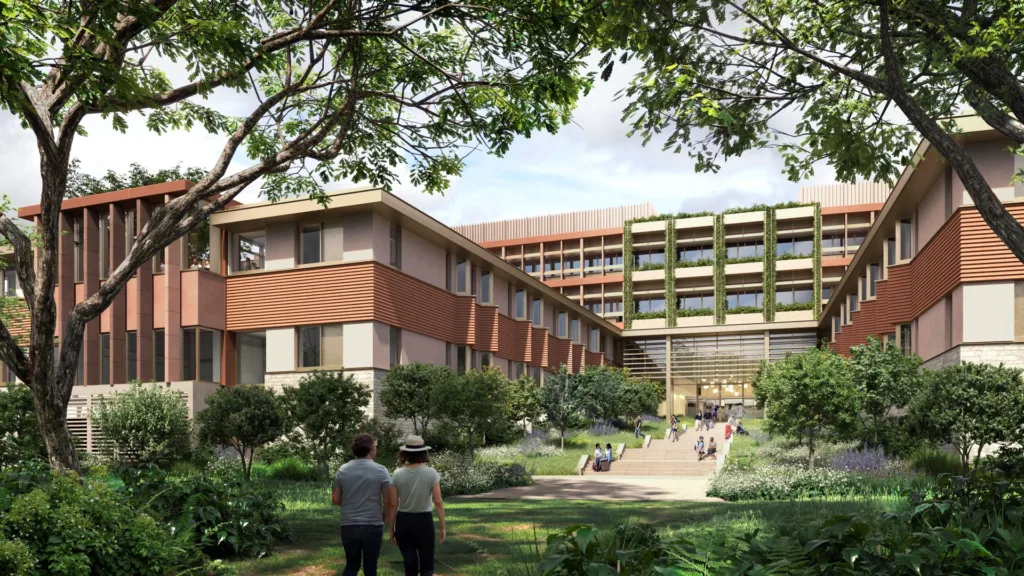
Irene Tracey also said: “Warneford Park will bring together leading experts from science, healthcare and industry in a world-class, purpose-built environment that is fit for the future.”
At the review meeting, trust representatives said parking provision could be reduced in future phases, but warned that refusal at this stage risked undermining financial backing and wider delivery of the project.
Council response
Following the decision, planning committee chair and Oxford City Council deputy leader Anna Railton welcomed the approval, describing the scheme as a significant step forward for mental health care.
She said the facility would be an “asset to the residents of Oxford and beyond” and help bring mental health treatment and research “into the 21st Century”.
She also criticised the current condition of the site, describing parts of it as “underused, outdated and literally derelict”, and said the redevelopment would ensure Oxford has a “world-class mental health hospital”.
Potential legal challenge
Despite approval, the Headington group has been advised that there may be grounds for a judicial review, meaning the project could yet face further legal scrutiny.
Opposition remains focused on the balance between healthcare investment, environmental impact and transport policy, particularly in an area already affected by road safety concerns.
Reporting contribution by Isabella Harris, Local Democracy Reporter (LDR) for Oxfordshire, covering local politics, council meetings and planning decisions across six councils in the county.