The future governance of Oxfordshire has been decided, with the Government confirming that the county, city and district councils will be abolished and replaced by three new unitary authorities.
The announcement was made in a written ministerial statement to the House of Commons by Secretary of State for Housing, Communities and Local Government Steve Reed on Thursday, July 16.
The approved plans will see the creation of Greater Oxford Council, North Oxfordshire Council and Ridgeway Council, which will take over all local government responsibilities from April 2028.
The move marks the biggest shake-up of local government in Oxfordshire for decades, ending the current system where responsibilities are divided between Oxfordshire County Council, Oxford City Council and the county’s four district councils.
Services including roads, planning, education and other council functions will transfer to the new unitary authorities.
Read more: Local government devolution proposals: What is it and what will it mean for Oxfordshire?
Greater Oxford proposal approved
The Government has selected the three-unitary model put forward by Labour-run Oxford City Council.
Under the plans, a new Greater Oxford Council will be created, combining Oxford with areas currently within parts of Cherwell, South Oxfordshire and Vale of White Horse.
A North Oxfordshire Council will cover the remainder of Cherwell, alongside West Oxfordshire.
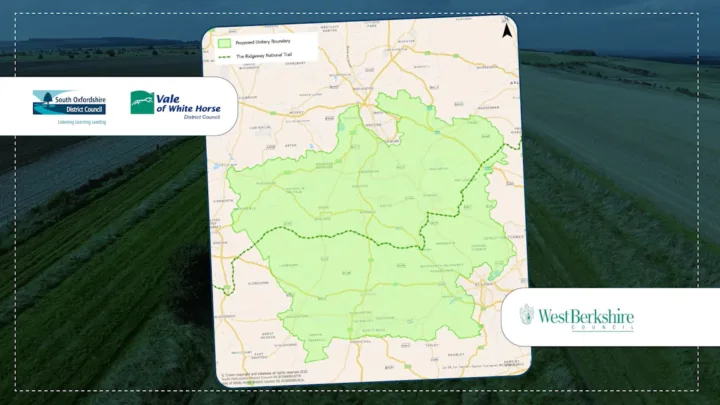
A Ridgeway Council will include parts of South Oxfordshire, the remainder of Vale of White Horse and West Berkshire.
An overarching Oxfordshire County Council will no longer exist, with powers currently held separately by the county and district authorities transferred to the new councils.
Supporters and critics divided over plans
The decision follows months of debate between councils and political leaders over the best future structure for Oxfordshire.
Supporters of the Greater Oxford model have argued that a larger authority would help deliver housing targets, coordinate strategic planning and support the development of much-needed affordable homes.
However, critics have described the proposal as a potential “land-grab”, claiming it would allow Oxford to expand its influence into surrounding rural areas.
Lib Dem MP for Bicester and Woodstock, Calum Miller, previously raised concerns in Parliament over rumours that the Government could select the Greater Oxford proposal.
He said residents in his constituency were “deeply concerned” that Cherwell and West Oxfordshire could be “hollowed out” to create a Greater Oxford authority.
Responding before the announcement, English Devolution Minister Alison McGovern said the Government was following the process it had set out.
She said the aim of reorganisation was to create “clearer structures, stronger councils, quicker decisions, more homes and better services”.
Alternative proposals rejected
The decision means alternative plans submitted by other councils will not proceed.
Oxfordshire County Council had proposed a single unitary authority covering the whole county, arguing that one council would provide a simpler structure and avoid duplication.
The Liberal Democrat-run district councils of Cherwell, South Oxfordshire, Vale of White Horse and West Oxfordshire proposed a two-authority model.
Their plan would have created an Oxford and Shires Council covering Cherwell, Oxford City and West Oxfordshire, alongside a Ridgeway Council covering South Oxfordshire, Vale of White Horse and West Berkshire.
Concerns were raised during discussions about including West Berkshire within the new arrangements due to the authority’s financial difficulties.
West Berkshire Council has previously received Government support and exceptional financial measures to avoid effective bankruptcy, prompting concerns about the impact on neighbouring areas.
Transition begins ahead of 2028 launch
The existing councils will continue operating until the new unitary authorities formally come into effect in April 2028.
Elections for temporary shadow authorities will take place in 2027, with these bodies overseeing the transition process before the new councils assume full responsibility.
A director responsible for managing Oxfordshire’s reorganisation is expected to be appointed through Oxfordshire County Council’s payroll, with the role carrying a salary of between £125,350 and £135,928.
Each new authority is expected to receive at least £900,000 from a £63 million Government fund to help cover transition costs.
The Local Government Association had previously raised concerns about the practical challenges of reorganisation, suggesting that political changes could provide an opportunity to revisit some aspects of the reforms.
However, the Government has confirmed that the timetable remains on track.
The creation of the three new councils will now begin a two-year transition period before Oxfordshire’s current local government structure disappears in 2028.
Read more
From the Government’s announcement of local government reorganisation proposals on 16 December 2024 by then Deputy Prime Minister Angela Rayner, through months of debate and competing council proposals, to today’s final decision, explore our complete collection of coverage on the future of Oxfordshire’s councils.
Reporting contribution by Isabella Harris, Local Democracy Reporter (LDR) for Oxfordshire, covering local politics, council meetings and planning decisions across six councils in the county.