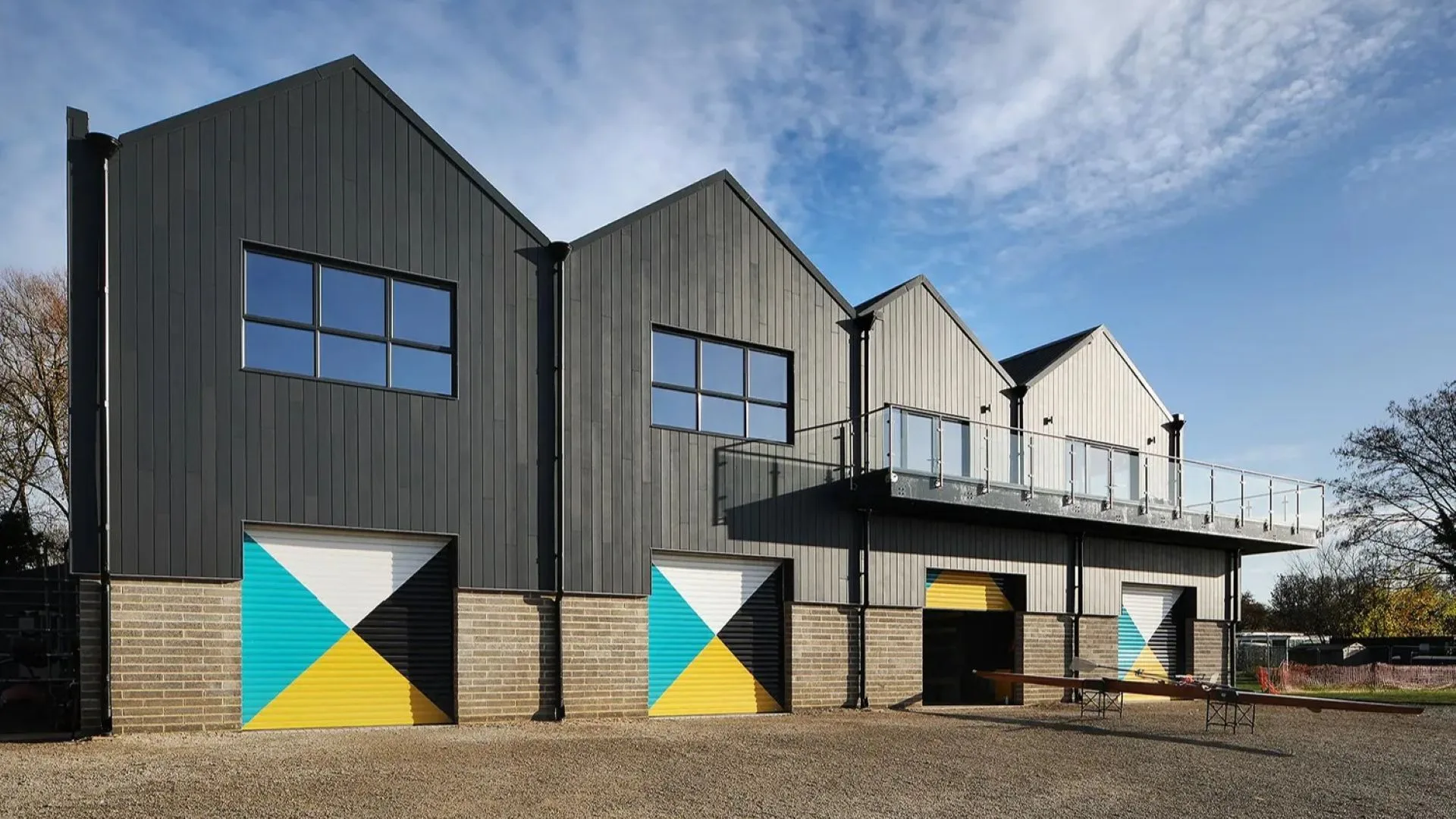
An Oxford rowing and canoeing club is seeking to expand its Thames-side clubhouse, citing increased use of the facility and growing demand for space from its members and wider community users.
Falcon Rowing and Canoeing Club, based at Meadow Lane on the Isis section of the River Thames, has submitted proposals to Oxford City Council for a two-storey extension to its existing boathouse.
The club’s current training and boat-storage facility was completed just over three years ago. But, according to the planning documents, the building’s success in supporting the club’s activities has brought a new problem: there is no longer enough room.
“The completed clubhouse has increased that role, but it has also created pressure on storage and internal space,” the plans state.
The club caters for a broad range of users, from competitive crews and recreational rowers to adults, juniors and beginners. It also hosts visiting groups and supports coaching, outreach work, local meetings and activities connected with governing bodies and schools.
The proposed extension has been developed around four main needs: additional boat storage, better covered space for maintenance, improved kayak storage and more first-floor space for club activities.
The planning statement argues that increasing capacity would help prevent restrictions on the club’s ability to expand its junior and beginner programmes.
It would also, the club says, allow it to continue supporting the wider community as participation grows.
The proposed addition would take the form of a further bay alongside the existing boathouse, maintaining the architectural approach of the current building. The two-storey extension would provide additional boat storage and training space, together with a dedicated kayak store.
The proposal has also been designed to retain the working relationship between the boathouse and the river.
“The river edge, boat launch, trailer route and Environment Agency maintenance strip are retained,” the plans state.
For a club operating on one of Oxford’s most intensively used stretches of water, the application reflects a familiar tension: the more successful a recreational facility becomes, the greater the pressure on the infrastructure supporting it.
Here, that pressure is being felt not on the water itself but around it — in the storage bays, maintenance areas and rooms where the club’s increasingly varied programme takes place.
The application will now be considered through Oxford’s planning process.
Reporting contribution by Isabella Harris, Local Democracy Reporter (LDR) for Oxfordshire, covering local politics, council meetings and planning decisions across six councils in the county.