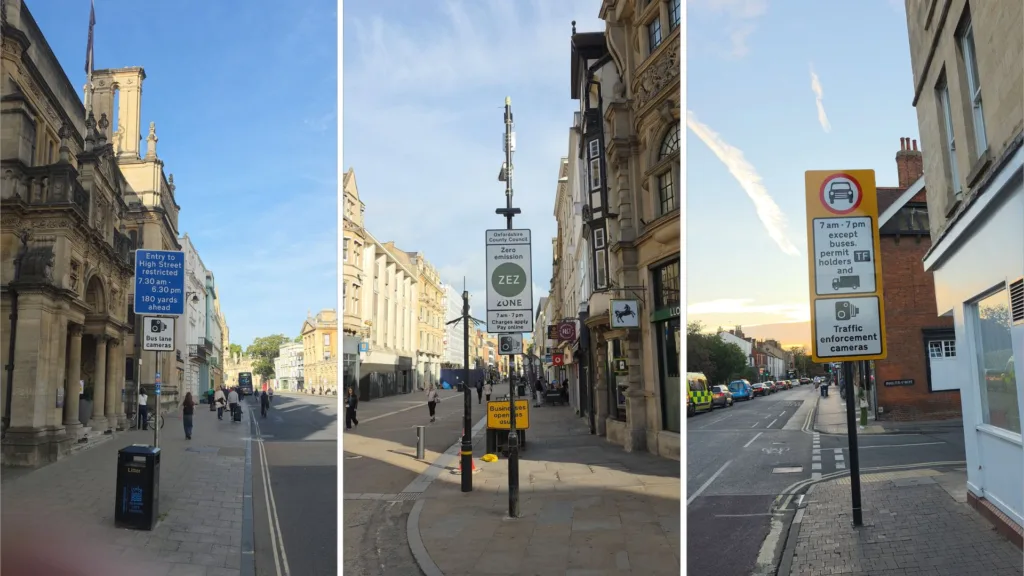
A city under construction
“It feels like Oxford is falling apart at the seams.”
That is how Independent Oxford Alliance councillor Saj Malik has described the situation in Oxford, where roadworks, construction projects and traffic restrictions have become an increasingly visible part of daily life.
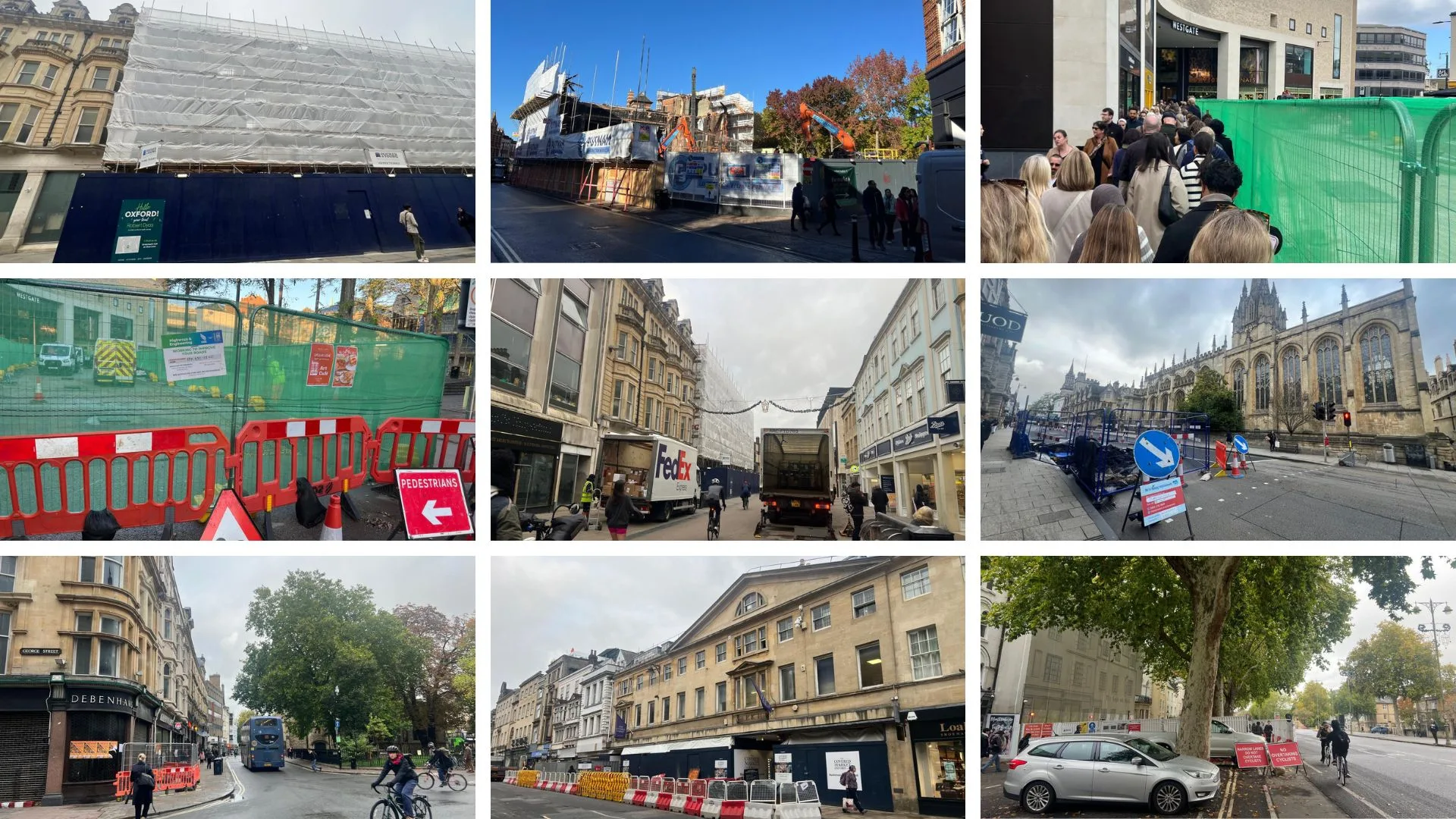
From temporary traffic lights and queues of buses to boarded-up buildings and narrowed pedestrian routes, disruption can be encountered across the city centre and on approaches to the railway station. The question being raised is not simply whether individual projects are necessary, but whether their combined effects are being adequately anticipated and managed.
Councillor Malik has described the situation as “mayhem”, arguing that the road network is no longer sufficiently robust to absorb multiple disruptions at once. His comments come amid continuing debate over Oxford’s traffic filters, which began their trial on 28 September, and the management of roadworks across the city.
A walk along The High this week could take in Thames Water roadworks, with buses queuing at temporary traffic lights, alongside further works near the Town Hall. The Covered Market is another part of the city centre where building work has affected the streetscape. Turn towards Cornmarket and St Giles and there are vacant or scaffold-covered buildings, including the former Debenhams and the Eagle and Child. On George Street, demolition of the former Odeon continues.
Elsewhere, works on Hythe Bridge Street have contributed to disruption around Frideswide Square and Botley Road, while pedestrian access near Bonn Square has been affected by construction work.
Each site has its own explanation and timetable. Taken together, however, they create an impression of a city undergoing several changes at once, with consequences for people travelling through it on foot, by bus or by car.
The concern about cumulative disruption
Councillor Malik believes Oxford’s transport network has become more vulnerable because drivers have fewer alternative routes available when roads are obstructed.
“Before, drivers would be able to take alternative routes to avoid roadworks and get to their destination,” he said. “Funnelling them onto fewer roads means that’s no longer possible.”
He argues that the consequences extend beyond delays and additional pollution. People can find themselves caught in traffic when trying to get to appointments or return home from work, with knock-on effects for their daily lives.
“It’s not just the extra pollution which these incidents cause, but that the council is casual with people’s time,” he said.
His criticism reflects a broader concern about the interaction between roadworks and transport policies designed to reduce through-traffic. When routes are restricted and road space is temporarily taken out of use, the capacity of the remaining network to accommodate disruption becomes an important question.
That does not, by itself, establish that the traffic filters are responsible for every delay. Roadworks, accidents, construction activity and the normal pressures of a busy city can all contribute to congestion. Establishing how much each factor contributes requires evidence beyond individual experiences.
But the timing has brought the issues together in public debate. Councillor Malik previously called for transport policies to be relaxed following days of gridlock in East Oxford after the filters were introduced, when roadworks and accidents added to the difficulties.
A historic city, a changing transport system
Oxford’s difficulties need to be understood in the context of the challenge facing a historic city trying to accommodate modern travel demands.
As explored in our recent article on traffic measures in a historic city, Oxford must reconcile competing needs: access for residents, workers and visitors; reliable bus services; deliveries and servicing; movement through the centre; and the environmental and public-space benefits sought through changes to transport.
The city’s historic street pattern places limits on the space available for roads and pavements. Many streets cannot simply be widened to accommodate more vehicles, and the consequences of disruption on one route can extend to others.
That makes coordination particularly important. Planned utility works, construction projects and changes to traffic management can each be justified individually while still creating a difficult combined experience for people moving around the city.
Traffic filters are intended to change how vehicles travel through Oxford, encouraging people to use alternatives to driving across the city. The debate is whether the wider network, including public transport and alternative routes, can accommodate the transition while essential maintenance and development continue.
Supporters of changes to travel patterns may argue that the existing system is already under strain and that reducing car journeys is part of the solution. Critics, meanwhile, question whether restrictions can work effectively when roadworks and incidents leave fewer practical alternatives.
Those positions are not mutually exclusive in one important respect: even if Oxford needs to change how people travel, the management of roadworks remains a separate responsibility that affects how well the city functions.
What the councils say
Following the first week of the traffic-filter trial, city council leader Councillor Susan Brown called for a change in approach to the county’s transport policy, citing the cumulative impact of roadworks, low-traffic neighbourhoods and the new filters.
She said the city council needed to review the disruption experienced during the first week of October and called for the county to “better coordinate their roadworks, consider a more flexible approach in future taking greater account of school holidays and night work”.
The response from the county council, which is responsible for managing the road network and permitting roadworks, has emphasised the measures already in place.
County transport chief Gareth Epps said he had instructed the network management team to allow fewer projects on the county’s busiest roads over the winter.
“The lane rental scheme is also already helping us manage work on Oxfordshire’s busiest roads and reduce unnecessary disruption,” he said.
He added that where work takes place outside agreed permit arrangements, the council can take action, including applying lane rental charges retrospectively.
The county receives around 30,000 roadworks applications a year, Councillor Epps said. Each application is reviewed to ensure that proposed work can be carried out safely and efficiently, with the minimum possible disruption to the public.
He also pointed to the long-standing nature of Oxford’s congestion.
“Congestion in this medieval city is nothing new – it has been a problem for decades,” he said.
The county’s approach, he added, has been to encourage more people to leave their cars at home more often through transport policies and alternatives to driving.
Councillor Epps cited the city’s park-and-ride provision, describing it as one of the cheapest schemes in the country, with more than 5,000 parking spaces and parking plus return bus travel for up to five adults costing £3 a day. He also highlighted recently introduced free park-and-ride parking and £1 flat bus fares for NHS and school staff.
The response sets out the county’s position: roadworks are subject to a permitting process, additional measures are being used to manage disruption, and longer-term transport policies are intended to reduce reliance on cars.
It does not, however, settle the question of whether the combined effects of particular projects and traffic restrictions have been adequately managed during the recent period of disruption.
Managing the whole, not just the individual projects
The challenge for Oxford is that roadworks and construction cannot simply be avoided. Water companies need to maintain infrastructure; buildings require repair, redevelopment or demolition; and roads need maintenance. Some work is urgent, while other projects can be planned well in advance.
The practical issue is how those activities are scheduled and managed alongside the demands of a city whose transport network has limited capacity and whose streets serve pedestrians, cyclists, buses, cars and commercial traffic.
A permitting system can assess individual applications, but the public experience depends on what happens across the network. Several projects that are manageable in isolation may create greater disruption when they overlap, particularly if incidents or delays reduce the remaining options for getting around.
The city and county councils’ statements suggest recognition that coordination matters, although they differ in their emphasis. Councillor Brown has called for greater flexibility and a more coordinated approach; Councillor Epps has pointed to existing controls and plans to restrict the number of permitted projects on the busiest roads over winter.
The effectiveness of those measures will ultimately be judged by their results: whether unnecessary disruption is reduced, whether works are completed within agreed periods, and whether people can move around the city with reasonable reliability.
For now, the complaints voiced by councillors and members of the public capture a familiar frustration with roadworks, but also a more specific question about Oxford’s ability to manage several pressures simultaneously.
The city is changing, and much of the work taking place is necessary. The question is whether that change can be managed in a way that keeps Oxford functioning for the people who live, work, study, visit and do business here.