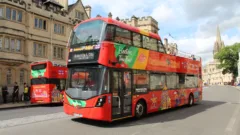
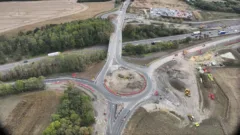
Reading could collaborate with Swindon, Oxfordshire, and other surrounding towns to assist with strategic infrastructure projects, such as new bridges, roads, and railway lines.
The Labour government released its English Devolution White Paper last December, which would see county and district councils abolished. This potential reorganisation raises the question of how Reading, Swindon, and Oxfordshire unite to shape the region’s future development.
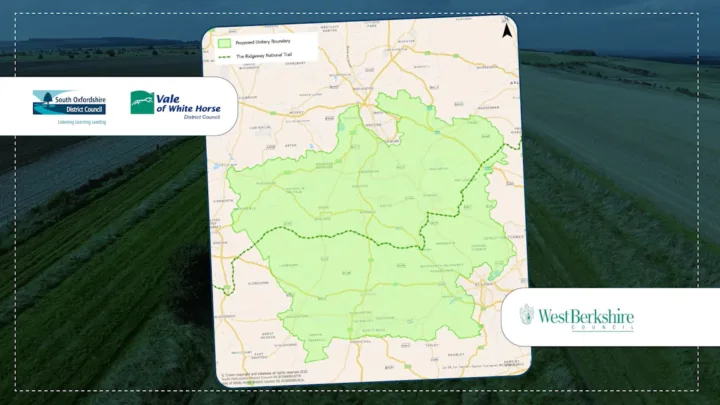
Reorganisation of local government would also involve the creation of ‘Strategic Authorities’ made up of a minimum of 1.5 million people. Berkshire, with a population of approximately 970,000, could be unified with neighbouring counties into a Thames Valley Strategic Authority.
Therefore Berkshire would have to join forces with Oxfordshire and Buckinghamshire to reach the 1.5 million citizen threshold. It has even emerged that Swindon could join forces with Reading and the rest of the Thames Valley.

The town will likely have to join either a ‘Heart of Wessex Combined Authority’ with Wiltshire, Somerset and Dorset or the Thames Valley Strategic Authority with Berkshire. Swindon is just under an hour’s drive from Reading on the M4, or approximately 30 minutes on Great Western Railway trains.
Many of the hoped-for infrastructure projects these authorities could deliver are located in the east of the proposed Thames Valley Strategic Authority. A major scheme would be a Western Rail Link providing direct trains to Heathrow Airport, alongside a third runway.
Closer to Reading, South Oxfordshire could be brought into the town’s orbit, to assist in the delivery of a third bridge over the River Thames, and convenient park-and-ride services between Oxfordshire villages and the town.
The possible creation of a strategic authority was discussed at a full Reading Borough Council meeting on Tuesday, 28 January.
Liz Terry (Labour, Coley), the council leader said: “Those discussions have started, and I didn’t feel it was appropriate to continue to have those discussions without bringing it to the attention of full council so that you are aware that Berkshire leaders and others are having discussions, no decisions are being made or will be made, and there will be a report that will come back.”
Along with the leaders of the six Berkshire councils, councillor Terry is a member of the Joint Prosperity Board created last year. She explained: “There is close working with the Berkshire leaders, and I would like to assure councillors of the fact that the good work that’s been happening for some time is good, purposeful, frank and honest.”
Councillor Terry added that she is committed to looking after the interests of Berkshire. The approach was supported by the Conservatives, with Councillor Isobel Ballsdon (Conservative, Caversham Heights) saying that all councillors want what’s best for residents.
Councillor Dave McElroy (Green, Redlands) said: “It does feel devolution seems like a bit of a misnomer. Our fear ultimately is that this could actually be seen as taking decisions away from local people and centralising them into super councils or some sort of regional mayor. Less about devolution and more about the centralisation of power.”
Although the Greens supported Councillor Terry’s involvement in discussions, he did raise fears that the Thames Valley Strategic Authority was being “gerrymandered to suit the interests of the big parties and their corporate overlords.”
Gerrymandering is the practice of manipulating political geographical boundaries to support the interests of specific parties. Councillor Terry was unanimously granted delegated power to work with neighbouring council leaders on a strategic authority at the meeting.