Opinions have been split over the government’s proposal to abolish district councils, with some councillors suggesting it could “undermine democracy”.
The government announced proposals to abolish district councils and introduce large mayoral combined authorities as part of a devolution white paper published on Monday.
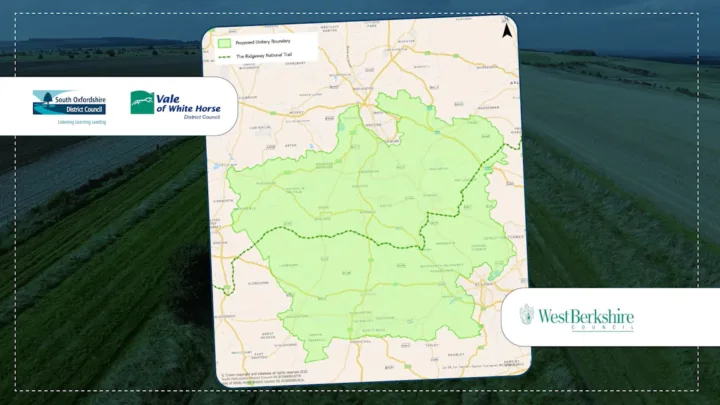
Leader of Oxford City Council Susan Brown welcomed the government’s plans and said she had already had discussions with neighbouring councils in Oxfordshire, Berkshire and elsewhere about the potential creation of a Thames Valley Mayoral Combined Authority.
Some Conservative councillors have sided with the government’s plans, arguing a new system would be more efficient and cost-effective and would make leaders more accountable to residents.
Speaking before the announcement, Eddie Reeves, who is the Conservative leader of the opposition on both Oxfordshire County Council and Cherwell District Council, said: “Simplifying local government is likely to make for a less expensive and more accountable council.
He also said that he favoured “a single council that is accountable to residents”, whether this takes the form of a single Oxfordshire Council or whether districts merge to create smaller, single-tier authorities within a mayoral combined authority.
He added: “I sincerely hope that councillors of all parties will now put party politics aside to find the right models, both of devolution and of local government reform, that are in residents’ best interests.”
Conservative councillor Ian Snowdon, who sits on both the county council and South Oxfordshire District Council, said the plans “should provide less duplicity and provide better value to residents”.
He added: “Having a unitary [authority] and/or mayor would hopefully result in some better accountability, which is sadly missing from the current council administrations in Oxfordshire.
“I hope whatever is decided is done efficiently with so many council officers now probably very worried about their jobs.”
However, Oxford city councillor David Henwood, leader of the Independent Oxford Alliance (IOA), said: “Giving more power to elected mayors affiliated to a party would undermine democracy and fail to represent the local view, which is one of the core aims of the devolution bill.
“In many ways, a single unitary authority or a single tier authority where residents can access all council services makes absolute sense.
“I wouldn’t be against a single tier authority, however a mayoral system with greater powers over planning does lend itself to greater levels of corruption.”
He added that there should be a referendum rather than a consultation on the issue.
Oxfordshire’s Green councillors have also criticised the plans, arguing that by reducing the number of councillors, decisions will be made by distant politicians who do not understand rural issues.
Andrea Powell, leader of the Green Group at South Oxfordshire District Council, said: “Scaled-up and mayoral authorities will suit some large urban areas, but in places like Oxfordshire, they risk taking decision-making powers far away to remote super-councils and regional mayors.
“We need our local district and county leaders to push very hard for a deal that makes sense and puts our residents first.”
Councillor Sarah James, leader of the Green group on Vale of White Horse District Council, added that while local government needs to “move with the times”, the reforms “could do the opposite by pursuing growth at the expense of local decision-making”.
The government has said some local authority elections could be pushed back due to the changes, but Oxfordshire County Council is yet to confirm whether their 2025 election will go ahead as planned.