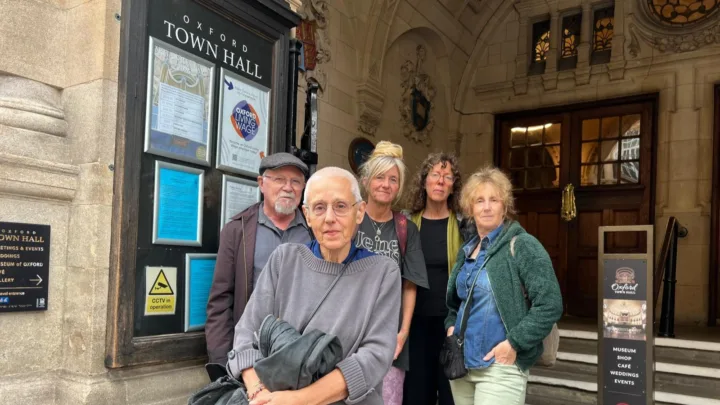
Plans for a temporary congestion charge in Oxford have sparked fierce debate, with critics accusing the county council of “experimenting” with livelihoods. The proposal was discussed at a full council meeting on Tuesday, July 8, where councillors and residents voiced strong opinions, according to our Local Democracy Reporter Esme Kenney..
The scheme would see motorists charged £5 per day to drive on several key city roads without a permit. It is designed as a short-term measure to ease congestion before the introduction of traffic filters, expected once Botley Road reopens.
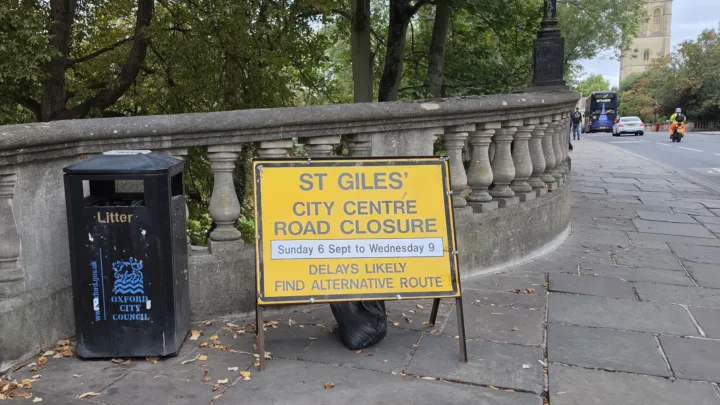
The affected roads include Hythe Bridge Street, St Cross Road, Thames Street and St Clement’s Street (7.00am–7.00pm daily), and Marston Ferry Road and Hollow Way (Monday to Saturday, 7.00am–9.00am and 3.00pm–6.00pm).
Public opinion has been sharply divided. A petition against the scheme has attracted more than 11,000 signatures, while local bus companies and active travel groups have voiced support.
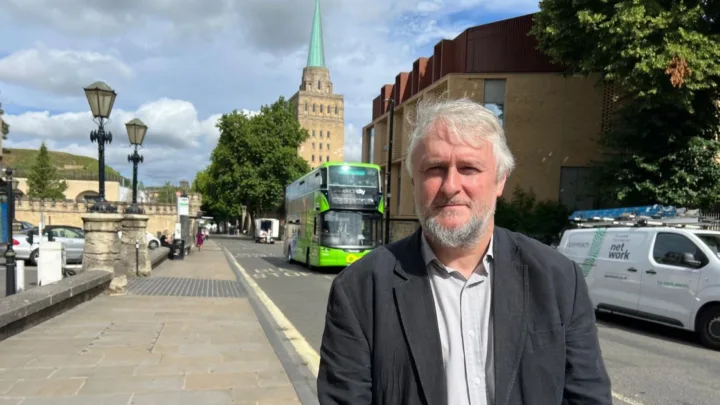
A total of 17 written questions were submitted in advance to Councillor Andrew Gant, cabinet member for transport management. Bernadette Evans from the Oxford Business Action Group asked whether the charge could be delayed until after the Christmas trading period.
Mr Gant said he could not confirm an exact date beyond “the autumn,” but argued the scheme would boost Oxford’s appeal for “90 per cent of city centre visitors who come by park and ride, rail, bus, on foot or by bike.” He said this would ultimately support local businesses.
But Ms Evans disagreed, adding outside the meeting:
“Inexplicably, councillor Gant and his supporters say that the congestion charge isn’t going to negatively impact Oxford’s small businesses at all. Unfortunately, he hasn’t taken the time to speak to any Oxford business owners to ask their views on this, which is a shame as so many of us would welcome the opportunity.
“Businesses such as those on Hollow Way and the Cherwell Drive parade which are situated immediately adjacent to the digital tolls will likely lose customers who discover it’s been made harder to get there by car.
“The council is casually experimenting on Oxford’s small business owners during a cost-of-living crisis and risking thousands of livelihoods in the process.”
Other councillors also raised concerns. Independent councillor Saj Malik questioned why Oxford was targeted over towns such as Abingdon, and why East Oxford faced the brunt of the restrictions rather than North Oxford.
In response, Mr Gant said the charging locations were identified years ago “to manage transport in the city as a whole,” stressing that congestion affects all parts of Oxford. His written response noted that Oxford is “more congested than other parts of the county” with 173,000 cars entering or leaving the city each day—nearly double the figure for Banbury.
He also defended the council’s traffic modelling, acknowledging its limitations:
“All transport modelling is subject to uncertainty. It is designed to give a picture of overall change, and it is less useful for looking at individual specific locations.”
Mr Gant added:
“This is a very important proposal with very important benefits, but it will not absolutely solve everything in Oxford and Oxfordshire, and it must be seen in the context of a wider suite of proposals.”
The six-week public consultation on the congestion charge closes on August 3. Within 24 hours of opening it had received 1,500 responses, rising to more than 3,750 after 10 days.
A final decision is expected when the county council cabinet meets in September.