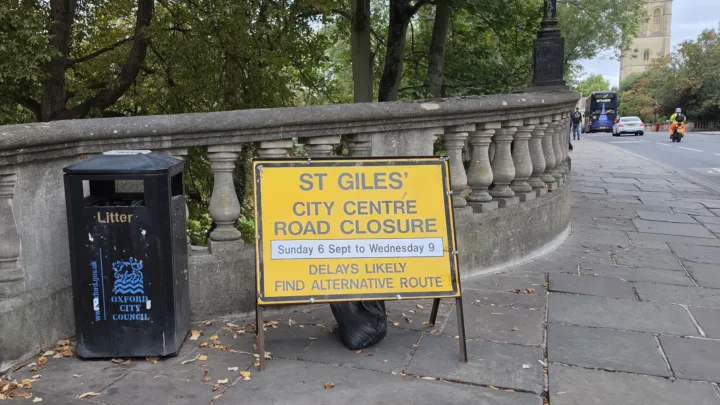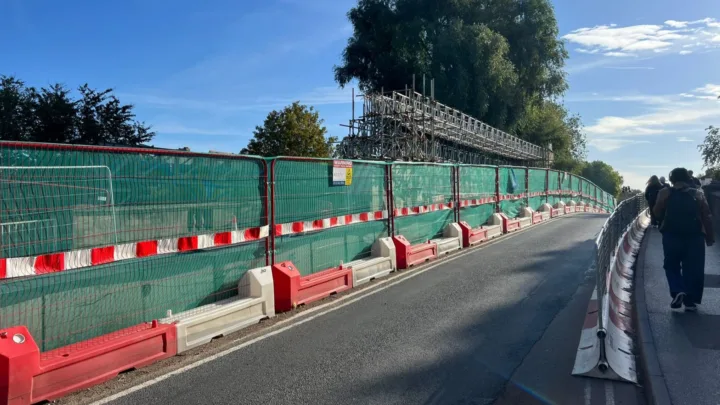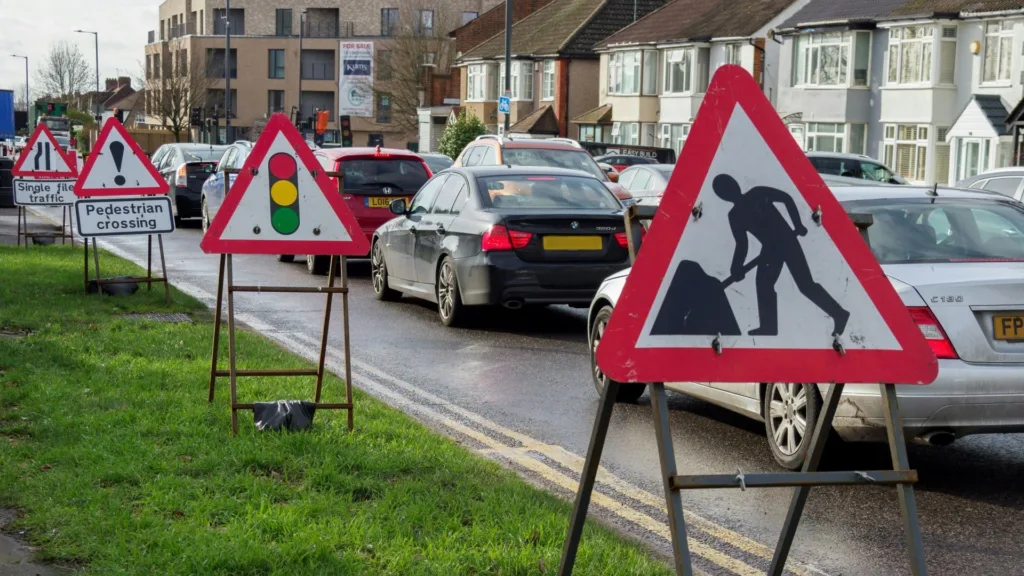
Oxfordshire County Council has been granted government approval to introduce a lane rental scheme (LRS), a move designed to reduce the disruption caused by roadworks on the county’s busiest routes.
The scheme will allow the council to charge utility companies and other organisations a daily fee for carrying out works on key sections of the network during peak periods, encouraging faster completion and better planning.
Utility providers such as broadband, electricity, gas and water companies, along with developers and other firms, routinely carry out essential works that can lead to congestion and delays.
Lane rental schemes are already in place in London, Kent, Surrey and West Sussex, where government evaluations have shown they are effective in reducing both the duration of roadworks and the impact on traffic flow.
Councillor Andrew Gant, Oxfordshire County Council’s Cabinet Member for Transport Management, said the frustrations caused by unexpected roadworks were widely shared. “Whether as pedestrians, cyclists, motorists or nearby residents, we are all familiar with the frustration of the sudden arrival of utilities companies to dig up the roads and create severe problems on the network,” he said.
“The work is very often emergency-related and councils have no option to agree to it given that otherwise people’s homes and businesses would potentially be cut off from water, electricity or other essentials.
“However, it is in everyone’s interests for these utilities to minimise their impacts and a lane rental scheme is one such way. If they know they are going to be charged for the length of time they spend there, it is an incentive to complete the job as expeditiously as possible.
“This type of scheme has been seen to work elsewhere. We were told in late October by the Department for Transport that we could implement a lane rental scheme of our own and we are now eager to implement it and reap the benefits for everyone in Oxfordshire.”
The council currently manages road and street works through a permit system introduced in 2020, handling around 30,000 requests each year. While the permit scheme recovers administrative costs, it does not allow the council to apply targeted financial incentives to avoid peak-time disruption – something the LRS will directly address.
Under the new approach, roughly nine per cent of the highway network – identified based on traffic levels and bus frequency – will be subject to charging. The scheme will encourage collaborative working, higher-quality repairs, better use of technology and work timed outside of peak hours. The council’s own roadworks will also be subject to fees.
Any surplus income must be reinvested in improving the operation and management of the highway network. Funding decisions will be made by a joint panel involving both the county council and works promoters, overseen by an independent chair in line with Department for Transport rules.