Oxfordshire County Council is increasing the number of crews repairing potholes after a surge in road defects caused by recent wet and freezing weather.
The council and its principal highways contractor, M Group, are more than doubling the number of repair teams from seven to at least 16 in an effort to reduce a growing backlog. Heavy rainfall followed by colder temperatures from mid-December into January created repeated freezing and thawing, leading to ideal conditions for potholes to form.
Potholes are prioritised for repair within two hours, 24 hours or 28 days depending on the level of risk they pose. Around 875 of the 28-day repairs – approximately 35 per cent – were completed a few days late following a sharp increase in reports at the start of January and the need to address higher-risk defects.
Crews have also encountered a higher number of large potholes requiring more intensive repair methods. While these approaches deliver longer-lasting results, they are more labour-intensive and reduce the number of defects that can be fixed each day.
Councillor Andrew Gant, Oxfordshire County Council’s Cabinet Member for Transport Management, said:
“It has been a difficult winter, but we are actively looking to improve the situation on our roads by making more resources available to repair potholes as quickly as possible.
“Our highways teams work very hard in all weathers and conditions to maintain the 3,000 miles of road for which we are responsible. We know how important the condition of our highways is for our residents, which is why we are taking positive action.”
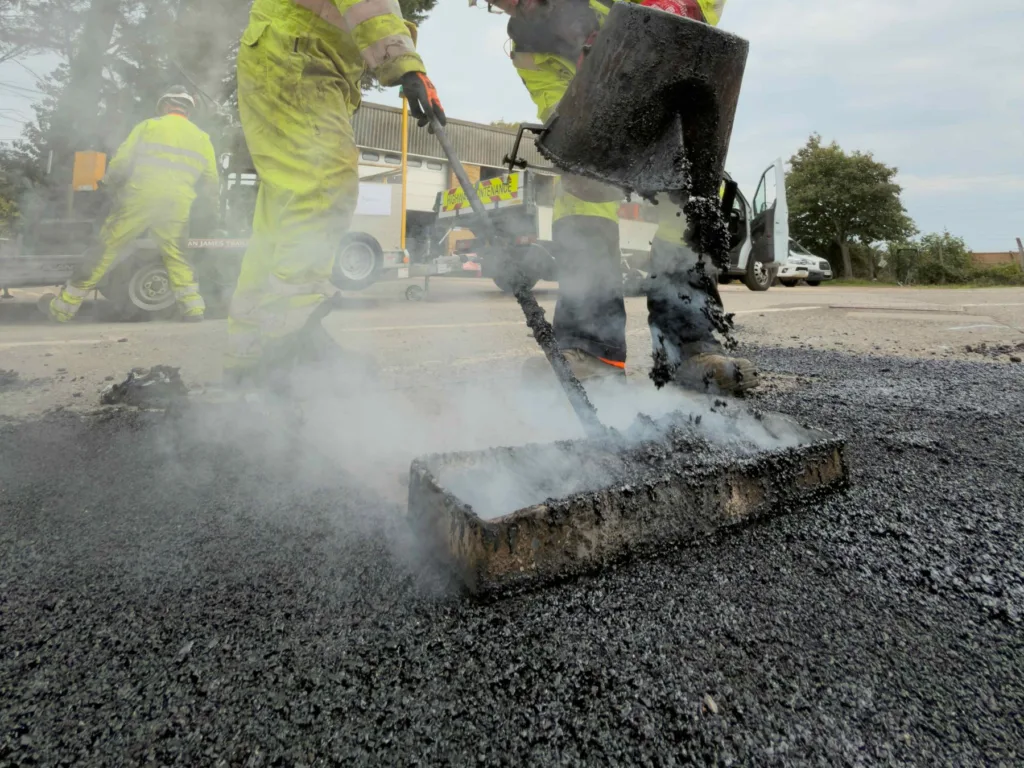
Repair techniques include two-person gangs cutting out and replacing damaged sections of carriageway, Dragon Patcher machines that seal repairs with hot bitumen and stone chippings, and Bobcat machines capable of removing large areas of damaged road surface in minutes.
To reduce outstanding repairs, additional sub-contractors are being brought in, Dragon Patcher machinery is being redirected to focus full-time on safety defects, Bobcat crews are being retained for defect repairs, and teams are being redeployed to areas with the highest demand.
More than 41,000 highway defects were reported to the council in the past 12 months, with around 90 per cent identified as potholes. Approximately a quarter were reported by members of the public through the Fix My Street portal, with the remainder logged during routine highway inspections. Crews are also authorised to repair additional defects they spot while on site.
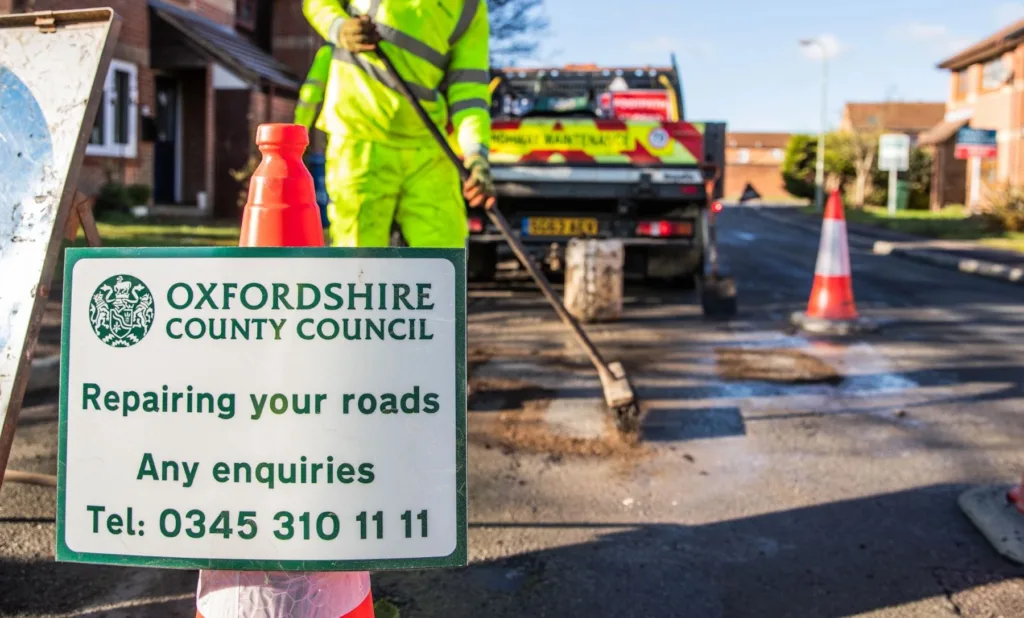
To ensure consistent standards, 20 per cent of completed repairs are inspected for workmanship and completeness. The council says 97 per cent of pothole repairs are now carried out using permanent methods, with 37,042 potholes filled during 2024–25.
Residents are encouraged to report potholes via Fix My Street, ideally with photographs if it is safe to do so. Reports are generally investigated within 10 days. Issues can also be logged through the council’s website.
Alongside reactive repairs, the council continues to prioritise preventative maintenance. Nearly £14.5 million has been invested since 2024 in surface dressing programmes – the largest for at least 20 years – treating around two million square metres of carriageway.
Richard Lovewell, M Group Business Director, said:
“We’re working closely with Oxfordshire County Council to respond to the leap in pothole reports over recent weeks. We’ve brought in additional resource and are currently working to bring in even more gangs whilst proposing initiatives including Bobcat and Dragon Patcher repairs.
“Potholes are frustrating for us all, but please remember the crews working hard to repair our roads at all hours and in all conditions should be treated with respect.”
The council has also highlighted a rise in abuse and threatening behaviour towards roadworkers in recent years, including incidents of operatives being filmed while carrying out repairs.