The approval of one of the UK’s largest data-centre developments has intensified a debate over whether Oxfordshire has the water, electricity and infrastructure needed to support a rapidly expanding AI industry.
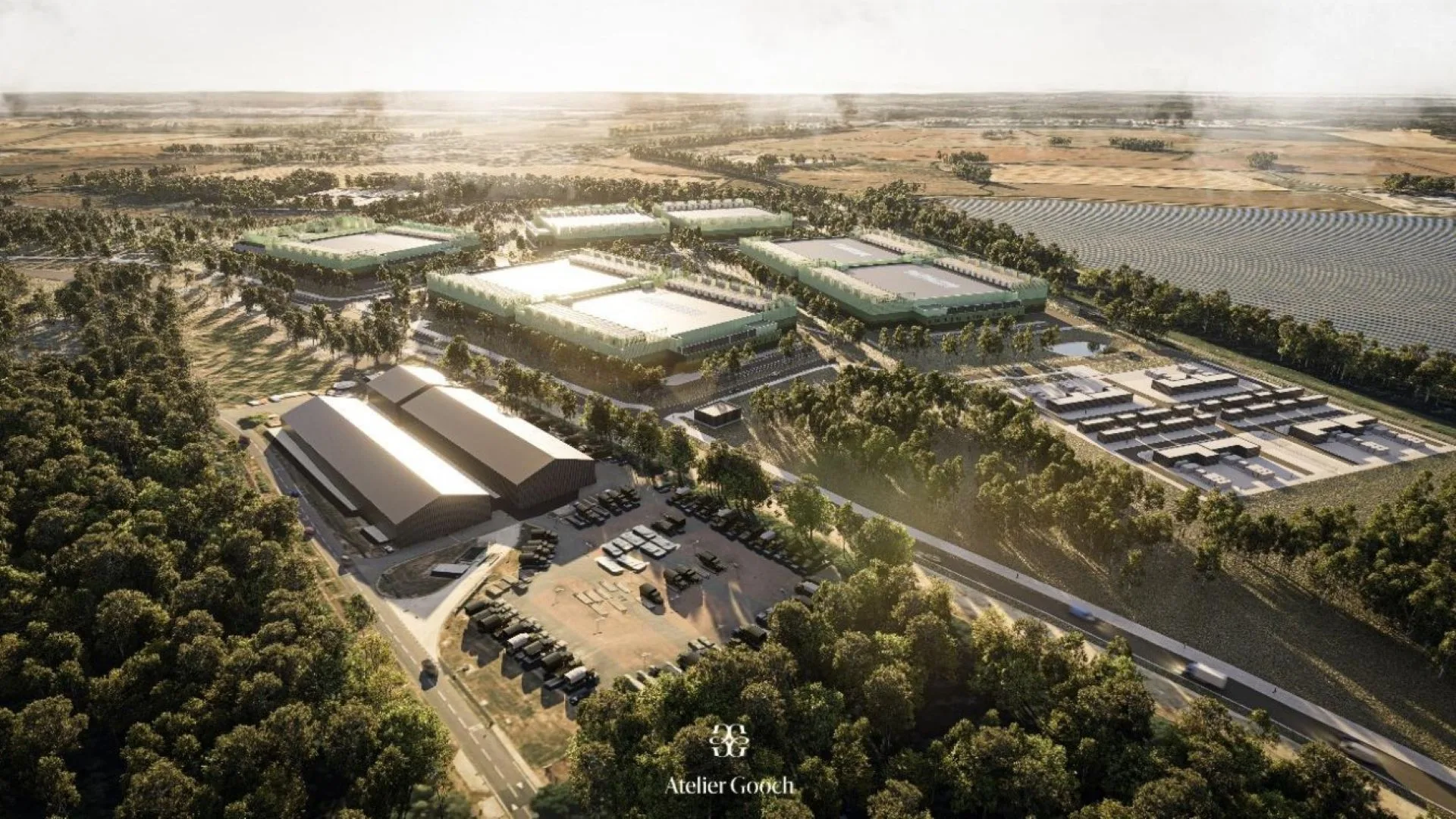
The eight-warehouse scheme at Graven Hill, near Bicester, will provide 103,605 square metres of data-centre space. Its potential electricity demand has been compared with the consumption of around 1.4 million homes.
The approval comes as a number of other large-scale data-centre proposals emerge across Oxfordshire, including plans linked to the former Didcot A power station, a proposed development on a farm near Shilton and a planned data-centre and energy district near Kidlington.
The county is also home to the UK’s first designated AI Growth Zone, part of a wider Government push to attract investment in artificial intelligence and the infrastructure required to support it.
But the speed and scale of the expansion is prompting questions about whether local infrastructure can keep pace.
Labour county and city councillor James Fry has called for a pause on new data-centre developments in Oxfordshire until there is clearer evidence of their cumulative impact on the environment and infrastructure.
“We don’t want the race to invest in AI to be at the expense of our future wellbeing,” he said.
Fry said electricity capacity and water availability were becoming increasingly important as the effects of climate change intensified.
“Data centres are huge users of water and electric power,” he said. “A wave of new data centres will undermine efforts to cut fossil fuel use.”
He argued that new facilities should only proceed where their electricity requirements could be met through new dedicated renewable generation and where water supplies would not be diverted from household, agricultural and industrial use.
The concerns come at a particularly sensitive time for water resources. Oxfordshire is currently under a hosepipe ban, while the University of Oxford has highlighted the potentially substantial water requirements associated with large data centres. Some of the biggest facilities can consume millions of gallons of water a day for cooling and associated electricity generation, although requirements vary considerably according to the technology used.
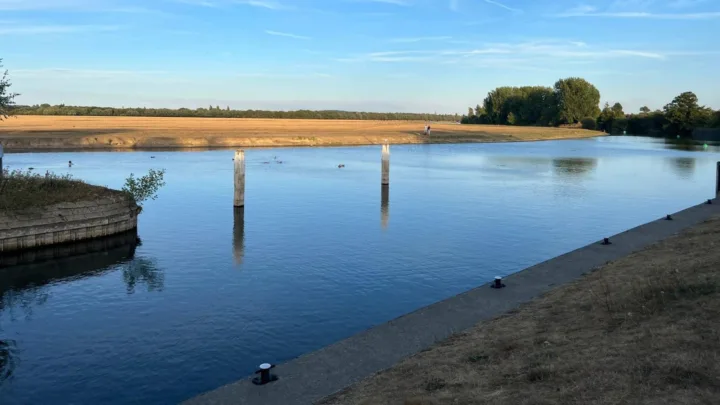
Fry also pointed to the proposed large water reservoir near Abingdon, which, if approved, would take many years to become fully operational.
A county under pressure
The debate is not confined to Graven Hill.
Green Party county leader and Cherwell councillor Ian Middleton said he accepted that Oxfordshire would probably need more data centres as demand for computing power grows.

But he argued that they needed to be located where the electricity grid had spare capacity, water was not already scarce and communities would not face disproportionate impacts.
“These are not insignificant facilities,” Middleton said. “They’re noisy, industrial-scale developments that can consume enormous amounts of vital resources in regions that are already under significant strain.”
He warned that further development could compound problems associated with utility shortages, rising temperatures and climate change.
“Like many other developments now, they are being pushed through by central government over the heads of residents without a proper assessment of the cumulative impacts on those who will have to live with them for decades to come,” he said.
The comments reflect a growing tension at the heart of the AI infrastructure boom. Data centres are increasingly regarded as essential economic infrastructure, yet the physical requirements of operating them — from electricity and cooling systems to land and grid connections — can place substantial demands on the places where they are built.
Government backs expansion
The Government has defended the role of data centres in the economy while saying their development must be sustainable.
A Government spokesperson said data centres were “a vital part of our economy and our everyday lives”, supporting digital services while helping to drive economic growth and regeneration.
The Government said it would support sustainable development by increasing clean power generation and encouraging greater energy efficiency within the sector.
Planning applications for data centres are also required to consider their impact on communities and the environment, the spokesperson said, with local authorities making decisions in the majority of cases.
The Government pointed to AI Growth Zones, including Culham, as a way of encouraging data-centre development in areas associated with new clean power generation.
It also said newer data centres were increasingly using advanced cooling systems designed to reduce water consumption.
Concerns grow around individual schemes
The Graven Hill decision has already prompted criticism from Calum Miller, MP for Bicester and Woodstock, who called for ministers to examine the implications of the development and ensure planning authorities and residents could properly consider the additional pressure on local utilities.

“You can’t have a data centre without abundant energy and water supply. Bicester lacks both,” Miller said. “We need a real commitment to address this before any building starts.”
Elsewhere, proposals for a data centre on a farm near Shilton have also generated concerns.
West Oxfordshire councillor Rosie Person questioned the amount of information available about the proposal’s feasibility and potential impacts, calling for robust environmental assessments covering water and energy use, biodiversity and nearby communities.
The proposed development near Kidlington has similarly attracted objections, including concerns about water supply, habitat loss, the impact on the National Grid and the heat generated by large-scale computing infrastructure.
The scale of the wider expansion is significant. The Energy Networks Association has previously warned that demand for computing power is growing rapidly, with five-fold growth in data-centre capacity predicted by 2030.
Dr Alexandra Howe, the organisation’s director of policy and external affairs, said electricity network operators were working with the Government to support major new demand projects while ensuring the system worked for customers large and small.
The infrastructure behind the AI boom
The debate over Oxfordshire’s data centres is ultimately a debate about what the physical expansion of artificial intelligence means for the places expected to accommodate it.
Data centres may be largely invisible to the people who use the digital services they support, but the buildings themselves are anything but small. They can occupy large industrial sites, require substantial connections to the electricity grid and need sophisticated cooling systems to keep thousands of computers operating.
For Oxfordshire, the question is whether the economic opportunities associated with becoming part of the UK’s AI infrastructure can be reconciled with pressures already facing its water, energy and natural environment.
There are also questions beyond the buildings themselves.
Anneliese Dodds, the Labour MP for Oxford East, has separately called for stronger safeguards around artificial intelligence, warning of potential risks to security and safety as increasingly powerful AI systems are developed.
Taken together, the debates point to a broader question for Oxfordshire: how much of the county’s infrastructure should be committed to supporting the next phase of the AI economy — and who should decide where the limits lie?
Reporting contribution by Isabella Harris, Local Democracy Reporter (LDR) for Oxfordshire, covering local politics, council meetings and planning decisions across six councils in the county.