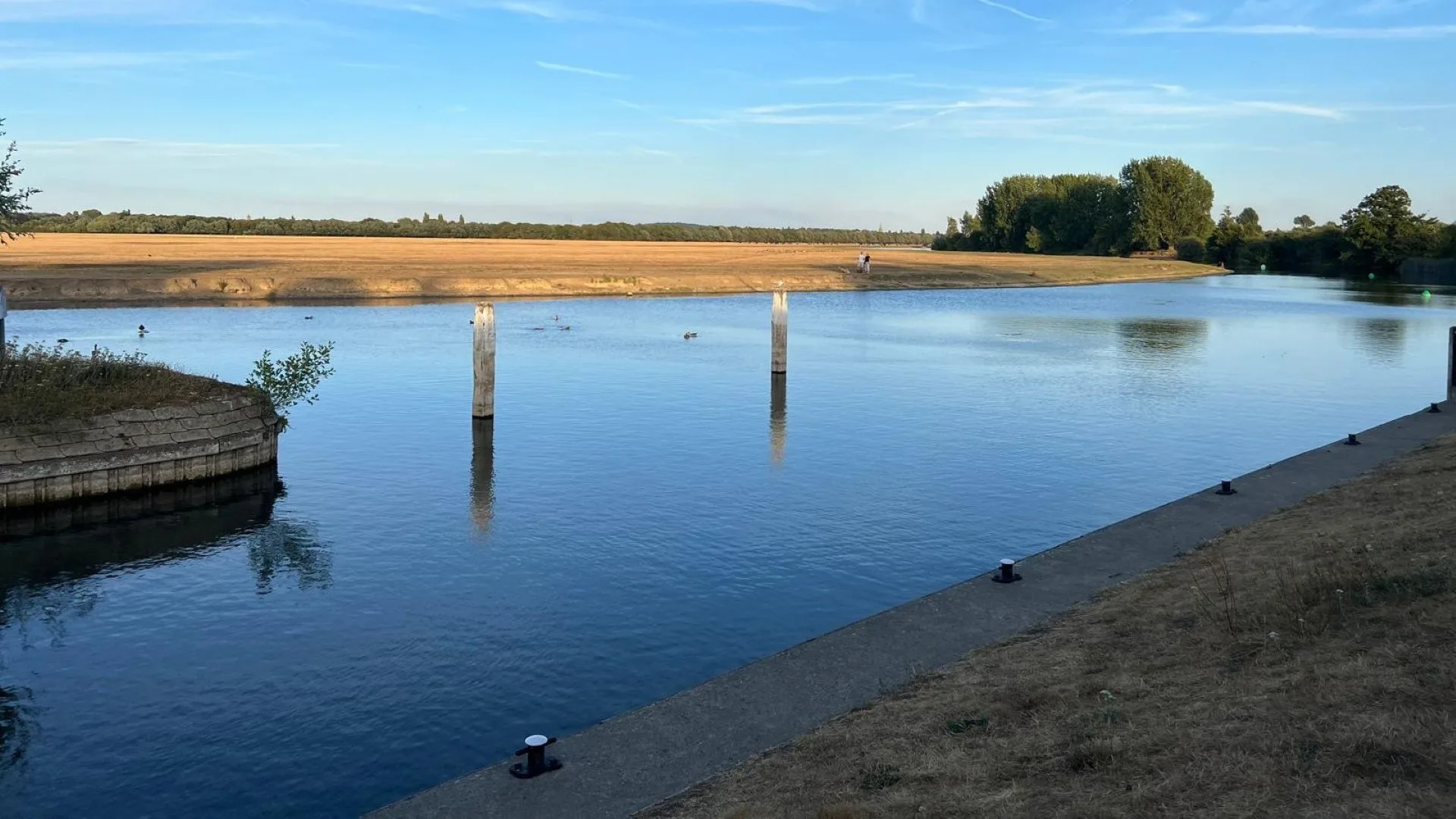
Raw sewage was discharged into several Oxfordshire rivers and streams over the bank holiday weekend, prompting warnings of a potentially “toxic and dangerous” mix of bacteria as the county remains in drought and under a hosepipe ban.
Thames Water storm discharges were recorded at Botley, Wheatley, Burford, Milton-under-Wychwood, Kingham and Faringdon following thunderstorms and showers last week.
The releases have renewed criticism of the water company, with campaigners warning that already-low river levels leave waterways with less capacity to dilute untreated sewage.
Ash Smith, co-founder of Windrush Against Sewage and one of the campaigners who helped inspire the Channel 4 docudrama Dirty Business, said the combination of low river levels and sewage discharges was particularly concerning.
“This is serious stuff as low rivers have very little capacity to dilute the highly toxic untreated sewage that will come,” he said, adding that sewage could also dislodge deposits that had accumulated within the system.
“Bacteria levels will be high, and the entire cocktail will be toxic and dangerous to fish and other animals, including humans.”
Smith has spent a decade investigating pollution in the River Windrush in the Cotswolds alongside fellow campaigner Peter Hammond. He said the latest incidents were the consequence of years of inadequate investment and regulation.
“Years of neglect and water companies being able to get away with it due to weak and complicit regulation have led us to this awful situation,” he said.
Calls for action on Thames Water
The latest discharges come as pressure continues to build on Thames Water and the wider privatised water industry.
Windrush Against Sewage has a petition calling for a referendum on public ownership of water companies. With close to 200,000 signatures, it is due to be debated in Parliament on 14 September.
Smith said the level of support reflected widespread frustration among members of the public who felt they had been ignored.
He said the petition had attracted twice the number of signatures required to trigger a parliamentary debate and that he hoped the forthcoming discussion would help “get the truth to be discussed in Parliament” and inspire further action.
Oxford Sheriff Linda Smith, who is also the city’s cabinet member for housing and communities, has separately been calling for progress on investigations into poor water quality at the city’s official bathing site at Port Meadow.
“The discharge of sewage into our rivers is completely unacceptable and should not be happening in a developed country like ours in the 21st century,” she said.
She blamed a lack of investment in technology and capacity, arguing that Thames Water had instead focused on “extracting profits and bonuses”.
The Sheriff is due to visit ultraviolet disinfection equipment installed by Thames Water upstream of the Cassington Sewage Treatment Works. She said, however, that more action was needed.
Water quality in the area remains poor, with a new investigation planned involving local charities, volunteers, Thames Water and the Environment Agency to examine the source of elevated faecal bacteria levels.
Thames Water has been investigating and reviewing data relating to the elevated levels for more than four years.
MP calls for Thames Water special administration
Witney MP Charlie Maynard has also criticised the latest discharges and called for action from the Government.
“No rain for months and months and with just the first few days of rain your sewage treatment works are dumping sewage right now in both the Windrush and the Evenlode,” he said.
“This is not good enough.”
Maynard has repeatedly called for Thames Water to be placed into special administration, a modified insolvency process intended to maintain essential services. It does not in itself amount to nationalisation.
The issue comes as Prime Minister Andy Burnham considers the future of the water industry.
Speaking in the House of Commons on 01 September, Burnham warned that reversing the privatisation of water companies almost 40 years ago would be difficult, while pledging stronger public control over essential services.
His Government is considering “all possible solutions” for the water industry.
Read more: Sewage discharged into Oxfordshire rivers as rain follows summer drought
Thames Water points to investment and extreme weather
Thames Water defended its approach, saying it takes its environmental responsibilities seriously and is investing in improvements to river health.
A spokesperson said the company’s latest results showed pollution incidents had fallen by 18 per cent and serious pollution incidents by 27 per cent in 2025.
The company said it was delivering what it described as the biggest upgrade to its wastewater network in 150 years, with the equivalent of more than £7 million a day being invested.
It also said every pound of profit was being reinvested in the business, with no dividend paid for the past two years and no external dividend paid since 2017.
The company said storm overflows operate within Environment Agency limits and were designed to prevent sewage backing up into homes during periods of intense rainfall.
It also pointed to the unusually dry summer as a factor in the pressure on the wastewater network.
“During our record-breaking summer, the ground has become hard and is absorbing less rainfall,” the spokesperson said.
“When heavy rain arrives, more water runs off the surface and reaches rivers and sewers quickly, increasing pressure on the wastewater network.”
Thames Water added that farming, industry, road runoff and increasingly extreme weather also contribute to river pollution.
Dry summer brings a second water concern
The contrast between months of drought and sudden heavy rainfall is also raising concerns about flooding later this year.
After a prolonged period of dry weather, hard ground can absorb less rainfall, increasing surface runoff when heavy rain arrives and potentially adding pressure to drainage systems.
Cherwell District Council, working with Oxfordshire County Council, is holding an Oxfordshire Flood Preparation event at Exeter Hall in Kidlington on Thursday 24 September, from 2.00pm to 7.00pm.
Chris Aramini-Brant, Cherwell’s planning chief, said changing weather patterns and more extreme rainfall made it increasingly important for residents to understand their flood risk and the practical measures available to protect their homes.
County environment and economy chief Laura Gordon said Oxfordshire had experienced more than 20 significant flood events since 2007.
“After a summer of heatwaves, it is vital we don’t forget about the risk that flooding poses,” she said.
For Oxfordshire’s rivers, however, the immediate concern remains the same: how waterways already stressed by an exceptionally dry summer will cope with the arrival of untreated sewage and increasingly unpredictable rainfall.
Reporting contribution by Isabella Harris, Local Democracy Reporter (LDR) for Oxfordshire, covering local politics, council meetings and planning decisions across six councils in the county.