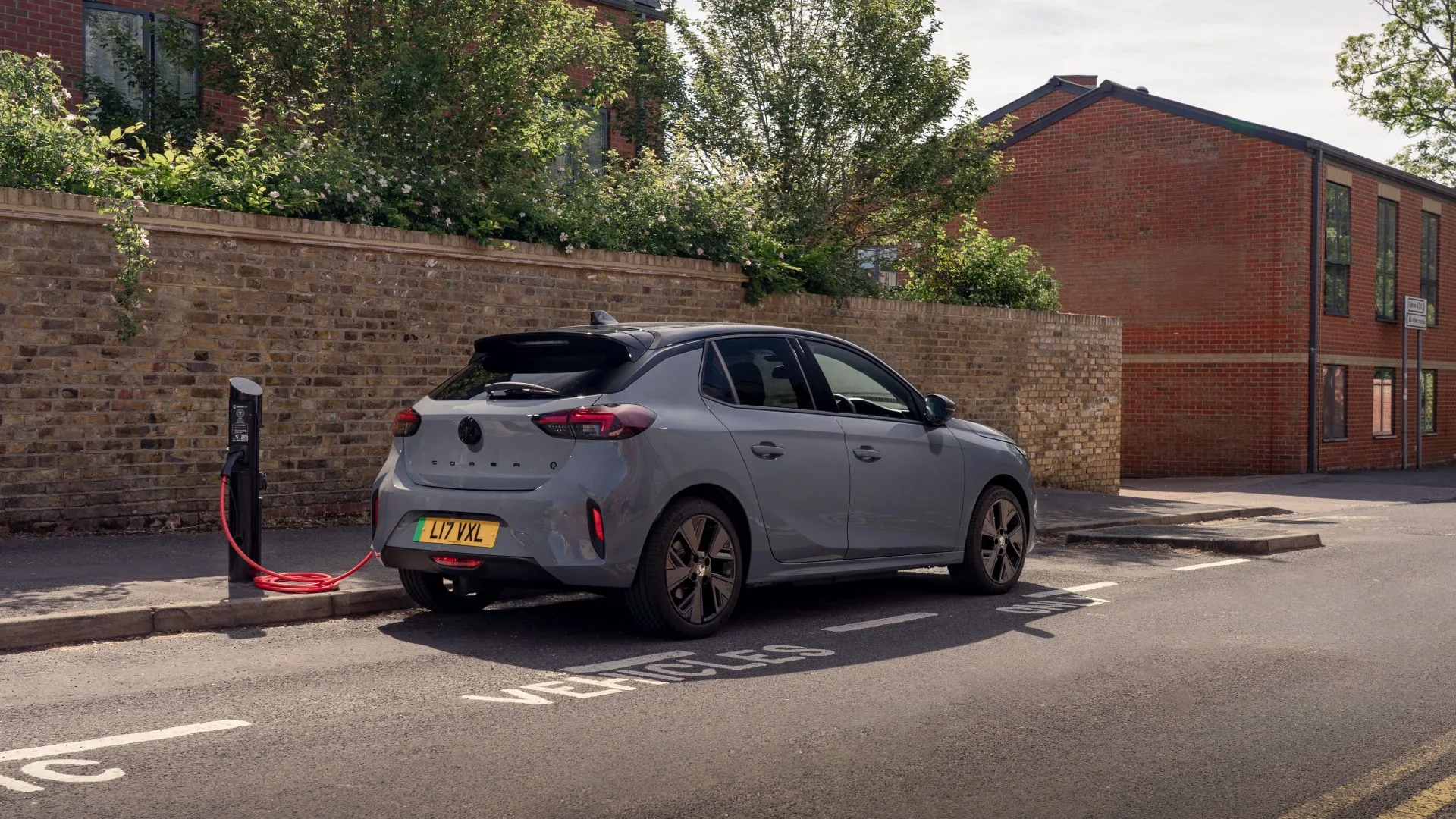
Electric vehicle charging bays will replace regular parking spaces at 11 locations across Oxfordshire after the county council approved the first sites in a £4 million programme to expand public charging.
The decisions, made by Oxfordshire County Council’s cabinet member for transport on Thursday, 03 September, will allow charging infrastructure to be installed in Oxford, Berinsfield, Burford, Henley-on-Thames and Kidlington.
But the rollout has exposed a familiar tension in the transition to electric vehicles: how to provide charging for residents without private driveways without reducing already pressured parking or creating obstacles on pavements.
Seven other proposed on-street locations were deferred to allow for further engagement and site assessment. Proposed charging bays in Carterton and Eynsham will not go ahead at this time.
The county council says the wider programme will install more than 1,500 public chargers by summer 2028, more than doubling the number currently available across Oxfordshire.
Most of the new chargers will be installed in off-street car parks, with the remainder provided on streets.
The programme is aimed in particular at residents who cannot charge an electric vehicle at home. The council estimates that about 30 per cent of Oxfordshire residents do not have a driveway or private off-street parking suitable for charging.
Councillor Gareth Epps, the council’s cabinet member for transport, said reliable public charging was essential to give people confidence to switch to electric vehicles.
“There is more work to do before some sites can move forward,” he said, adding that the council needed to balance the needs of residents who do not have electric vehicles with the need to provide public charging.

The approved Oxford sites include Binsey Lane, Cowley Road, Hamilton Road and Whitehouse Road/Salter Close. Hockmore Street and Water Eaton Road were also approved subject to further checks, while Cuddesdon Way is dependent on whether an alternative off-street site can be delivered.
In Kidlington, the Phelps site was approved subject to the council continuing to look for better-supported alternatives.
Latimer Road was deferred for further consideration of wider parking changes and alternative sites.
The decisions followed a formal consultation on the first 18 proposed on-street sites, which received more than 700 responses between 08 July and 07 August.
Concerns included the loss of parking, pressure on existing spaces, the amount of footway remaining around charging equipment and the visual impact of infrastructure in conservation areas.
At the decision meeting, Alison Hill, speaking on behalf of the Coalition for Healthy Streets and Active Travel and the Summertown and St Margaret’s Neighbourhood Forum, urged the council to ensure chargers did not become obstacles on pavements.
The group supported some proposed locations provided that sufficient space remained for pedestrians.
Melanie Greene, who lives at The Phelps in Kidlington, questioned the impact of the proposals on local parking. She said the plans could result in a 50 per cent reduction in parking in her area and questioned whether the full number of affected properties had been surveyed.
She argued that the cost of electric vehicles, rather than a lack of charging infrastructure, could be a greater barrier to adoption and suggested that charging spaces could instead operate during specified daytime periods while remaining available for general parking at other times.
In Bampton, resident Spencer Komodromou said the concern was “specifically the location” of proposed chargers in the Market Square.
He warned that restricting parking in the area could push motorists towards other spaces and contribute to overcrowding and potentially unsafe parking.
The council has now deferred the Bampton proposals while it looks for another location.
A council officer defended the approach, saying the sites had undergone a rigorous selection process and that the programme was intended to ensure rural and deprived communities were not left behind.
She said two-thirds of the planned chargers would be located in car parks, while some on-street provision was necessary to place charging facilities within a five-minute walk of people’s homes.
The officer also challenged descriptions of the changes as a loss of parking, describing them instead as a “transfer of use of parking spaces” to electric vehicles.
The approved chargers will generally be 7.4kW units, allowing vehicles to charge over several hours or overnight. A smaller number of rapid chargers of 50kW or more will be installed where electrical capacity and the location make this possible.
The county council’s programme also includes a scheme allowing residents to apply for cable channels outside their homes, as well as work with town and parish councils to establish charging microhubs at community facilities.
Connected Kerb, a partner investor, will install and operate the on-street chargers and charging points at Oxfordshire County Council’s park-and-ride and other car parks. Bicester-based EZ-Charge will install and operate charging hubs in participating city and district council car parks.
The council said installation of the approved sites remains subject to detailed design, technical feasibility and electrical connection work.
Further proposed sites are still being assessed, while EV parking spaces proposed for Deddington are due to return to a cabinet member decision meeting in October.
The expansion comes ahead of the UK’s 2030 deadline for ending the sale of new petrol and diesel cars, increasing pressure on local authorities to build charging infrastructure for drivers making the switch to electric vehicles.
For Oxfordshire, the challenge will be to expand that network without worsening the competition for parking and pedestrian space that has already accompanied the first phase of the programme.
Reporting contribution by Isabella Harris, Local Democracy Reporter (LDR) for Oxfordshire, covering local politics, council meetings and planning decisions across six councils in the county.