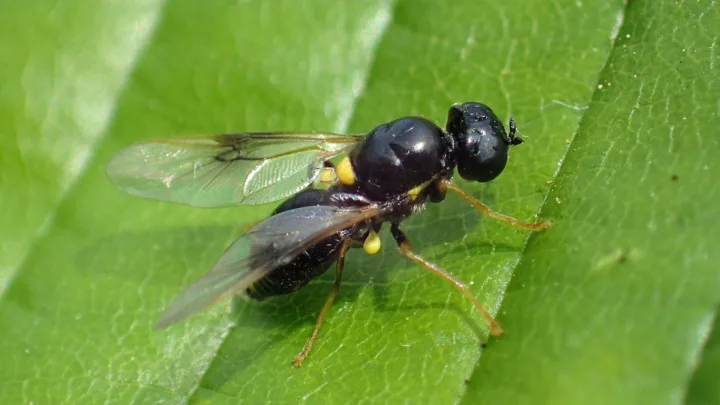
The Berkshire, Buckinghamshire & Oxfordshire Wildlife Trust (BBOWT) and the Royal Horticultural Society (RHS) have launched a campaign for gardeners nationwide to help protect hoverflies. This fly family is the second most significant pollinator after bees—some species of hoverflies are known to visit more flowers than bees.
These insects are unsung heroes of many of our ecosystems. Hoverflies visit 52% of crops globally, which they either pollinate or protect by eating sap-sucking aphids. Additionally, they pollinate wildflowers, are food for birds and even help break down organic matter in gardens.
Yet, intensive agriculture, harmful pesticides, urban development and climate change have all taken their toll. Hoverfly distribution has seen a 44% decline between 1980 to 2020, and in 2022, the International Union for the Conservation of Nature added hoverflies to its Red List of threatened species.
Hoverflies are masters of disguise. These stingless insects are often mistaken for wasps, bees or even hornets, and the different types go by various common names such as Batman, Footballer, and Marmalade, thanks to their distinctive markings and colours.
True flies have only one pair of flight wings (whereas bees and wasps have two) and they make up over 280 of the 6000 fly species in the UK. It can be easier to identify them by their behaviour than by their looks because they hover or even zigzag around plants.
Andy Coulson-Phillips, BBOWT’s Principal Ecologist, said: “Hoverflies are a tiny but essential part of the natural world. They are vital for pollinating both wildflowers and garden plants alike, so we’d love everyone across our three counties to invite them into their gardens or outside space.”

Vicki Hird, author of Rebugging the Planet and strategic agriculture lead for The Wildlife Trusts, said: “Hoverflies are the hidden heroes of our gardens and countryside – but whatever their shape, size or disguise, they are critical for our food security. They can thrive in well-managed woodlands and wetlands, but there is also so much we could be doing in our gardens to help.
“Providing a range of flowers to feed on through the year, ponds for larvae to grow in, dead wood to lay eggs in and even a few aphid pests for them to feed on, and you will have these gardeners’ friends for life. And they are so helpful, and don’t bite or sting. You can be a hoverfly champion by telling friends and family to cherish them.”
Helen Bostock, Senior Wildlife Specialist at the Royal Horticultural Society, said: “We’d like people to open their garden gates to hoverflies this summer. These incredible insects help pollinate our plants, keep aphids in balance and break down rotting matter in the garden.
Gardeners can help attract them by planting open, easily accessible flowers. In spring, they’ll be drawn to aubretia. In summer, they’ll love blackberry flowers, oxeye daisy, marigolds, fennel, cow parsley and poppies. Come autumn, they can be seen on heather, aster and even common ivy.”
Experts from the two charities have designed a series of projects for gardeners to help hoverflies in spaces large or small. These include:
- Pollinator plant boxes: Ideal for small-space gardens or balconies, these can be jam-packed with flowering plants to suit the season, representing a giant buffet for visiting hoverflies.
- Hoverfly lagoons: These are pools of shallow water where fallen leaves create a perfect breeding ground for many of the hoverfly species, which have aquatic larvae.
- Larvae nurseries: Log piles and even shrubs can make perfect homes for hoverfly larvae.