The hidden materials behind everyday life are brought into focus in a new special exhibition opening at Oxford University Museum of Natural History (OUMNH) on Wednesday 17 June.
34: The Critical Raw Materials Shaping Our Future explores the 34 raw materials deemed essential to the UK’s future, revealing the global stories, scientific significance and geopolitical complexity behind the minerals that underpin modern technology.
Through a mix of case studies, historical artefacts, contemporary objects and interactive installations, the free exhibition invites visitors to explore the supply chains and human impact behind materials that are often taken for granted in everyday life.
The exhibition is a collaboration between OUMNH, the University of Oxford’s Department of Earth Sciences, and Oxford EARTH, a transdisciplinary research programme focused on addressing the challenge of sourcing critical materials sustainably and equitably.
Critical minerals are defined as those essential to a country’s economy or national security but which face potential supply chain risks. With demand increasing rapidly due to clean energy transitions, electrification and digital infrastructure, the exhibition highlights the urgency of understanding where these materials come from and how they are used.
At the heart of the display are 34 materials officially designated as critical to UK development, including lithium, cobalt, titanium, aluminium, iron, helium and rare earth elements. These sit alongside the technologies they enable, from smartphones and medical imaging equipment to wind turbines and aerospace components.
Dr Gavin Svenson, Director of OUMNH, said the exhibition reflects the museum’s commitment to engaging with pressing global issues.
“Our upcoming exhibition, 34, will not only deepen public understanding of one of today’s most urgent global challenges, but also reflects our ongoing commitment to present topical, relevant content that helps audiences understand how the natural world shapes and connects with our daily lives,” he said.
The exhibition takes a long historical view of human interaction with the Earth, beginning with a 40,000-year-old iron-rich ochre from Ngwenya Mine in southern Africa, and continuing through gold rushes in North America to modern lithium extraction in Chile’s Atacama Desert.
These examples highlight how the pursuit of raw materials has shaped landscapes, economies and communities over time, while raising ongoing questions about sustainability and environmental impact.
Alongside historical context, 34 examines the modern systems and industries that rely on critical materials, linking everyday spaces such as kitchens, hospitals and transport networks to the global supply chains that sustain them.
Interactive installations allow visitors to virtually dismantle familiar objects to see the elements inside, while others showcase geological processes and provide hands-on engagement with raw materials. A tactile section also traces the journey of iron from ore to finished product, allowing visitors to handle materials at different stages of processing.
The exhibition also highlights the environmental and social challenges associated with extraction, including water stress, ecosystem disruption and labour conditions in mining regions. It explores emerging research into alternative extraction methods, recycling, and material substitution as ways to reduce reliance on high-impact resources.
Professor Mike Kendall, Director of the Oxford EARTH programme, said the challenge of securing sustainable supplies of critical materials is central to the transition to net zero.
“Achieving net zero and a sustainably secure future will place unprecedented demands on natural resources, requiring innovative ways to discover, refine and reuse critical materials – bringing both major challenges and unique opportunities,” he said.
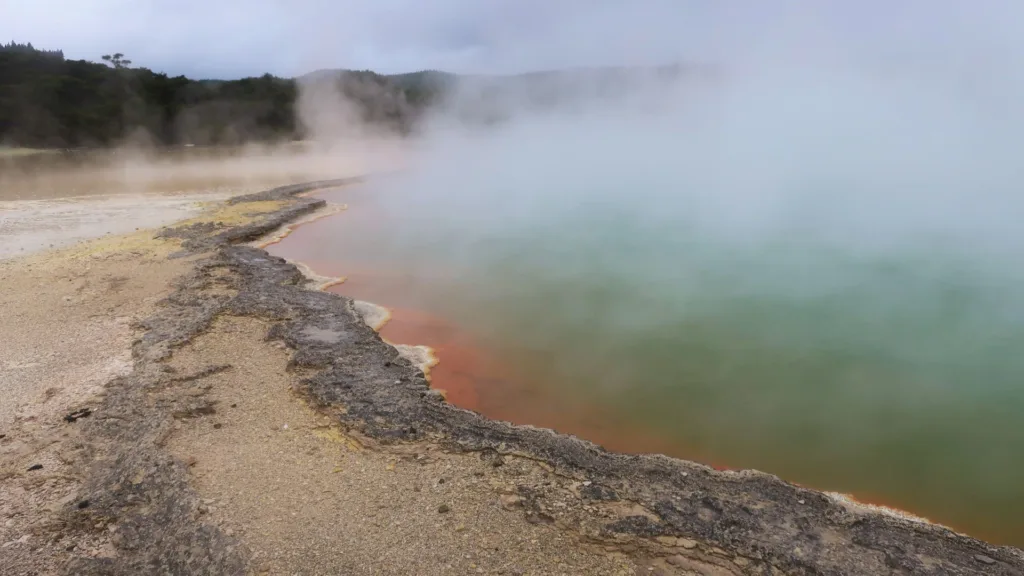
A key focus of the exhibition is lithium, essential for rechargeable batteries, and the environmental pressures associated with its extraction. Research featured in the exhibition explores whether geothermal brine mining in locations such as New Zealand and Montserrat could offer more sustainable alternatives.
Alongside scientific research, the exhibition also incorporates art, storytelling and public engagement. A commissioned artwork by Katie Surridge responds to the scale and impact of global extraction, while a collaboration with the Oxford Flash Fiction Prize invites creative responses to the themes of resource use and sustainability.
A wider programme of public events will run alongside the exhibition, including talks, workshops, tours and family activities designed to engage audiences of all ages with the subject matter.
The exhibition is free to enter and will be open during the museum’s normal opening hours.