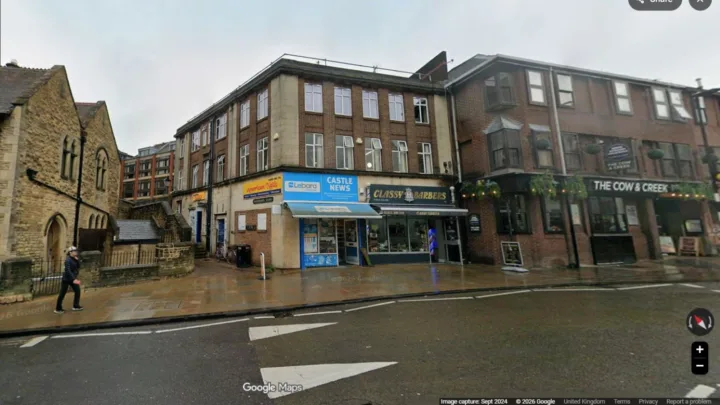
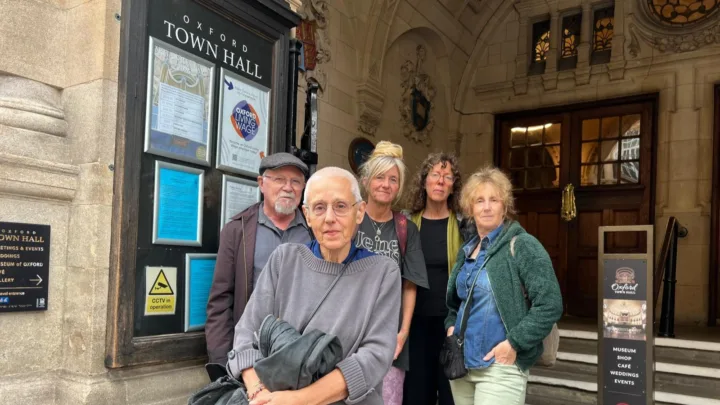
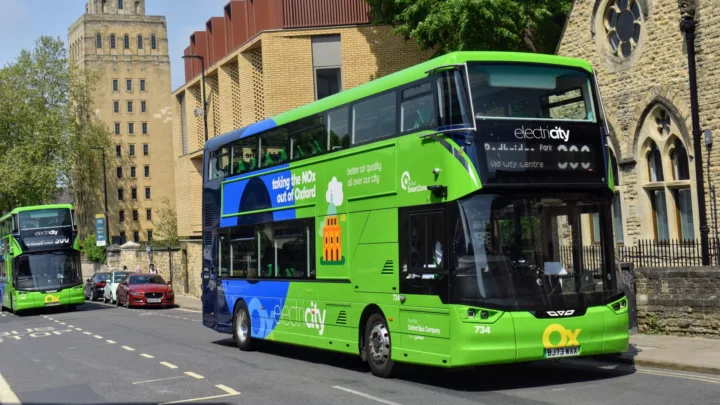
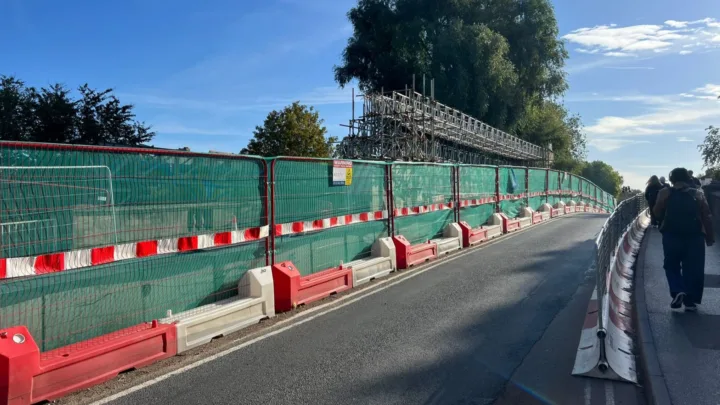
Schools, businesses, a nursery, and a volunteer rescue service have raised concerns about how staff will be impacted by proposals to introduce a congestion charge in Oxford, according to our Local Democracy Reporter Esme Kenney.
This comes after 43 per cent of staff at The Cherwell School said they were likely or certain to resign when traffic filters are introduced, which would be located on the same roads as the congestion charge.
One business leader described the plans to bring it in before Christmas as “sinister and contemptuous” for local traders.
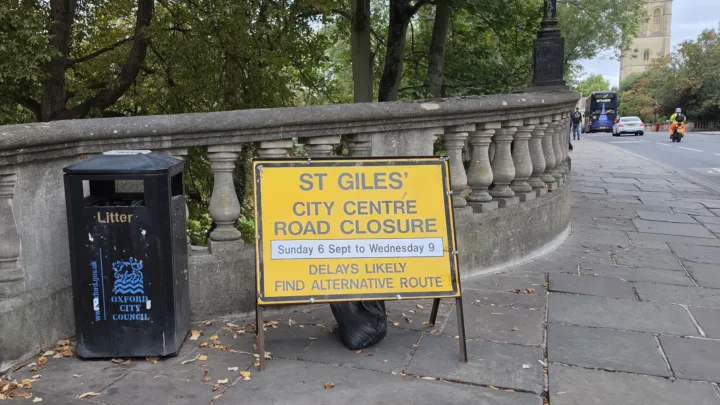
Oxfordshire County Council is considering rolling out the temporary scheme, which would see motorists charged £5 per day for driving through several of the city’s roads without a permit. A final decision will be made at the council’s cabinet meeting on Wednesday, September 10.
Paul James, chief executive of the Rivers Learning Trust, which oversees The Cherwell School, The Swan School and New Marston Primary School, wrote to the council highlighting fears about staff recruitment.
These concerns were based on a July 2024 survey, where high numbers of staff at schools – including 50 per cent of staff at The Swan School – said they would leave or consider leaving when traffic filters are introduced.
Graham Jones from Rescue Oxford (ROX) – backing Oxford business – said:
“The current parking charges are very expensive and unaffordable for a great many.
“Adding on congestion charges will be a great deterrent and encourage people to stay away from Oxford, badly affecting the local economy.
“Bringing in the congestion charge just before Christmas, when retailers normally receive a high percentage of their annual turnover, seems to be a sinister and contemptuous gesture to the business community. Why?”
He also said the exemptions on business vehicles were confusing for sole traders.
Kris Love from Lowlands Rescue Oxfordshire, whose volunteers assist emergency services, said:
“While our members residing in the wider county area will be eligible for 25-day trips into the city permit areas under the proposed scheme, we anticipate this restriction will reduce our team’s ability to participate fully in deployments and training.
“It is unacceptable to expect volunteers – who dedicate their time and personal resources – to pay a £5 daily fee for operations they already undertake voluntarily at their cost.”
Council officers responded that volunteers could apply for a permit if they use their personal cars as long as they are carrying goods and equipment that cannot be transported by bus or bike.
St Thomas’ Day Nursery also wrote to the council, saying they were “deeply concerned” about the impact on staff and parents.
In an email they said:
“We have senior staff who do various school drop offs and pick ups for their own children and it would be impossible to do so as well as make working hours work while using public transport.
“If the congestion charges are implemented it will not be affordable for parents to travel to the nursery and therefore we may lose clientele and therefore money and not remain sustainable.”
Officers responded that nursery staff could apply for a permit, but parents would have to pay the charge or use one of their day passes if eligible.
Other groups, including Oxford Pedestrian Association, Cyclox and Uber, have written in support of the scheme, citing benefits for walking, cycling, and reduced congestion.
A total of 7,165 people responded to the consultation, with 74 per cent saying the proposal would have a negative or very negative impact overall. By comparison, 20.3 per cent thought it would have a positive or very positive impact, while 5.7 per cent thought it would have a neutral or no impact.
Following the consultation, the county council added free park and ride tickets in November and December and additional permits, such as for ice hockey clubs and business cars, to its proposal.
A council spokesperson said:
“The county council has been urged, including by Oxford City Council, to take urgent action to tackle congestion and speed up bus journeys in Oxford.
“The scheme is proposed as a temporary measure to help reduce traffic before we are able to start the traffic filters trial approved in November 2022. If introduced, most of the city would be accessible without driving through a congestion charge point.
“This would be the case for schools in north Oxford where staff from outside the city may not even have to take a different route to the one they use now. Those that do would most likely only need to make a small adjustment to their route, in relation to the overall journey length.
“If we are to provide the faster, cheaper and more reliable buses, and improved walking and cycling infrastructure that people say they want, we need to reduce traffic first.
“It is proposed to make P&R cheaper. Given that 90 per cent of people access the city centre by non-car modes, this would be of significant benefit to the majority of visitors. No decision has been made yet.”
The proposals will be scrutinised by the Place Overview and Scrutiny Committee at their meeting on Wednesday, August 27, before going to cabinet on September 10.
The roads that would be affected are Hythe Bridge Street, St Cross Road, Thames Street and St. Clement’s Street every day from 7.00am to 7.00pm, as well as Marston Ferry Road and Hollow Way Monday to Saturday from 7.00am to 9.00am and 3pm to 6pm.
Residents within the Oxford permit area can apply for up to 100 permits a year, while those in the county can apply for 25. Exemptions will be available for groups including blue badge holders and students with special educational needs.
More than 13,500 people have signed a petition against the charge since the scheme was announced.