Plans to establish a powerful new Thames Valley-wide strategic authority have been thrown into disarray after political leaders from Oxfordshire abruptly withdrew support at a crucial meeting in Reading.
The gathering, which brought together representatives from across Berkshire, Swindon and neighbouring areas, was expected to sign off a shadow “Foundation Strategic Authority” (FSA) — the essential precursor to a future Thames Valley Mayoral Strategic Authority with elections pencilled in for May 2028.
Instead, the meeting reportedly ended in confusion and silence, with participants declining to comment on what had taken place. It is understood that Oxfordshire’s Liberal Democrat leadership withdrew support during discussions, effectively halting months of delicate negotiations.
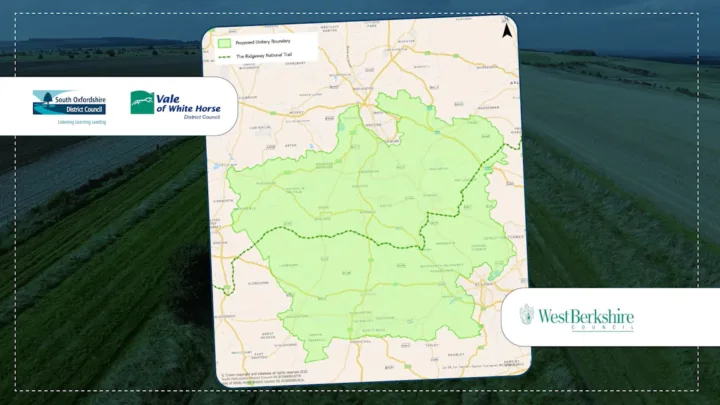
The proposed authority would have brought together a polycentric economic region spanning Oxfordshire, Berkshire, Swindon and surrounding districts, covering nearly two million people and a combined economy valued at more than £97bn.
The plan was designed to unify decision-making on transport, housing, skills, climate resilience and economic development while leaving day-to-day services with existing councils.
Supporters of the scheme had argued that a single mayoral structure could unlock major investment, streamline infrastructure planning and address long-standing issues such as housing shortages and fragmented labour markets. Earlier submissions to government suggested the reforms could generate billions in additional economic output and tax revenue by 2040.
However, political consensus began to fracture at the decisive moment. While Berkshire-based leaders were reportedly still broadly supportive, concerns are believed to have emerged around governance balance, local control and the scale of proposed regional infrastructure priorities — including long-term transport projects such as additional Thames crossings in Reading.
The absence of Windsor and Maidenhead from the latest talks further highlighted the fragility of the coalition behind the proposals, with several councils having only recently aligned behind the idea of a transitional authority.
Local business leaders, who had welcomed the prospect of stronger regional coordination on investment and skills, are now said to be alarmed that the collapse of agreement could delay or derail major development plans.
Central government had been understood to be broadly supportive of the concept, with officials ready to progress once a governance model was agreed. The breakdown in local consensus now leaves ministers with fewer clear options: restart negotiations, proceed with a reduced partnership, or potentially impose a model with limited local input.
The political fallout extends beyond governance reform. Attention is now turning to what a future Thames Valley mayoral election might look like if the plans are revived ahead of 2028.
An analysis of recent voting patterns across Oxfordshire, Berkshire and Swindon suggests a complex and shifting electoral landscape. Using data from comparable area-wide elections, including Police and Crime Commissioner results, Labour would be in a strong position to win a hypothetical mayoral contest.
After adjusting for boundary differences — including the exclusion of Buckinghamshire — Labour’s vote share advantage appears to translate into a narrow lead over the Conservatives, with Reform UK emerging as a potential third force.
However, the picture changes when incorporating Swindon Borough voting patterns and recent local election results, where the Conservatives remain competitive but still fall short of overtaking Labour in a combined regional projection.
The Liberal Democrats, despite holding significant local influence across parts of Oxfordshire and Berkshire, would likely place fourth in a regional mayoral race based on aggregated voting behaviour.
The projection reflects a broader shift in UK political dynamics, with Reform UK continuing to poll strongly nationally and the Greens gaining traction in selected constituencies. Yet both parties’ limited presence in earlier area-wide contests complicates any definitive forecasting.
Ultimately, the analysis suggests that Labour would be favoured to win the first Thames Valley mayoral election — but only if the strategic authority itself is revived.
For now, however, the collapse of agreement at Reading leaves the future of Thames Valley devolution uncertain, with councils facing a choice between revisiting a revised deal or abandoning the project altogether.
Reporting contribution by Isabella Harris, Local Democracy Reporter (LDR) for Oxfordshire, covering local politics, council meetings and planning decisions across six councils in the county.