Plans to shake-up local government in Oxfordshire risk becoming a “great distraction” from the real issues facing councils if not handled properly, a local thinktank has warned. This is according to a news story by our Local Democracy Reporter Esme Kenney.
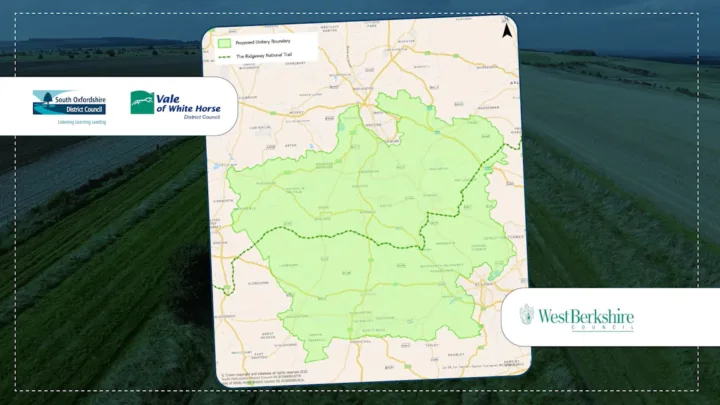
Under the proposals, Oxfordshire’s existing county and district councils would be abolished and replaced with new unitary authorities covering revised boundaries. These councils would take responsibility for all local services, replacing the current two-tier system where duties are split between county and district authorities.
Alongside this, a mayoral combined authority would be created to oversee services at a broader, strategic level across a wider region.
Chris Cousins, a member of POETS (Planning Oxfordshire’s Environment and Transport Sustainably), argued the Government risked replacing “one two-tier system with another”, despite its stated aim of simplification.
He said: “Most people are likely to be more concerned about the cost of living or problems in the health service than they are about the structure of local government.
“In current circumstances it would make sense for the Government to avoid any more self-inflicted damage by rethinking its approach.
“There is a lack of clarity about precisely what the different authorities will be responsible for and how they will interact.
“This currently has all the hallmarks of a great distraction, an expensive and time-consuming displacement activity from some of the real issues the Government faces, including delivering genuinely affordable housing and a transport system that is fit for the future.”
The Government has yet to confirm the exact geography of the proposed mayoral authorities. However, it has launched a consultation on ‘spatial development strategies’, which is seen as an indication of the likely shape of future combined authorities.
In the consultation documents, Oxfordshire is grouped with Reading, West Berkshire, Slough, Bracknell Forest, Wokingham, Windsor and Maidenhead, and Swindon.
Mr Cousins questioned the rationale behind the grouping, saying there appeared to be little evidence supporting the choice of areas. He pointed to census travel-to-work data showing that Oxford exerts influence over much of Oxfordshire, but has limited connection with places such as Swindon or West Berkshire.
“Getting local governance right is important both for democracy and for local communities, and it needs a long-term perspective,” he said.
“If the Government is to avoid yet more reputational damage, it needs to avoid any suspicion that its proposals are half-baked and that it is making things up as it goes along.”
The Government recently reversed its decision to cancel certain local elections, having initially offered councils the option to do so in order to focus resources on reorganisation. Oxford City Council, West Oxfordshire District Council and Cherwell District Council had already opted to proceed with their scheduled elections.
The consultation on proposed areas for Spatial Development Strategies runs until 26 March.