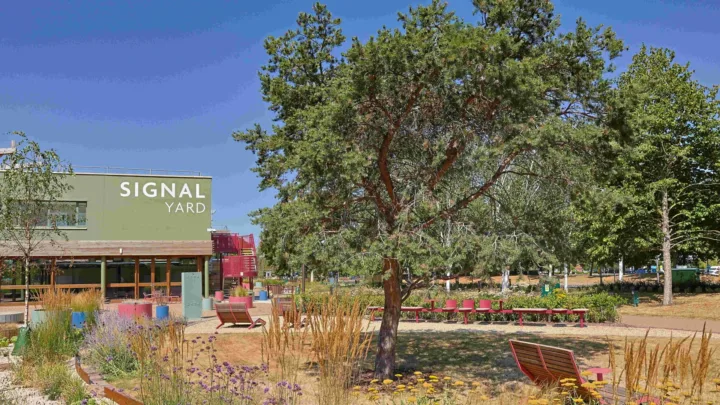
Oxford University’s Wellington Square redevelopment plans have been approved despite Jericho objections over demolition, trees and community space.
Plans by University of Oxford to demolish a building in Wellington Square and redevelop the site have been approved by Oxford City Council, despite objections over the loss of mature trees, biodiversity and established community spaces.
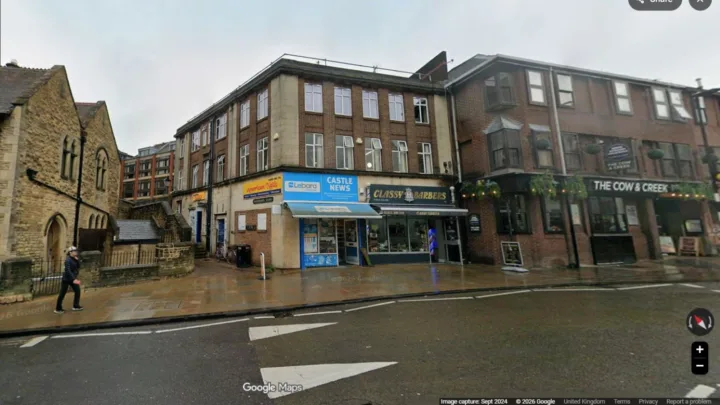
The application covers 25 Wellington Square, a building designed by architect Sir Leslie Martin, who was also responsible for the Royal Festival Hall in London. The building currently contains unused graduate accommodation above Common Ground and The Nest, which have operated from the site.
The redevelopment will see 25 Wellington Square demolished to make way for new academic, teaching and office space. At the same time, former university offices at 32-42 Wellington Square will be converted to provide 99 student rooms and studio flats.
The university describes the accommodation as replacement graduate housing for the rooms previously provided at 25 Wellington Square.
The existing graduate accommodation was vacated in August 2023 because of fire safety concerns. Anna Strongman, chief executive of Oxford University Development, told councillors that the university had considered a range of options for the building, including retention, refurbishment, partial demolition and extension.
“The conclusion was clear,” she said, arguing that the building could not be adapted to meet modern standards.
She said the replacement building would provide “high-quality academic and retail space”, bringing the site back into use.
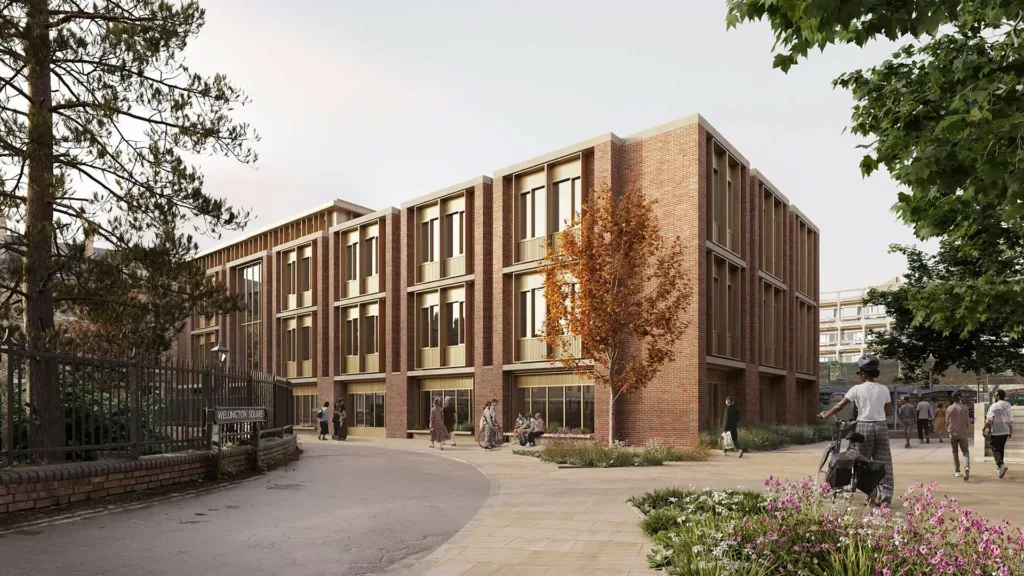
But the proposals have proved controversial in Jericho, where residents raised concerns about the scale and design of the replacement building, the loss of two mature lime trees and the impact on Little Clarendon Street.
Alistair Wilson, who lives in Jericho, told the planning meeting that the development would have a negative impact on what he described as one of the neighbourhood’s “beating hearts”.
He questioned whether the loss of the trees was genuinely unavoidable, arguing that a different approach to the design could retain them.
“The street becomes a hard surface canyon,” he said, warning that the scale of the new building would create a “long heat island” and make the street a place to pass through rather than spend time.
Objectors also raised concerns about biodiversity. The council’s tree officer had concluded that the proposals did not satisfy local planning policy in relation to the removal of the two mature lime trees.
The future of Common Ground and The Nest was another point of contention.
Councillor Ed Turner asked about the businesses during the meeting. Strongman said the university had provided the space as temporary accommodation at a peppercorn rent and had offered Common Ground alternative premises, although those options had not met its requirements.
She said the university was continuing to look for opportunities closer to the businesses’ current location.
Strongman acknowledged the importance of the area, describing Wellington Square and Little Clarendon Street as “characterful, much-loved parts of central Oxford” and noting the level of public interest in the application.
“We’re committed to creating sustainable places that will contribute to the city in the future,” she said.
The planning committee ultimately approved the application by six votes to five.
The decision clears the way for the demolition of 25 Wellington Square and the wider redevelopment of the site, while leaving questions about the future of the existing community spaces and the impact of the development on one of Jericho’s most recognisable streets.
Reporting contribution by Isabella Harris, Local Democracy Reporter (LDR) for Oxfordshire, covering local politics, council meetings and planning decisions across six councils in the county.