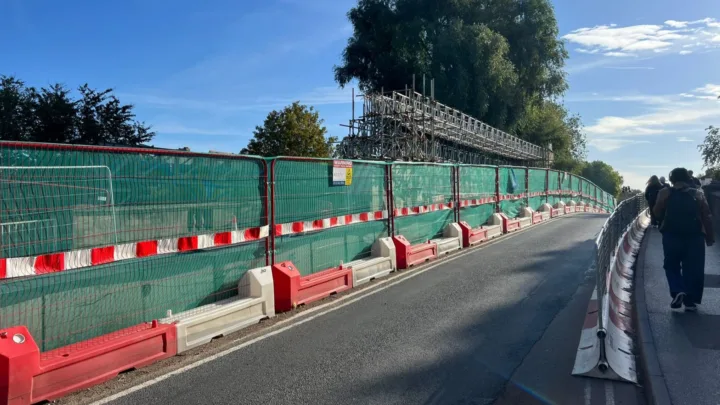
Bus operators have welcomed plans by Oxfordshire County Council to explore temporary congestion reduction measures, including a controversial £5.00 daily charge for drivers on key routes across the city.
The proposed charge, intended to ease delays while Botley Road remains closed until August 2026, could be introduced as early as this autumn—if approved by the council’s cabinet next Tuesday (June 17). A six-week public consultation on the plan is also expected to be launched.
Read more: Temporary congestion charge proposed for Oxford as council seeks urgent fix for traffic crisis
The move follows calls from local bus operators for a “Plan B” to address worsening congestion, after the closure of Botley Road delayed the council’s wider traffic filter trial.
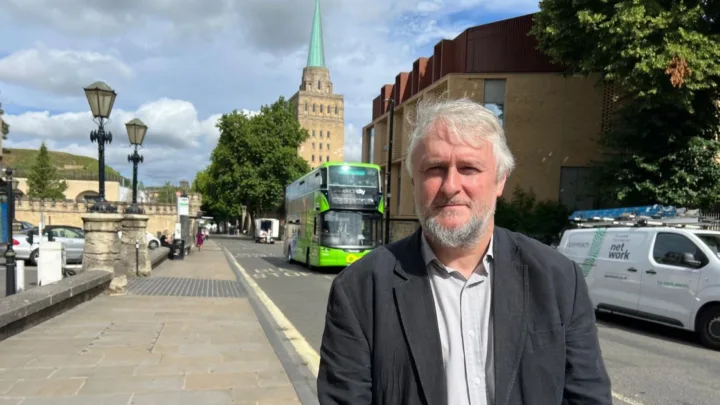
Chris Hanson, Managing Director of Stagecoach West, said he was “incredibly supportive” of the county council’s proposals, according to reporting by our LOcal Democracy Reporter Esme Kenney
“Like other bus operators in the city, we’ve seen real detriment to our operating environment in recent years,” he said.
“There’s a number of different measures that are being proposed, but we’re very supportive of anything that can offset the current situation, particularly with Botley Road being closed.”
Describing the proposed congestion charge as “bold”, Mr Hanson added: “Only bold measures will do. It’s probably in my view one of the only things you can do to achieve the level of change we need.
“It’s sending a very clear message that the car isn’t the preferred option, and in a place like Oxford where we have such fantastic facilities not to use the cars, it feels like a congestion charge is a pretty good solution.”
Luke Marion, Managing Director of Oxford Bus Company, also backed the plan, saying: “The proposed temporary measures while the Botley Road remains closed will help further improve bus services for passengers in the city, and make bus travel a more attractive alternative to using private vehicles.”
He added: “Improving bus services will help bring about a virtuous circle of increasing bus use, and reducing congestion in our city. We’re pleased our concerns have been listened to and this is an encouraging step forward.”
If approved, the temporary charge would apply to six roads already earmarked for future traffic filters. Hythe Bridge Street, St Cross Road, Thames Street and St Clement’s Street would be charged daily from 7.00am to 7.00pm. Marston Ferry Road and Hollow Way would be subject to charges Monday to Saturday, during morning and afternoon peak hours.
The congestion charge has already sparked fierce debate, with a petition opposing it – alongside Oxford’s Low Traffic Neighbourhoods (LTNs) – amassing nearly 5,000 signatures in under 48 hours.
Read more: Petition against temporary Oxford congestion charge gains momentum
Mr Hanson acknowledged the concerns but urged people to consider the bigger picture.
“I don’t think the LTNs in isolation are causing the problem,” he said. “They were part of a package of measures that remain undelivered because Botley Road has been closed.
“It’s quite difficult to take one element that has been delivered and assume that that’s where the issue lies.
“Something bolder needs to be the answer, and I think traffic filters will be a really innovative approach to that and will make a huge difference. In the short term, we can’t wait to tackle that problem until then.”
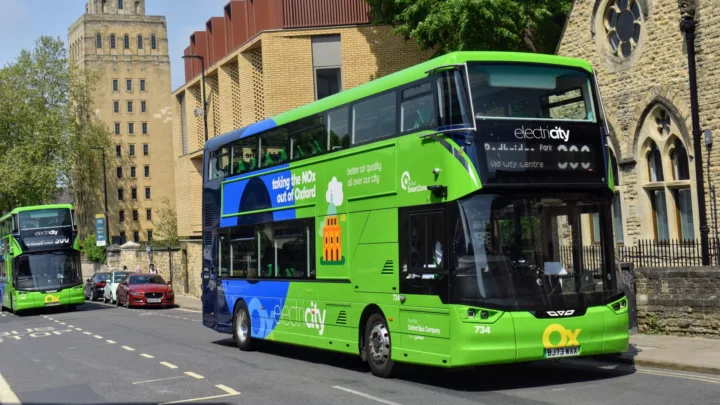
Bus companies have already invested £45 million alongside the county council to introduce 159 new electric buses in Oxford- on the condition that average bus journey times are cut by at least 10 per cent to make the investment viable.
“We invested on good faith that our vehicle speeds would improve by 10 per cent, and that hasn’t happened,” Mr Hanson said. That’s nobody’s fault – no one knew Botley Road was going to be delayed to the levels that it has been.
“But what we are pushing for is that we need to unlock that 10 per cent, so that the money we have invested is put towards creating a beneficial situation rather than having really nice electric buses that are stuck in traffic.”
The cost of a bus journey in Oxford rose to £3.00 in April after the government raised the national fare cap, which will remain in place until March 2027.