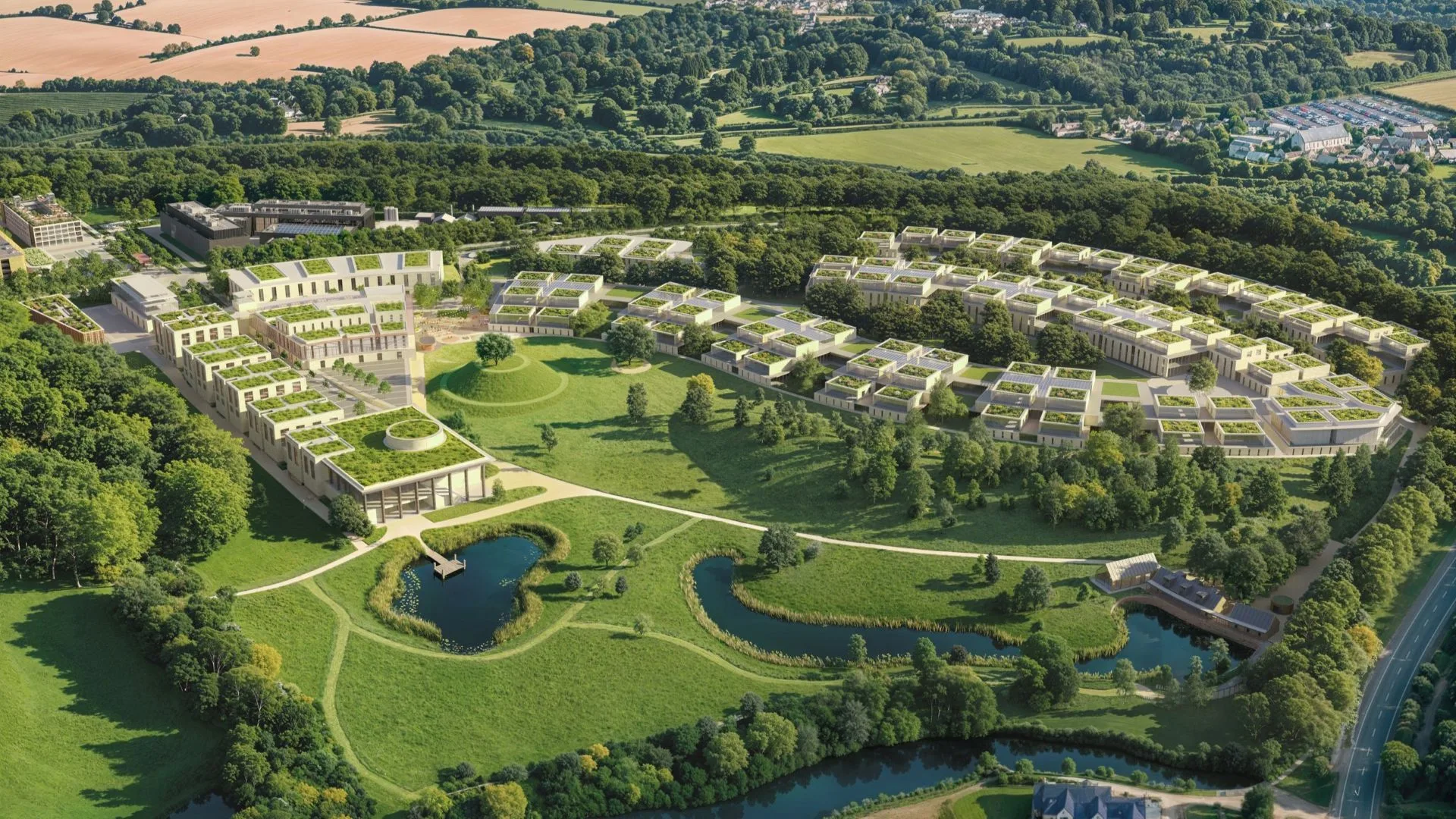
Exeter College has unveiled proposals for a significant new research and innovation district, EXOq, located adjacent to Oxford Parkway station, designed to strengthen the UK’s advanced computing and scientific research capability while delivering substantial public benefits for the surrounding Kidlington area.
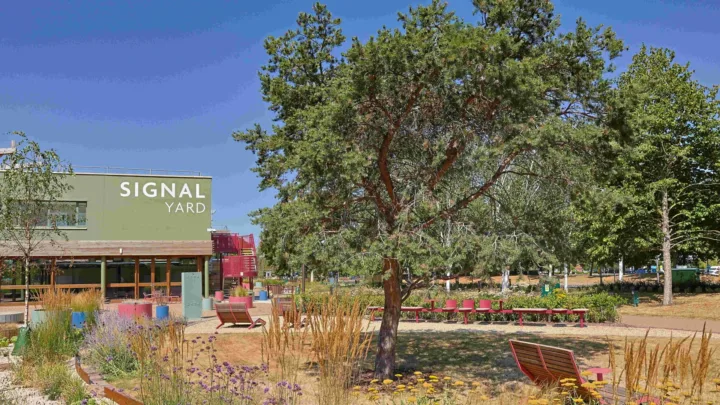
The 30-hectare development proposes a blend of high-performance research infrastructure and extensive green space, with almost half of the site dedicated to public parkland.
At its core will be a Sovereign High-Performance Compute (HPC) system and quantum-compatible data centres intended to support world-leading research across fields including artificial intelligence, climate science, advanced materials, robotics, particle physics and space technology.
Exeter College says the district is intended to act as a “dynamic research and innovation compute environment”, enabling both academic and commercial breakthroughs. The College is home to leading figures in the field of AI, including DeepMind Professor of Artificial Intelligence Professor Michael Bronstein, reinforcing its position within Oxford’s wider innovation ecosystem.
Alongside the research facilities, EXOq proposals include a new further education college aimed at developing local skills in hardware and IT, as well as a hotel, incubator and accelerator spaces, and academic and conference facilities. The development also includes plans for a low-carbon heat facility serving the wider area.
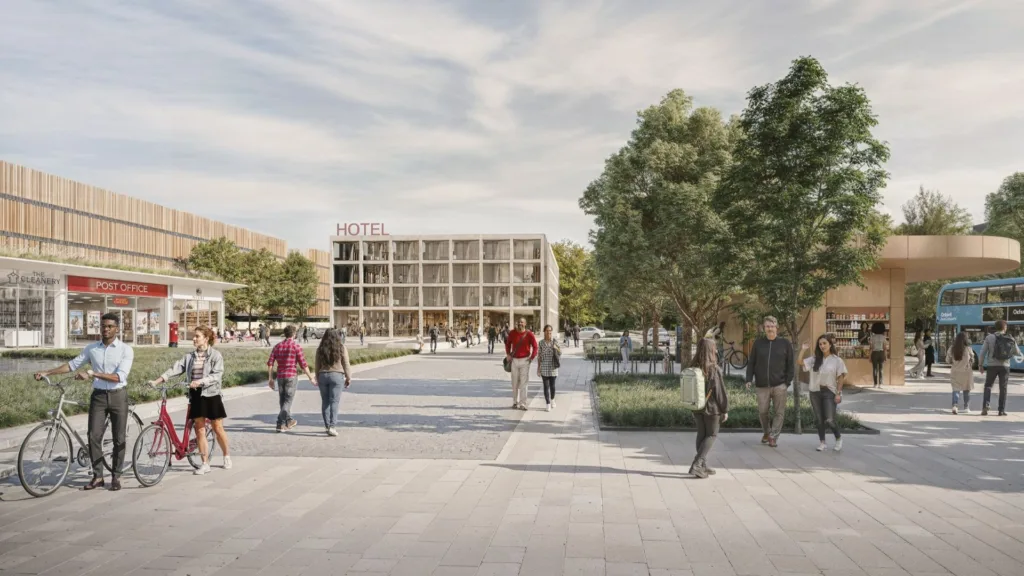
A key element of the masterplan is improved connectivity. A new foot and cycle bridge would link the site directly to Oxford Parkway station, while additional walking and cycling routes would connect the development to the Oxford Canal towpath and surrounding active travel networks, reducing reliance on car travel and reinforcing the scheme’s “low-traffic exemplar” ambition.
Exeter College Rector Dr Andrew Roe described the project as “a significant investment in both national capability and the local community,” while Finance and Estates Bursar Nicholas Badman said the sovereign HPC infrastructure would “power and accelerate research of global significance and associated commercial ventures.”
The proposals also emphasise community benefits, including new public parkland designed to support wellbeing and reduce social isolation, alongside enhanced access to green space for nearby residents.
A public consultation on the EXOq plans will take place at North Oxford Golf Club on 13, 14 and 15 November, with further information to be made available via the project website.
The site lies north of Oxford within the Cherwell District Council area, between the Oxford Canal and the A34, and falls partly within the Green Belt. Developers argue the masterplan has been carefully designed to minimise environmental impact, with buildings integrated into the landscape and screened by extensive planting.
The proposal aligns with national planning policy encouraging high-tech clusters and innovation-led growth, with EXOq positioned as part of the wider Oxfordshire “knowledge spine” and the UK Government’s ambition to establish global leadership in AI and advanced computing.
Cherwell District Council will consider the plans as part of its evolving local plan framework and future planning decisions.