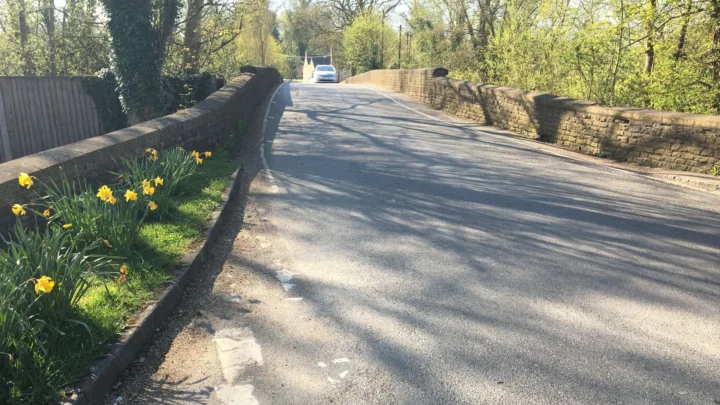
Oxfordshire’s first “quiet lane” scheme has been approved, cutting the speed limit on Shepards Pit Lane in Stanton St John from 60mph to 20mph despite objections from Thames Valley Police.
The decision, approved on Thursday, 03 September, marks what the county council describes as the final legal step before the experimental scheme can proceed.
It also brings into sharper focus a disagreement between the council and the police over how far the authority should go in reshaping rural roads.
Thames Valley Police described the proposed changes as “highly inappropriate”, prompting a pointed response from county transport chief Gareth Epps, who said he could not allow the force’s criticism to pass without challenge.
Mr Epps said he was surprised that a public body would describe the scheme in such terms “without making the vaguest attempt to say why”.
He said he intended to write to the force to question its position, including whether the criticism represented the formal view of the constabulary.
“I would hope they would find a more appropriate way to express their view on this,” he said, pointing to the council and police’s wider partnership on road safety.
A test for Oxfordshire’s rural roads
The Stanton St John scheme is the first in what could become a countywide experiment involving 10 roads.
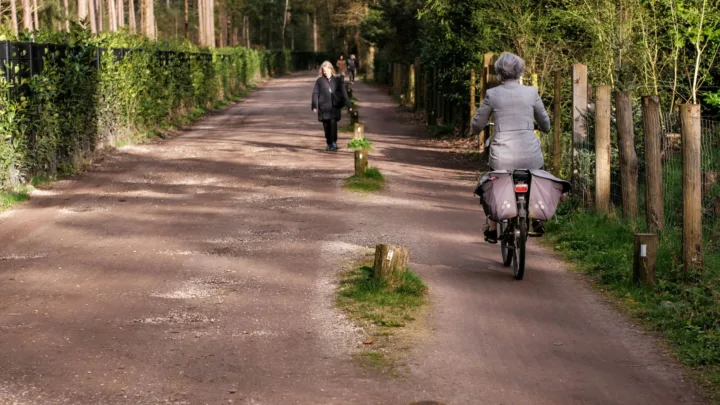
The council’s proposed approach goes beyond the Government’s definition of a conventional quiet lane. Physical measures, including bollards, are intended to restrict through traffic on roads where alternative routes are available.
The concept has consequently attracted comparisons with low-traffic neighbourhoods, but applied to rural roads.
Read more: Oxfordshire quiet lanes plan faces police objection over proposed 20mph limit
Proposals have previously been discussed for locations including Blackthorn Village, Fawler, Towersey, Goring, Kennington and Aston Rowant. Some roads have since been removed from consideration following opposition from local communities.
The Stanton St John scheme is further advanced, having been under consideration for several years and receiving support during consultation.
The 20mph speed limit is being introduced separately from the wider traffic measures because speed-limit changes cannot be incorporated into the experimental traffic orders governing the quiet-lane arrangements.
Approving the restriction, Mr Epps said there was “clear support” for both the quiet lane and the lower speed limit on Shepards Pit Lane.
Police concerns over 20mph limits
The disagreement comes against the backdrop of wider concerns raised by Thames Valley Police about Oxfordshire’s rollout of 20mph speed limits.
The force has previously questioned whether some restrictions can be effectively enforced, citing limited police resources and concerns about unfairly criminalising motorists.
Police have also warned that speed limits they consider unrealistic could be disregarded by drivers, potentially undermining road safety rather than improving it.
Those concerns have particular significance for the quiet-lane programme, which relies on a combination of lower speeds and physical changes to the road environment.
Paul Fermer, the county council’s director of environment and highways, acknowledged that the authority was operating outside national guidance for quiet lanes.
He described the police objection as “a bit odd”, given the force’s stated intention to enforce 20mph limits.
In its response to the police concern, a council officer said the authority’s transport plan was clear in its commitment to improving road safety while balancing the needs of different road users.
For Stanton St John, the decision now moves the quiet-lane experiment from years of discussion towards implementation.
For the county as a whole, it may prove more significant. With further rural roads potentially facing similar measures, the first scheme will offer an early test of whether Oxfordshire’s experiment can reconcile local support, traffic reduction and road safety with concerns from those responsible for enforcing the rules.
Reporting contribution by Isabella Harris, Local Democracy Reporter (LDR) for Oxfordshire, covering local politics, council meetings and planning decisions across six councils in the county.